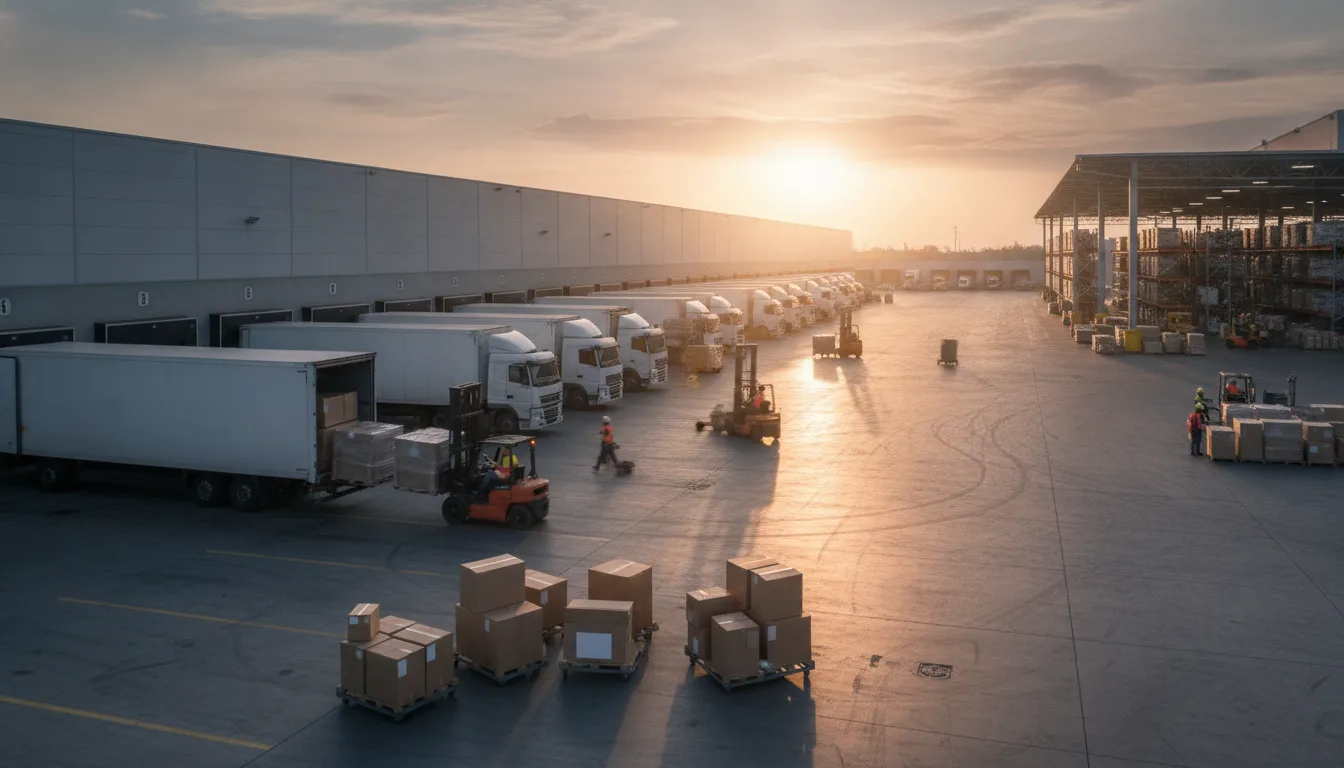


An international 3PL (third-party logistics provider operating US fulfillment infrastructure for overseas brands) is now the practical foundation for selling in the US from abroad. With de minimis suspended indefinitely, CBP interim rules in force and Section 301 forced-labor duties live since July 24, 2026, every cross-border parcel triggers a duty event. YouParcel operates fulfillment centers in New Jersey, California and Illinois, handles 10,000-plus orders a day across multiple marketplaces, and gives international brands a single US partner from freight in to doorstep and returns.
- The US Court of International Trade upheld the de minimis suspension on August 13, 2026, closing the last legal path for duty-free parcel entry.
- Bulk importing to a US warehouse converts many small duty events into one formal customs entry per inbound shipment, which simplifies compliance and cost modeling.
- Section 301 forced-labor duties of 10 or 12.5 percent on 60 economies, effective July 24, 2026, raise the stakes of per-parcel shipping models even further.
- YouParcel's warehouses in New Jersey and California, 70-plus platform integrations and carrier network covering USPS, FedEx, DHL, Aramex and EasyPost give overseas brands a ready US infrastructure without a local entity.
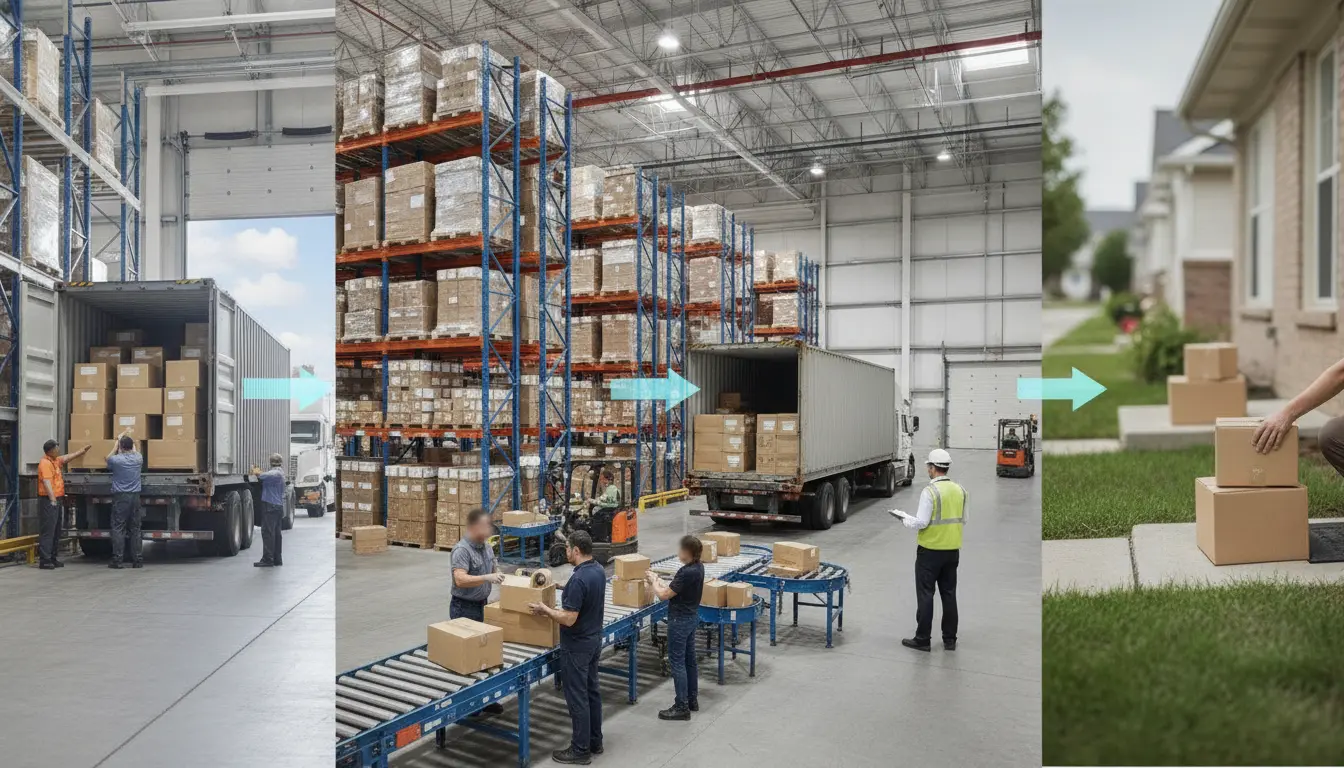
What changed in 2026 and why it matters for international sellers
The de minimis suspension: from executive order to court confirmation
Section 321 of the Tariff Act historically allowed merchandise valued at 800 USD or less to enter the US duty-free, one shipment per person per day. That exemption was suspended by executive order on August 29, 2025. In the months that followed, legal challenges tested the authority behind the suspension. On August 13, 2026, the US Court of International Trade upheld the suspension in Axle of Dearborn, confirming that the executive has statutory authority under IEEPA to suspend the exemption and that the indefinite CBP interim final rules published in the Federal Register on June 24, 2026 are valid. The statutory repeal takes effect July 1, 2027, making the end of duty-free parcel entry permanent in both regulatory and legislative terms.
Sources: Alvarez and Marsal: USCIT Upholds IEEPA Suspension of De Minimis (Aug 13, 2026); Federal Register: Indefinite Suspension of the De Minimis Exemption, June 24, 2026.
Section 301 forced-labor duties: July 24, 2026 and 60 economies
When the Section 122 temporary 10-percent surcharge expired on July 24, 2026, USTR activated Section 301 forced-labor duties on 60 economies at rates of 10 percent or 12.5 percent. For the EU and Taiwan, combined MFN-plus-301 rates are generally capped at 10 percent. For other economies, the effective landed rate depends on the HTS code (Harmonized Tariff Schedule classification) and origin. This is a structurally higher baseline tariff cost layered on top of standard MFN duties, and it applies to every entry regardless of value. EY Tax News: USTR Finalizes Section 301 Forced-Labor Tariffs (July 24, 2026).
The practical implication: an international brand shipping 500 individual parcels a month to US customers now faces 500 separate duty events with per-parcel brokerage fees, potential delays at port of entry and unpredictable landed costs passed on at checkout. Shipping bulk inventory to a US warehouse transforms those 500 events into one formal entry per inbound shipment.
Canada: Section 338 duties from August 22, 2026
Canadian brands selling into the US face an additional layer. Section 338 duties of 50 percent on approximately 569 HTS lines took effect August 22, 2026, affecting specific product categories. Canadian brands shipping those categories direct-to-consumer into the US should verify their HTS classifications with a licensed customs broker before any inbound shipment. Storing inventory at a US fulfillment center that was imported before the effective date may provide a buffer, subject to the applicable entry date and liquidation rules.
Why the bulk-inventory model is now the lasting answer
The logic is straightforward. When goods are imported in bulk to a US warehouse:
- One formal entry per shipment. A single customs entry covers an entire container or LCL (less-than-container-load) shipment. Brokerage fees, ISF (Importer Security Filing) costs and CBP processing apply once, not per parcel.
- Duty is paid once and predictably. The landed cost per unit is calculable before the first customer order. Brands can price accurately, show US customers a clean checkout price and avoid surprise import charges on delivery.
- Domestic last-mile rates. Once inventory is inside a US fulfillment center, orders ship via USPS, FedEx or similar domestic services. These are typically faster and less expensive than international small-parcel routes from origin country to US consumer, especially for standard-size packages.
- Customer experience parity. US shoppers receive packages with domestic tracking, domestic return addresses and the same carrier experience as a US-based brand. Dispute rates and cart-abandonment linked to international shipping concerns typically fall.
- Returns handled domestically. Returned parcels come back to the US warehouse rather than traveling internationally, which reduces return shipping cost and keeps inventory in the US distribution network for restocking or grade-based disposition.
The model does not remove duty. It concentrates and formalizes the duty event at the import stage, which is manageable and foreseeable rather than fragmented across thousands of individual consumer-facing parcels. Always confirm the applicable duty rate, HTS classification and Incoterms with a licensed customs broker before shipping.
Who acts as importer of record?
Importer of Record (IOR) is the party legally responsible for ensuring goods comply with US import regulations and for paying duties to CBP. YouParcel does not act as IOR. International brands typically handle IOR in one of three ways:
| IOR option | What it involves | Typical fit |
|---|---|---|
| Brand as IOR (with US EIN) | The overseas brand obtains a US Employer Identification Number and bonds, and acts as its own IOR | Brands with an established US legal entity or the intent to form one |
| Licensed customs broker as IOR | A third-party licensed customs broker assumes IOR responsibility, usually for a service fee | Brands without a US entity that need a compliant entry pathway quickly |
| Freight forwarder-facilitated entry | The freight forwarder works with a customs broker; the brand remains responsible but documentation is managed through the forwarder | Brands already working with a freight forwarder for ocean or air freight |
YouParcel's freight forwarding services include coordination with customs brokers for inbound shipments. The IOR question is one the brand needs to resolve with its own legal and customs advisors before goods arrive at a US port. This is information only; consult a licensed customs broker for definitive guidance specific to your product classification and origin country.
YouParcel's US fulfillment infrastructure for international brands
YouParcel operates fulfillment centers positioned to cover the major US population centers and inbound freight lanes:
| Location | Address | Primary freight lane |
|---|---|---|
| New York / New Jersey | 20 Farinella Dr, East Hanover, NJ 07936 | Port of New York and New Jersey; air freight via EWR and JFK; East Coast population centers |
| Southern California | 3700 S. Riverside Ave, Rialto, CA 92324 | Ports of Los Angeles and Long Beach; air freight via LAX; West Coast and Mountain time zones |
YouParcel's first fulfillment facility was in Saddle Brook, NJ, which reflects the company's roots in serving the Northeast import corridor. The network also includes a warehouse in Illinois, providing a central node for brands that want broad ground coverage across the continental US.
Across the network, YouParcel handles 10,000-plus orders a day across multiple marketplaces and integrates with Shopify, Amazon, Salesforce, Tableau and 70-plus other platforms. For international brands selling on both a direct-to-consumer storefront and one or more US marketplaces, that integration layer means a single inventory pool driving all channels without manual reconciliation.
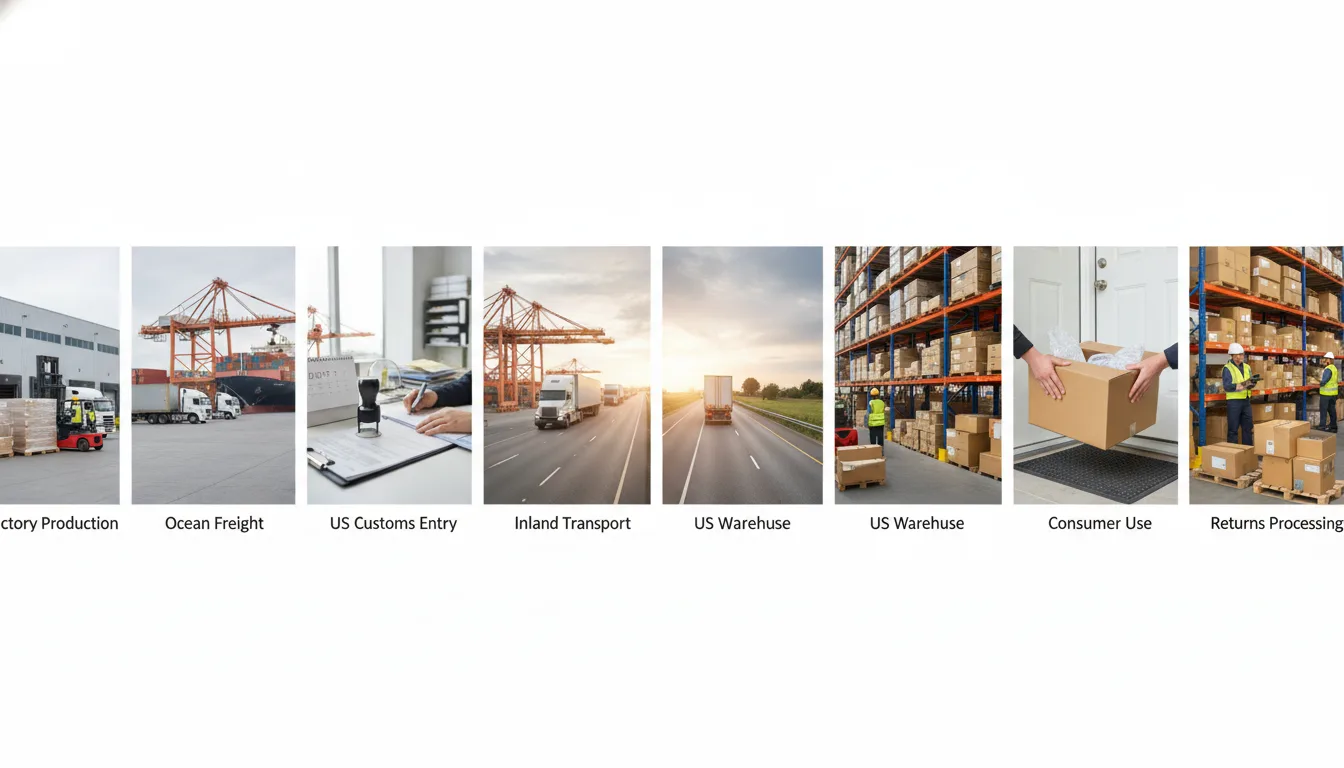
What the end-to-end flow looks like in practice
- Origin-country production and export. Goods are manufactured or assembled, classified by HTS code at origin and packed to YouParcel inbound specifications. Carton counts, weights and dimensions are confirmed for ISF filing purposes.
- Freight forwarding and ISF filing. Ocean FCL (full container load) or LCL, or air freight, is booked. An ISF 10+2 filing is required at least 24 hours before vessel departure for ocean shipments. YouParcel's freight-forwarding coordination supports this step.
- US customs entry and duty payment. The licensed customs broker files a formal entry with CBP, assigns the correct HTS codes, calculates duties and any Section 301 additions, and coordinates bond and payment. Goods are released after CBP review.
- Inbound receiving at YouParcel. Containers or pallets are delivered to the fulfillment center. Receiving includes unit count verification, SKU-level quality inspection against the purchase order, barcode scanning and putaway to assigned storage locations.
- Storage. Inventory is slotted by velocity (fast-moving SKUs near pick stations, slow-moving in reserve storage). YouParcel's warehouse management system tracks available units in real time, visible through the brand's integration.
- Order pick, pack and ship. When a customer order arrives via Shopify, Amazon or another connected channel, it is picked, packed to carrier dimensional-weight specifications (the standard divisor for most US parcel carriers is 139 for inches) and labeled. Orders ship via USPS, FedEx, DHL or the optimal carrier for the destination zone and weight.
- Real-time tracking and alerts. YouParcel's tracking layer pushes status updates through to the storefront and, where configured, directly to the end customer. BI and analytics give operations teams visibility into fill rates, carrier performance and inventory days-on-hand.
- Returns processing. Returned parcels arrive at the US fulfillment center. YouParcel's reverse logistics services include receiving, inspection, grading (resalable, refurbishable or liquidation) and restocking or disposition according to the brand's return policy.
How the model works by origin market
United Kingdom
UK brands face the same Section 301 duty stack as other 60-economy exporters, at 10 or 12.5 percent on top of standard MFN rates. YouParcel also operates a shop-and-ship warehouse in the UK, which means UK brands have an existing relationship pathway. For brands moving from a direct-parcel model to a US inventory model, the transition involves a first bulk shipment by ocean or air, IOR resolution and integration setup. Typical ocean transit from UK ports to the US East Coast is 12 to 18 days depending on routing; confirm current vessel schedules with a freight forwarder.
European Union (Germany, France, Italy and others)
EU brands exporting to the US are generally subject to a combined MFN-plus-301 rate capped at 10 percent. The specific rate depends on the HTS code; some product categories carry higher MFN base rates. EU exporters should work with a customs broker to model landed cost by SKU before committing to a pricing strategy. For German, French and Italian brands in particular, stocking at the New Jersey facility provides access to the largest US consumer population cluster within two to three ground-shipping days.
Canada
Canadian brands are affected by both Section 301 duties on applicable product categories and, from August 22, 2026, Section 338 50-percent duties on approximately 569 HTS lines. This creates an urgent case for pre-positioning inventory. The New Jersey warehouse is the closest US fulfillment point to Toronto and Montreal for brands that import by truck across the border, while the California facility serves brands whose goods transit through West Coast ports. Verify Section 338 applicability by HTS code with a licensed customs broker before shipping.
Australia
Australian brands shipping direct-to-consumer to the US previously benefited from de minimis on lower-value orders. That pathway is closed. Australia is classified in the 10-percent Section 301 tier for most product categories. Ocean transit from Australia to the US West Coast is typically 15 to 25 days depending on origin port and routing; air freight from Sydney or Melbourne to Los Angeles runs approximately 5 to 8 transit days. The California fulfillment center in Rialto is the natural first US node for Australian brands arriving through the Port of Los Angeles or Long Beach.
India
Indian exporters should confirm their specific Section 301 rate, as India falls in the 12.5-percent tier for some product categories depending on classification. Ocean freight from Mumbai or Chennai to the US East Coast runs roughly 20 to 28 days. For brands in categories such as textiles, home goods, jewelry or supplements, HTS classification matters significantly because MFN base rates vary widely across these categories. A customs broker review of the top 10 SKUs by revenue is a practical starting step before committing to a bulk shipment plan.
Incoterms and how to structure the trade
Incoterms (International Commercial Terms, published by the International Chamber of Commerce) define where seller responsibility ends and buyer responsibility begins in an international shipment. For overseas brands shipping to a US fulfillment center, the most commonly used terms are:
| Incoterm | Who pays freight to US | Who pays US duties | Practical implication for brands |
|---|---|---|---|
| EXW (Ex Works) | Brand (buyer) | Brand (buyer) | Maximum control and cost exposure; typically used when brand manages its own freight forwarder |
| FOB (Free on Board) | Brand (buyer) from port of origin | Brand (buyer) | Supplier hands over at origin port; brand manages ocean freight and US import |
| CIF (Cost, Insurance, Freight) | Supplier to destination port | Brand (buyer) | Supplier manages freight cost and insurance to US port; brand still handles customs clearance |
| DDP (Delivered Duty Paid) | Supplier | Supplier | Supplier takes all risk to final delivery point; rarely offered by suppliers for large shipments; complicates who is IOR |
FOB is the most common term for international brands managing their own logistics. It gives the brand control of the ocean freight booking and the choice of customs broker. DDP is attractive in theory but complicates IOR responsibility and is seldom available from manufacturers for full container loads. Confirm the chosen Incoterm with both the supplier and the customs broker before issuing a purchase order.
Platform integrations for international brands
Most international brands selling in the US operate on Shopify or Amazon, often both. YouParcel integrates with Shopify and Amazon natively, plus Salesforce, Tableau and 70-plus additional platforms. For brands that also sell on UK or EU marketplaces from the same inventory pool, the integration layer is critical: it prevents overselling and enables allocation rules that reserve units for specific channels or geographies.
Beyond storefront integrations, YouParcel's BI and analytics capabilities let operations teams monitor inventory turns by SKU, flag slow-moving stock before storage costs accumulate and model the next inbound shipment size based on actual sell-through velocity. This matters particularly for brands navigating the new duty landscape, where over-importing ties up capital in duty-paid stock that may take months to sell.
Kitting, assembly and retail distribution
International brands often need more than pick, pack and ship. YouParcel offers kitting and assembly services at the fulfillment center, which is relevant for brands that import components separately (to optimize duty classification) and assemble the finished product in the US. It also matters for subscription box models, promotional bundles and FBA prep.
For brands moving into US retail and wholesale channels, YouParcel supports EDI (Electronic Data Interchange) and retailer compliance requirements including routing guides and labeling specifications. Retail distribution adds complexity, particularly for brands unfamiliar with US retailer charge-back triggers; having a 3PL with established EDI capability reduces that risk. Learn more about the full range of services on the YouParcel ecommerce fulfillment page.
Returns: the often-overlooked cost in the international model
US return rates in apparel, footwear and electronics routinely run 20 to 30 percent. For an international brand shipping direct from origin, each return requires an international return shipment or a write-off. With a US fulfillment center, returns come back domestically. YouParcel's reverse logistics operation handles inspection, grading, restocking and disposition at the US location, which keeps good inventory in the US supply chain rather than in transit back across an ocean.
For brands with a customer return window of 30 to 60 days, the practical question is what happens to returned units. YouParcel's grading process typically classifies units as resalable (returned to stock), refurbishable (sent for repackaging or minor repair) or liquidation. The right disposition rule depends on the product category and the brand's margin structure. Setting those rules before the first inbound shipment arrives avoids ad-hoc decisions at high volume.
Sustainability considerations
YouParcel is taking active steps toward carbon-neutral services. Consolidating many direct-to-consumer international shipments into bulk inbound freight and domestic last-mile delivery can reduce per-unit transport emissions compared to shipping individual parcels internationally for each order. This is a structural benefit of the inventory-in-US model that is increasingly relevant for brands reporting on scope 3 emissions. YouParcel does not operate an electric-vehicle fleet and does not claim carbon-neutral status at this time.
How to evaluate whether the model is right for your volume
Not every international brand is ready to pre-position US inventory. The decision depends on order volume, product characteristics, capital availability and lead times. A rough framework:
| Factor | Signals that favor US inventory | Signals that require more analysis |
|---|---|---|
| Monthly US orders | 500 or more per month | Under 100 per month; review inbound freight cost amortization |
| Product shelf life | 12-plus months or non-perishable | Short shelf life or seasonal; risk of holding duty-paid stock past sell-by |
| SKU count | 20 or fewer core SKUs | Hundreds of SKUs with uneven velocity; forecasting complexity increases |
| Average order value | High enough to absorb US fulfillment cost per unit | Very low AOV (average order value); model the per-unit landed cost carefully |
| Return rate | Any meaningful return rate; US returns handling saves significantly | Near-zero return rate categories (some industrial goods); less benefit from domestic returns |
YouParcel's team works through these variables with prospective clients. With 50-plus years of combined leadership experience and operations handling 10,000-plus orders a day, the conversations are practical and specific to the brand's product and market situation.
Frequently asked questions
Is de minimis really permanently gone for international shipments to the US?
Yes, for all practical purposes. The US Court of International Trade upheld the de minimis suspension on August 13, 2026, and CBP interim final rules published June 24, 2026 suspend the exemption indefinitely for all shipping modes. The statutory repeal of the 800-USD threshold takes effect July 1, 2027. Every parcel entering the US now triggers a duty assessment regardless of value.
Does storing inventory in a US warehouse eliminate the duty cost?
No. Duty is paid once when the goods are formally entered into the US at customs, on the commercial value and applicable HTS rate of the inbound shipment. What the model eliminates is per-parcel duty fragmentation: one entry per bulk shipment instead of one entry per consumer order. The landed cost per unit is paid upfront and becomes predictable.
Who acts as importer of record if my brand has no US entity?
Options include using a licensed customs broker as IOR, establishing a US legal entity and acting as your own IOR with the appropriate bond, or working through a freight forwarder that facilitates the entry process. YouParcel does not act as IOR; the choice of IOR structure should be made with a licensed customs broker and legal counsel familiar with US import regulations.
What is the minimum inventory level needed to make US fulfillment cost-effective?
There is no universal threshold, but 500 or more US orders per month is a common starting point where inbound freight amortization, storage and pick-and-pack costs compare favorably to per-parcel international shipping plus per-parcel duty processing. The right answer depends on your product's weight, dimensions and average order value. Talk to YouParcel's team for a model specific to your SKUs.
Can YouParcel handle both ecommerce fulfillment and retail distribution for a US market entry?
Yes. YouParcel supports direct-to-consumer order fulfillment through Shopify, Amazon and 70-plus other integrations, and also supports wholesale and retail distribution with EDI compliance, routing-guide adherence and retail-standard labeling for US retailers. Brands can run both channels from the same US inventory pool.
Ready to move your US fulfillment strategy off fragile parcel-by-parcel duty events and onto a durable inventory-in-US model? Create an account to get started, or Talk to an Expert and let YouParcel's team walk through the inbound freight, IOR, integration and fulfillment setup specific to your brand's origin market, product mix and US growth targets.