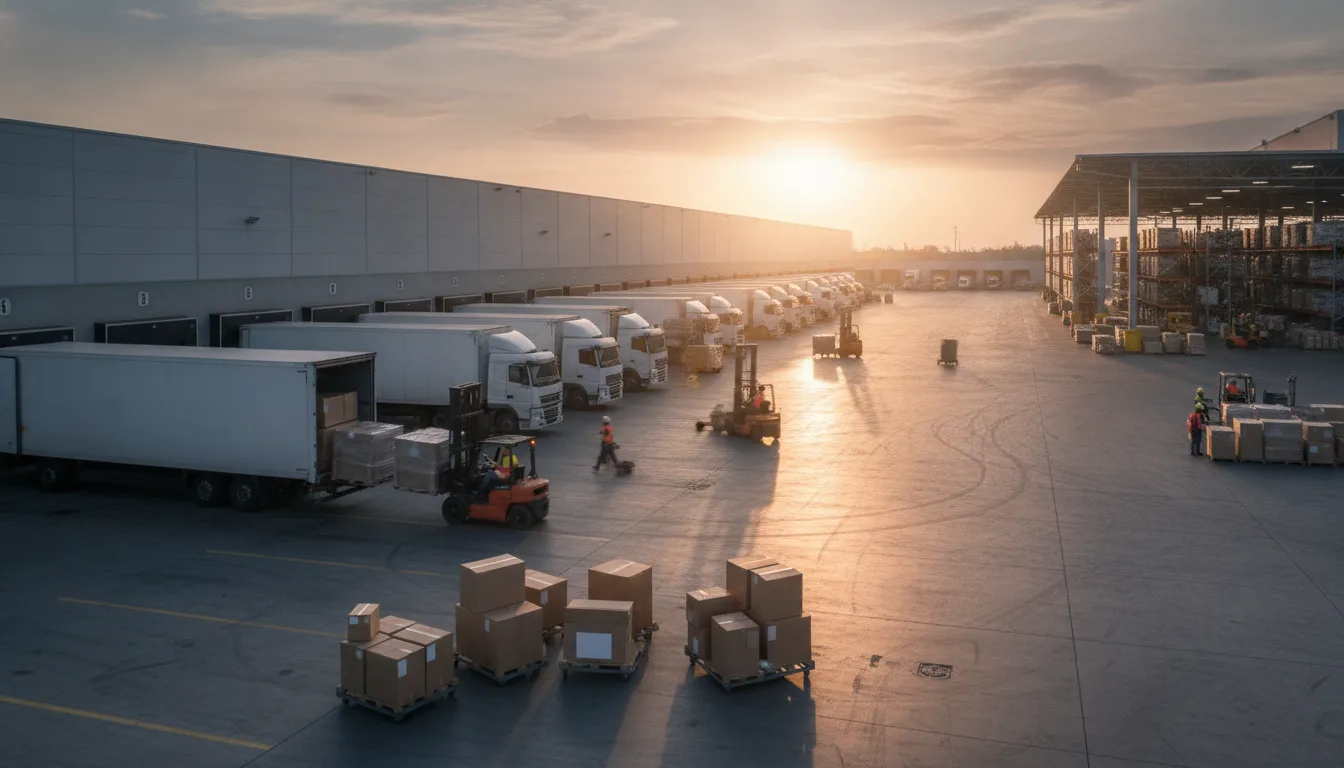


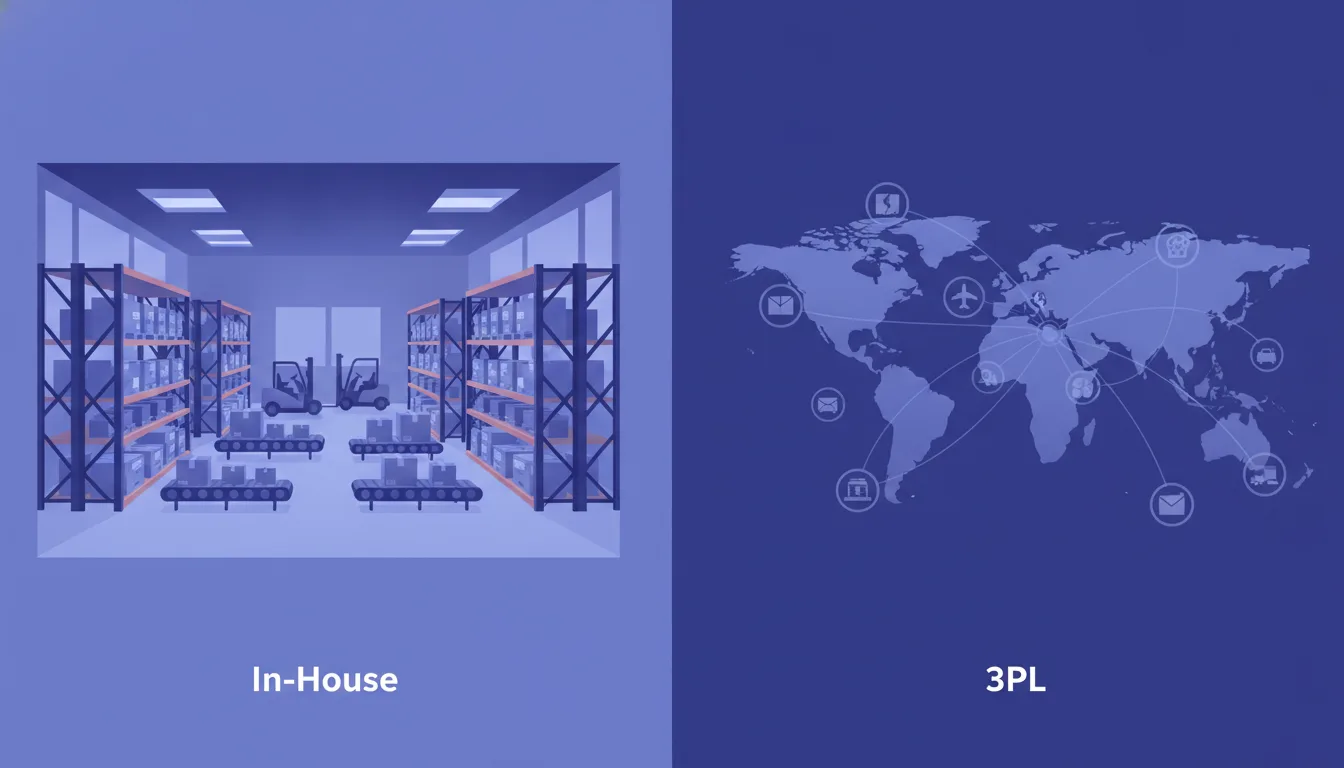
A 3PL (third-party logistics provider) handles warehousing, pick-and-pack, shipping and often returns on behalf of an ecommerce brand, while in-house fulfillment means the brand operates its own warehouse and staff. For most growing US brands, the right choice between 3PL ecommerce fulfillment and in-house comes down to four factors: unit economics, operational control, capacity flexibility and risk exposure. YouParcel works through exactly this analysis with brands every day.
- Cost: In-house fulfillment carries high fixed costs (lease, labor, equipment); a 3PL converts most of those to variable costs that scale with order volume.
- Control: In-house gives you direct authority over every pick, pack and ship decision; a 3PL gives you data visibility and SLA accountability instead.
- Scalability: A 3PL absorbs volume spikes, multi-warehouse expansion and new marketplace channels faster than an internal operation can staff up.
- Risk: In-house concentrates operational risk on your balance sheet; a 3PL distributes it, but introduces vendor dependency that must be managed through contracts and integrations.
What Is 3PL Ecommerce Fulfillment, Exactly?
Third-party logistics (3PL) is a term standardized by the Council of Supply Chain Management Professionals (CSCMP) to describe the outsourcing of logistics functions to a specialized provider. In an ecommerce context, a 3PL receives your inventory, stores it in one or more fulfillment centers, picks and packs individual orders, ships them through contracted carrier relationships and manages returns on your behalf.
The service layers inside a 3PL contract typically include:
- Receiving: Unloading inbound shipments, counting units and logging them into a warehouse management system (WMS).
- Storage: Slotting inventory in bin, shelf or pallet locations, charged per pallet or cubic foot per month.
- Pick and pack: Pulling individual SKUs per order, placing them in packaging, adding inserts or labels, sealing and weighing the parcel.
- Shipping: Generating carrier labels and tendering parcels to USPS, FedEx, DHL, Aramex or another carrier based on rate-shopping logic.
- Returns processing (reverse logistics): Receiving returned parcels, inspecting condition, restocking or quarantining units and updating inventory counts.
Some 3PLs also offer kitting and assembly, retail compliance support (EDI, routing guides, retailer labeling requirements) and freight forwarding for international inbound shipments.
The Four Decision Dimensions: A Side-by-Side Comparison
| Dimension | In-House Fulfillment | 3PL Ecommerce Fulfillment |
|---|---|---|
| Cost structure | High fixed costs: lease, equipment, full-time staff, utilities, insurance, WMS license | Variable costs: per-order pick-and-pack fees, per-unit storage, outbound shipping rates negotiated at volume |
| Break-even volume | Favorable when monthly order volume is high and stable enough to spread fixed costs (often 5,000+ orders/month as a rough threshold) | Favorable at lower and fluctuating volumes; per-unit fees can exceed in-house cost at very high, stable volumes |
| Operational control | Direct authority over SOP design, packaging standards, staffing and technology choices | Indirect control via contract SLAs, real-time WMS portals, integration data feeds and account management |
| Speed to scale | Slow: requires lease negotiation, equipment procurement, hiring and training cycles of weeks to months | Fast: activate additional storage space, add a new facility node or onboard a new sales channel within days to weeks |
| Geographic reach | Limited to your own facility locations unless you open additional warehouses | Multi-node network (for example, East Coast, West Coast, Midwest) reduces average shipping zone and transit time without capital outlay |
| Carrier rates | You negotiate directly; leverage depends on your own volume | 3PL pools volume across all clients for discounted rates from USPS, FedEx, DHL and others |
| Technology | You own the WMS, OMS and integration stack; ongoing license and IT maintenance cost | 3PL provides WMS, real-time tracking and platform integrations (Shopify, Amazon, Salesforce, 70+ others at YouParcel) |
| Risk profile | Operational errors, facility disruptions and labor shortages fall entirely on you | Vendor dependency risk; mitigated by SLA contracts, data portability and multi-3PL strategies for large brands |
| Customization | Full: you design every packaging, insert, kitting and branding touch point | Possible within 3PL capabilities: custom packaging, inserts, kitting and assembly are common service add-ons |
How to Model the True Cost of In-House Fulfillment
Many brands underestimate in-house costs because they only count direct labor and shipping labels. A complete cost-per-order model includes:
- Occupancy: Monthly rent or mortgage payment for warehouse space, pro-rated per order. Industrial lease rates in New Jersey and California have averaged $10 to $18 per square foot annually in recent years, according to CBRE commercial real estate research.
- Labor: Warehouse staff wages plus payroll taxes, benefits and workers compensation insurance, including management overhead.
- Equipment: Forklifts, conveyors, packing stations, scales, label printers and racking, depreciated over useful life.
- Technology: WMS license or subscription, integrations and IT support.
- Carrier spend: Your own negotiated rates, plus the time cost of carrier relationship management.
- Packaging materials: Boxes, poly mailers, dunnage, tape and custom inserts.
- Error and damage cost: Mis-picks, damaged goods, return shipping and customer service hours. Industry estimates typically place warehouse error rates at 1 to 3 percent of orders for operations without rigorous scan-verify workflows.
Divide the sum of all monthly costs by your monthly order volume to get a true cost-per-order baseline. Compare that number honestly to a 3PL quote that covers the same scope before making a decision.
How to Model the True Cost of a 3PL
A 3PL invoice is itemized and variable. Common line items include:
- Receiving fees: Charged per carton, per pallet or per hour depending on provider.
- Storage fees: Per pallet per month, per bin per month or per cubic foot per month. Long-term storage surcharges often apply after 90 to 180 days.
- Pick fees: A base fee per order plus a per-unit fee for each additional line item.
- Pack and materials: Labor to pack plus cost of materials (sometimes passed through at cost, sometimes bundled).
- Outbound shipping: Carrier rate plus any 3PL handling margin or fuel surcharge pass-through.
- Returns handling: Per-unit inspection and restocking fee.
- Account or platform fees: Monthly minimum or software access fee.
The 3PL cost-per-order is more transparent by design. The key negotiating lever is volume commitment: higher guaranteed monthly volume typically earns lower pick fees and storage rates. For pricing specific to your SKU count, order profile and geographic needs, talk to a fulfillment expert at YouParcel.
When Does In-House Fulfillment Win?
In-house fulfillment makes sense in specific circumstances. It is not automatically wrong to keep operations internal, and the best operators in this model run tight, highly specialized facilities.
- Very high, stable volume with simple SKUs: If you ship 20,000+ orders a month of a narrow SKU catalog with predictable demand, fixed costs spread thinly and your cost-per-order can beat a 3PL on a pure unit-economics basis.
- Highly specialized handling requirements: Products requiring temperature control, hazardous materials certification, extremely fragile handling protocols or regulatory documentation that no 3PL currently services adequately.
- Proprietary brand experience as a core differentiator: Some DTC brands treat the unboxing ritual as a central part of their value proposition and maintain direct control to protect it. Note that many 3PLs, including YouParcel, support custom packaging and inserts, so evaluate whether full in-house control is truly necessary.
- Existing owned facility with excess capacity: If you already own or have a long-term lease on warehouse space, the marginal cost of fulfilling from it is lower than starting fresh.
When Does a 3PL Win?
A 3PL ecommerce fulfillment partner typically creates more value than in-house operations in the following situations:
- Growing or seasonal brands: Volume spikes during Q4, product launches or promotional events require surge capacity. A 3PL absorbs those spikes without requiring you to hire seasonal workers or hold excess space year-round.
- Expanding to new geographies: Splitting inventory across East Coast and West Coast nodes (for example, YouParcel facilities in New Jersey and California) reduces average shipping zones, which directly lowers carrier costs and transit times for customers.
- Entering new marketplaces or retail channels: Amazon FBA prep, Walmart supplier requirements, Target+ routing guides and EDI compliance for wholesale each carry distinct labeling, packaging and documentation rules. A 3PL experienced in retailer compliance handles these without disrupting your core DTC operation.
- International shipping: Cross-border order fulfillment to 100+ countries requires carrier relationships, customs documentation knowledge and sometimes multi-country warehouse nodes. YouParcel ships to 100+ countries and maintains shop-and-ship warehouses in the USA, the UK and Turkey.
- Founder-led brands shifting focus to growth: Warehouse operations management consumes leadership bandwidth. Outsourcing to a 3PL lets founders and operations leads focus on sourcing, marketing and customer acquisition instead of staffing and facility management.
- Brands with under-optimized carrier rates: A 3PL pools shipping volume across thousands of shipments per day, giving it leverage with USPS, FedEx, DHL and other carriers that a mid-sized brand cannot replicate independently.
The Scalability Question: What Happens During Peak Season?
Peak season stress-tests both models. In-house operations face a predictable set of challenges every Q4: insufficient staff, inadequate space, carrier capacity constraints and the risk of shipping cutoffs. Hiring temporary workers in October and November is expensive and slow. Signing a short-term warehouse lease is nearly impossible in most major markets on short notice.
A 3PL, by contrast, has already built surge capacity into its network design. It manages staffing across a large shared labor pool, pre-negotiates peak-season carrier capacity and handles volume increases from dozens of clients simultaneously. The trade-off is that your brand is one of many during peak, so SLA enforcement and proactive communication with your account manager matter significantly during October through January.
YouParcel processes 10,000+ orders per day across multiple marketplaces, which provides the operational depth to handle volume spikes without service degradation.
Control vs. Visibility: Addressing the Biggest Objection to Outsourcing
The most common reason brands resist a 3PL is the perception of losing control. This concern is legitimate but often conflates two different things: authority over operations and visibility into operations.
With in-house fulfillment, you have authority but visibility is only as good as your internal reporting. With a modern 3PL, you surrender day-to-day operational authority but gain structured, real-time visibility through WMS portals, order tracking feeds, BI dashboards and exception alerts. YouParcel provides real-time tracking and alerts, business intelligence tools and integrations with Shopify, Amazon, Salesforce, Tableau and 70+ other platforms, so your data lives in your own reporting environment.
What you are actually outsourcing is execution, not information. If a 3PL cannot give you real-time inventory accuracy, order status by SKU and carrier-level tracking at the order line, that is a vendor selection problem, not an inherent limitation of the 3PL model.
Risk Management: What Can Go Wrong and How to Mitigate It
Both models carry operational risk. Honest evaluation means accounting for both sides:
| Risk Category | In-House Risk | 3PL Risk | Mitigation |
|---|---|---|---|
| Labor disruption | Strike, turnover or local labor shortage halts your operation entirely | 3PL labor issues affect the shared facility; your orders compete with others for floor staff | 3PL: negotiate SLA minimums with financial penalties; In-house: cross-train staff and maintain temp agency relationships |
| Inventory accuracy | Your WMS, your responsibility | 3PL WMS errors can result in phantom inventory or mis-picks | Require cycle count reporting and WMS API access; audit quarterly |
| Facility disruption | Fire, flood or power outage at your single facility is catastrophic | Multi-node 3PL network provides natural redundancy | In-house: business continuity plan and insurance; 3PL: confirm geographic redundancy in contract |
| Vendor lock-in | Not applicable | Switching 3PLs is disruptive and costly; inventory migration takes weeks | Require data portability in contract; maintain a WMS export of all SKU and order data at all times |
| Cost overrun | Fixed costs are predictable but inflexible; volume drops increase cost-per-order rapidly | Variable pricing is predictable at steady volume but can spike with surcharges during peak | Model both at low, medium and high volume scenarios before committing |
A Simple Checklist: Should You Outsource to a 3PL?
Work through each question. If you answer yes to three or more in either column, that model is likely the better fit for your current stage.
Lean toward a 3PL if:
- Your monthly order volume is under 5,000 orders, or it fluctuates by more than 30 percent between your slowest and busiest months.
- You are shipping to customers in more than two US time zones and carrier transit times are a competitive issue.
- You are entering Amazon, Walmart, Target or another major marketplace channel within the next 12 months.
- You ship or plan to ship internationally to 10 or more countries.
- Your leadership team is spending more than 20 percent of its time on warehouse and logistics operations management.
- You have experienced a stock-out or fulfillment failure during a peak season in the past two years.
- You do not currently have discounted carrier contracts with at least two major carriers.
Lean toward in-house if:
- You ship 20,000+ orders per month with stable, predictable volume and a narrow SKU catalog.
- You own or have a multi-year lease on adequate warehouse space with no meaningful opportunity cost on that space.
- Your product has specialized handling, temperature or hazmat requirements that your 3PL candidates cannot certify for.
- You have an experienced warehouse management team in place with low turnover.
- Your cost-per-order analysis, using the full-cost model described above, shows in-house is definitively cheaper at your current and projected volume.
The Hybrid Model: When Neither Pure Option Fits
Some brands operate a hybrid: they maintain a small in-house facility for custom orders, returns inspection or domestic B2B fulfillment while routing DTC ecommerce volume through a 3PL. This is more common than most operators realize, particularly in wholesale and omnichannel businesses where retailer compliance requirements (EDI, routing guide adherence, carton labeling) are handled separately from consumer shipping.
A hybrid model works best when the operational split is clean, the technology integrations are solid and both facilities share real-time inventory data. Without tight integration, you risk double-counting inventory and fulfilling orders you cannot ship.
YouParcel supports both DTC ecommerce fulfillment and wholesale distribution with EDI and retailer compliance, kitting and assembly, making a hybrid arrangement manageable through a single vendor relationship rather than two separate logistics stacks. Learn more about the full scope of YouParcel ecommerce fulfillment services.
How YouParcel Fits Into This Decision
YouParcel operates fulfillment centers in New Jersey and California, giving US brands a multi-node network that reduces average shipping zone distance for customers from coast to coast. Its first fulfillment facility is in Saddle Brook, NJ. Public fulfillment center addresses include 20 Farinella Dr, East Hanover, NJ 07936 for the NY/NJ region and 3700 S. Riverside Ave, Rialto, CA 92324 for Southern California.
For brands earlier in their growth curve, YouParcel's small-business fulfillment features are designed to provide the same carrier rates, technology integrations and account support available to high-volume shippers, without requiring large volume minimums. The leadership team brings 50+ years of combined experience across ecommerce, freight and supply chain, which shows up in the quality of onboarding and ongoing account management rather than in generic ticketing queues.
Key Questions to Ask Any 3PL Before You Sign
- What is your inventory accuracy rate, and how is it measured and reported to clients?
- What carrier contracts do you hold, and can I see rate cards for my parcel profile (weight, dimensions, destination zone mix)?
- How do you handle peak-season volume increases, and what SLA guarantees apply during Q4?
- What integrations do you support natively, and what is the implementation timeline for Shopify or Amazon?
- What are your terms for inventory migration if I choose to exit the contract?
- Do you support EDI and retailer compliance for wholesale distribution?
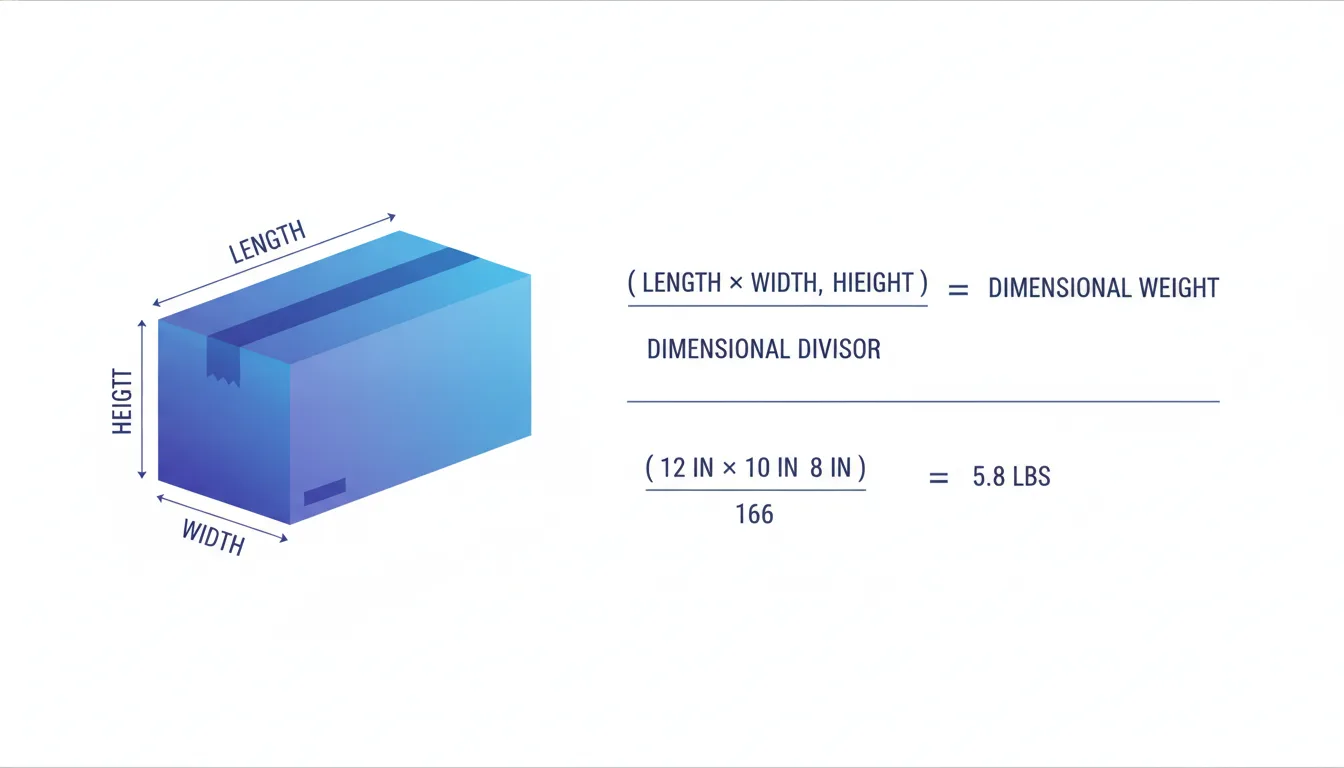
- How is dimensional weight (DIM weight) calculated in your system, and do you rate-shop across carriers per shipment?
Dimensional weight is calculated as length x width x height (in inches) divided by a divisor, typically 139 for domestic ground shipments with major carriers or 166 for many international shipments. The carrier bills the greater of actual weight and DIM weight. A 3PL with automated rate-shopping compares DIM weight versus actual weight across carriers in real time, which meaningfully affects your cost on lightweight but bulky products. The CSCMP Supply Chain Management Definitions and Glossary is a reliable reference for standardized logistics terminology used throughout this comparison.
Frequently Asked Questions
What is the main difference between 3PL ecommerce fulfillment and in-house fulfillment?
In-house fulfillment means your brand owns and operates the warehouse, staff and technology. A 3PL ecommerce provider owns the facility and infrastructure and charges you per order, per unit stored and per shipment. The core trade-off is fixed cost and direct control in-house versus variable cost and operational flexibility with a 3PL.
At what order volume does it make sense to switch from in-house to a 3PL, or vice versa?
There is no universal threshold, but many operations analysts use 3,000 to 5,000 monthly orders as a rough point where a 3PL becomes cost-competitive after accounting for full in-house fixed costs. At 20,000+ stable monthly orders with a narrow SKU catalog, in-house economics can favor keeping operations internal, provided you have optimized carrier contracts and a lean labor model.
Will I lose control of my brand experience if I use a 3PL?
Not necessarily. Most established 3PLs, including YouParcel, support custom packaging, branded inserts, kitting and assembly. What you surrender is direct day-to-day operational authority; what you gain is real-time data visibility through WMS portals, order tracking feeds and BI dashboards. Evaluate specific 3PL capabilities before assuming brand control requires in-house operations.
Can a 3PL handle both my DTC ecommerce orders and my wholesale or retail distribution?
Yes, if the 3PL supports EDI, retailer routing guide compliance, carton labeling requirements and the associated documentation. YouParcel supports both DTC fulfillment and wholesale distribution with EDI and retailer compliance, so brands do not need two separate logistics vendors for the two channels.
How do I evaluate whether a 3PL's shipping rates are actually better than what I can negotiate directly?
Request the 3PL's rate card for your specific parcel profile: weight range, average dimensions, destination zone mix and carrier preference. Compare each service level directly to your current carrier rates or public rate tables, and include fuel surcharges and residential delivery surcharges in the comparison, as those add-ons frequently represent 10 to 25 percent of the base rate and are often where 3PL pooled volume provides the largest savings.
Ready to run the numbers on your specific order profile and see whether a 3PL makes sense for your brand? Talk to an expert at YouParcel and get a fulfillment analysis built around your actual volume, SKU mix and shipping destinations.