


An ecommerce fulfillment company that specializes in apparel must do far more than pick, pack and ship. It must manage size-and-color SKU trees that can produce 50 or more active SKUs from a single style, make smart packaging decisions that protect garments without inflating dimensional weight charges, and run a returns operation capable of inspecting, refolding and restocking hundreds of units a day. YouParcel handles these exact workflows for clothing brands across its fulfillment centers in New Jersey and California.
- Apparel SKU sprawl (one style in six sizes and five colors equals 30 SKUs) demands bin-level slotting, strict barcode discipline and real-time inventory visibility to avoid mis-picks and stockouts.
- The polybag vs box decision affects both dimensional weight cost and garment presentation; the right choice depends on item value, carrier rate cards and brand standards.
- Return rates for online apparel regularly exceed 20 percent, making a structured reverse logistics workflow a core part of apparel fulfillment, not an afterthought.
- Integrations with Shopify, Amazon and 70-plus other platforms let fulfillment teams receive order data, trigger return labels and update inventory records in real time.
Why Apparel Fulfillment Is Operationally Different
General merchandise fulfillment counts SKUs in the dozens. Apparel fulfillment counts them in the hundreds or thousands. A single hoodie style offered in XS through 3XL and in eight colorways produces 48 SKUs before any bundle or gift-set variant is added. Each SKU needs its own bin location, its own reorder trigger and its own pick path in the warehouse. Mistakes at the pick stage, pulling a size M when the order says size L, generate returns that cost more to process than the original shipping fee.
Beyond SKU volume, apparel has properties general freight does not: it compresses, it wrinkles, it is sensitive to moisture and it is often judged on presentation when the customer opens the package. These physical characteristics drive packaging decisions, kitting choices and returns grading criteria that are specific to the category.
SKU Sprawl: How It Happens and How to Control It
Understanding the Size-Color Matrix
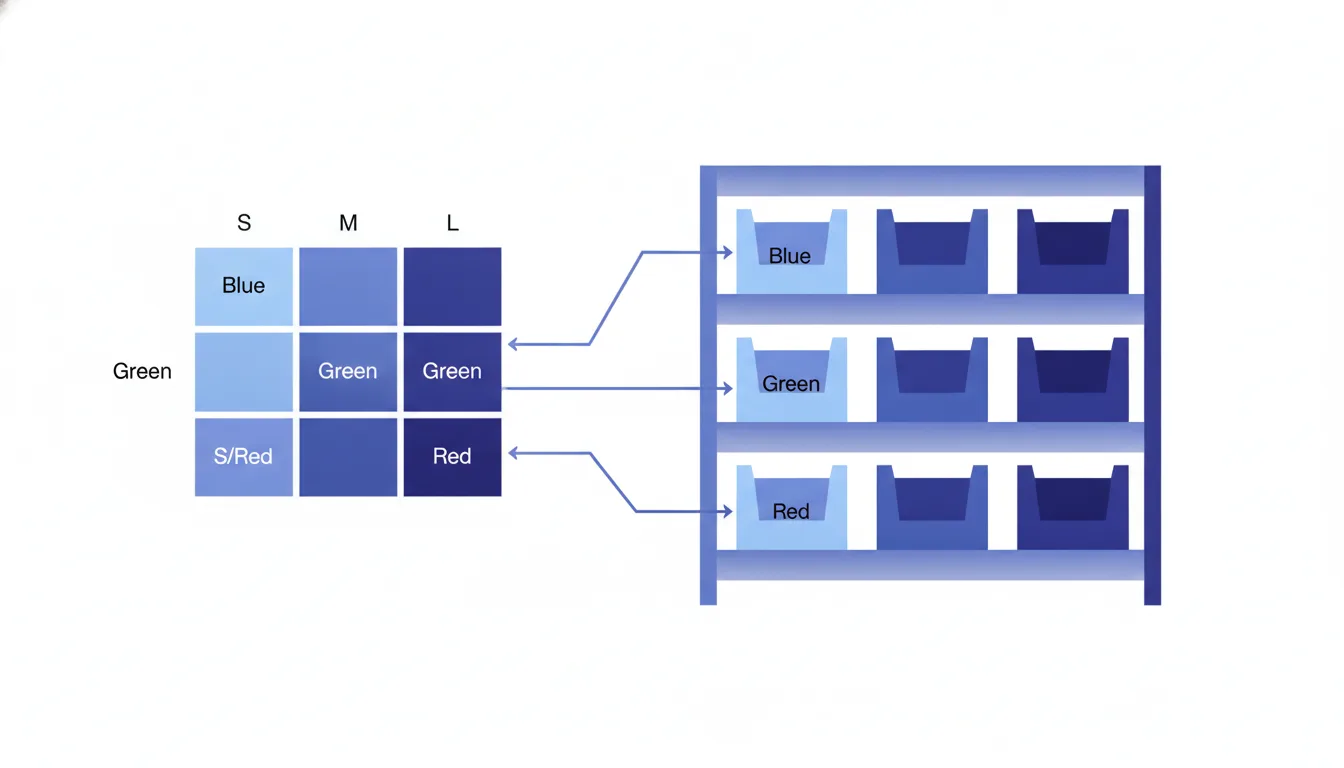
The size-color matrix is the grid that maps every physical variant of a style. Each cell in that grid is a distinct SKU with its own GTIN (Global Trade Item Number) or merchant-defined identifier. When a brand adds a new size run or a seasonal color, the matrix expands multiplicatively. A five-size, four-color style that adds one size and two colors jumps from 20 SKUs to 30, a 50 percent increase in inventory positions without adding a single new product line.
Controlling matrix size is partly a merchandising decision and partly a warehouse-design decision. From a fulfillment standpoint, every SKU that moves fewer than a threshold number of units per week (a common benchmark is five units per week per location) is a candidate for consolidation or discontinuation. Dead SKUs still occupy bin space, appear in cycle counts and generate mis-pick risk.
Bin-Level Slotting for Apparel
Slotting is the practice of assigning each SKU to a specific bin, shelf or pick location inside the warehouse. For apparel, effective slotting means:
- Group sizes within a style on adjacent shelves so a picker moves laterally, not across aisles, when filling a multi-unit order.
- Place high-velocity sizes (typically M, L and XL in adult styles) at mid-shelf ergonomic height to reduce pick time and fatigue.
- Separate colorways that look similar under warehouse lighting to reduce the single most common apparel pick error: correct size, wrong color.
- Use poly-bag pre-labeling at the bin so each polybag already carries the SKU barcode and the picker scans before placing the item in the tote, not after.
- Audit slotting quarterly against velocity data; a color that was a slow mover in spring may become the fastest mover in fall.
Barcode and Label Discipline
Garments frequently arrive from manufacturers with hangtags or woven labels that carry the wrong barcode format, an inconsistent check digit or a barcode that the warehouse management system (WMS) cannot scan reliably. A competent order fulfillment company will receive apparel into a QC (quality control) station where barcodes are verified against the purchase order line before goods move to a bin. Items that fail barcode verification are relabeled before putaway, not after a mis-pick occurs.
YouParcel operates a WMS that logs every scan event, giving brands a digital chain of custody from receiving dock to outbound carrier. That audit trail is what resolves inventory discrepancy disputes before they escalate.
Polybag vs Box: Making the Right Packaging Decision
Packaging choice for apparel is not just a branding question. It directly affects dimensional weight charges, which are the fees carriers calculate based on package volume rather than actual weight. Understanding how dimensional weight works is essential before choosing a packaging format.
How Dimensional Weight Works for Apparel
Dimensional weight (also called DIM weight) is calculated by dividing the package volume in cubic inches by a carrier-specific divisor. USPS, FedEx and UPS each publish their own divisors; for domestic U.S. ground services the divisor has typically been 139 cubic inches per pound, though carrier-specific rate cards should always be confirmed directly with the carrier for the current billing period. The carrier bills the higher of actual weight and dimensional weight.
A folded t-shirt weighs roughly 0.4 lbs but inside a 10 x 8 x 3 inch mailer box it generates a dimensional weight of about 1.7 lbs, meaning the carrier bills more than four times the actual weight. A polybag that collapses around the garment to 10 x 8 x 1 inch produces a dimensional weight closer to 0.6 lbs, a meaningful saving per shipment that compounds across thousands of orders.
Comparison: Polybag vs Mailer Box for Apparel
| Factor | Polybag | Mailer Box |
|---|---|---|
| Dimensional weight impact | Low (collapses to garment profile) | Higher (fixed interior void) |
| Material cost per unit | Lower | Higher |
| Crush and moisture protection | Moisture protection; minimal crush resistance | Good crush and shape protection |
| Unboxing experience | Functional; limited brand expression | Premium; supports tissue, inserts, ribbon |
| Best fit for | Basics, replenishment orders, marketplace fulfillment | Gift purchases, premium DTC, subscription boxes |
| Returns processing speed | Faster (reseal and reuse) | Slower (inspect box condition before reuse) |
| Sustainability profile | Lower material weight; recyclability depends on film type | Higher material weight; often recyclable or FSC-certified |
For most apparel brands shipping through Amazon FBA or marketplace channels, polybags are the default because marketplaces often require them. Amazon, for example, publishes suffocation-warning and thickness requirements for polybags used in its fulfillment network. For DTC brands building a premium customer experience, a branded mailer box with tissue paper and a sticker seal can justify the extra DIM weight cost if average order value is high enough. YouParcel offers kitting and assembly services so brands can add inserts, fold garments to a consistent presentation and choose packaging formats by SKU or by sales channel.
Managing High Return Rates in Apparel
Industry research consistently places online apparel return rates between 20 and 40 percent depending on category and fit complexity. Footwear, formal wear and swimwear tend to sit at the higher end; basics and loungewear tend to sit lower. Whatever the rate, every returned unit is a cost event: inbound shipping, labor for inspection and restocking, potential repackaging and, if the item cannot be resold as new, a markdown or a liquidation loss.
A well-designed reverse logistics operation does not just receive returns. It grades them, routes them and restores inventory value as quickly as possible. YouParcel handles reverse logistics as a structured workflow, not a side operation. You can review how the process connects to the broader supply chain in the context of reverse logistics services for ecommerce brands.
The Apparel Returns Grading Workflow
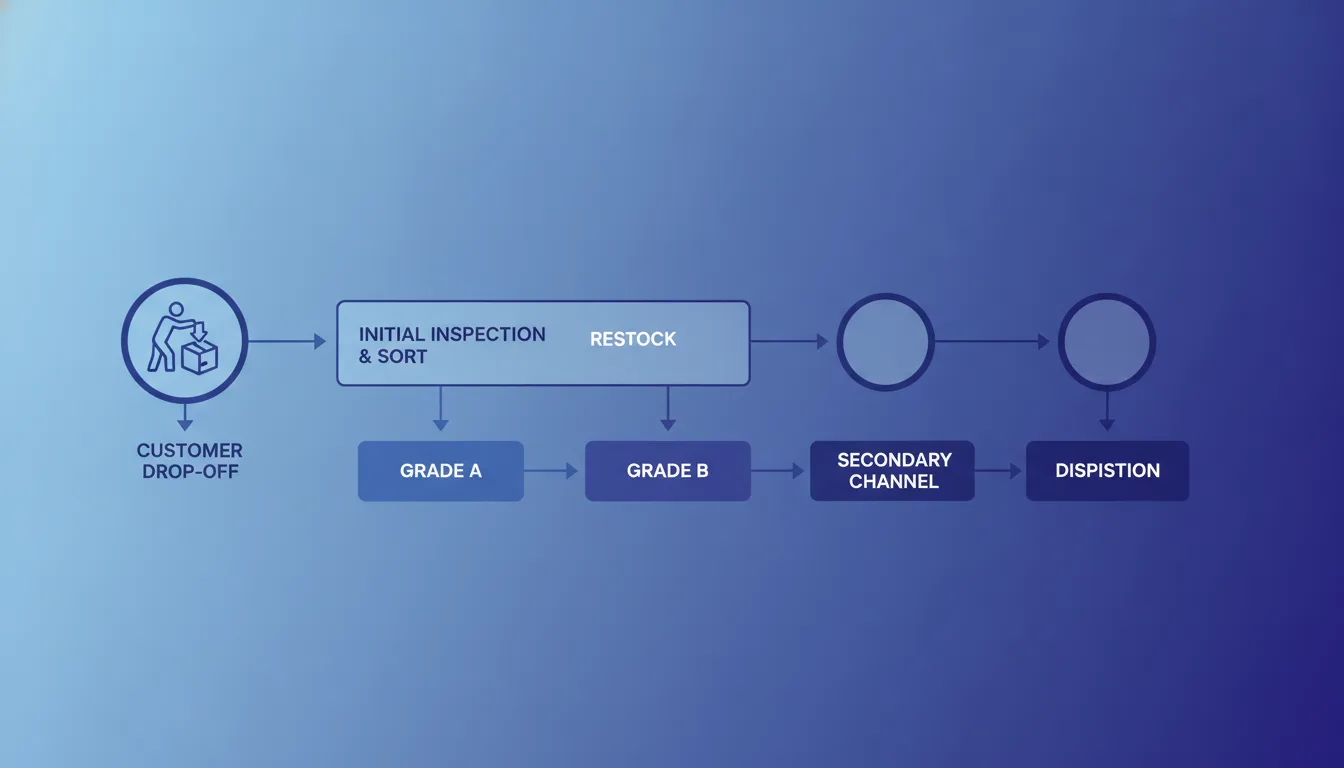
Grading is the step where a returns associate opens each package and assigns the unit a condition code. For apparel, the most common grading tiers are:
- Grade A (Sellable as new): Tags attached, no odor, no visible wear, packaging intact. Item is refolded, rebagged if needed and returned to the active bin within the agreed SLA (service level agreement), typically 24 to 48 hours after receipt at the returns station.
- Grade B (Sellable with disclosure): Tags missing or minor cosmetic issue. Routed to a secondary channel such as a secondary storefront, a bulk liquidator or the brand's own outlet. Not returned to the primary bin.
- Grade C (Not resalable): Damaged, soiled, altered or missing core components. Documented with photos and held for brand disposition instructions. Options include charitable donation, textile recycling or destruction.
The speed of grade-A restock directly affects sellability. A size S in a fast-moving color that sits in a returns queue for five days during a peak season is effectively out of stock during that window, generating lost sales. Setting a clear SLA at the grading station and measuring grade-A restock rate as a KPI (key performance indicator) is standard practice for high-volume apparel operations.
Return Label and Portal Integration
Customers expect a self-service return portal where they select a reason, print a label and drop the parcel. The data from that portal, return reason codes in particular, feeds directly into operational planning. If 35 percent of returns for a specific SKU cite "too small," that is a fit issue the brand can address in product copy or size-guide content before it generates more returns.
YouParcel integrates with Shopify, Amazon and 70-plus other platforms, meaning return authorization data, label generation and inbound tracking updates flow into the same system that manages forward fulfillment. There is no manual reconciliation between a separate returns portal and the WMS. When a returned unit arrives and is graded A, the inventory count updates automatically and the unit is available for the next order.
Carrier Selection for Return Shipments
The cost of a prepaid return label is a real expense. USPS Ground Advantage, FedEx Ground and UPS Ground are common carrier options for domestic returns, with the right choice depending on package weight, pickup density and the brand's negotiated rate card. For lightweight garments under one pound, USPS is often the most cost-effective option. Heavier items, multiple-unit returns or those requiring weekend pickup may favor other carrier options. YouParcel works with USPS, FedEx, DHL, Aramex and EasyPost, which means carrier selection for return labels can be optimized by weight band and geography rather than locked to a single provider.
Multi-Channel Apparel Fulfillment Considerations
Many apparel brands sell on multiple channels simultaneously: their own Shopify store, Amazon, wholesale accounts shipping to retail buyers and potentially international markets. Each channel has different labeling requirements, packaging standards and compliance rules.
Wholesale and retail distribution add EDI (Electronic Data Interchange) requirements and retailer routing guides into the mix. A routing guide is a document a retailer sends to its suppliers specifying exactly how shipments must be packaged, labeled and delivered to their distribution centers. Non-compliance typically triggers a chargeback (a financial penalty deducted from the invoice). YouParcel supports EDI and retailer compliance including routing guide adherence and labeling requirements, which means a brand can ship DTC orders and wholesale B2B orders from the same warehouse without maintaining separate fulfillment operations.
For international apparel shipments, customs classification under the Harmonized System (HS) is critical. Apparel HS codes fall primarily in Chapters 61 (knitted or crocheted) and 62 (woven), and the specific code affects the duty rate applied at the destination country. Brands should work with a licensed customs broker or freight forwarder for classification decisions; YouParcel does not act as importer of record (IOR) but can connect brands with IOR service providers as part of a cross-border shipping solution.
For a broader view of how fulfillment infrastructure supports multi-channel apparel operations, see the full overview of ecommerce fulfillment services at YouParcel.
Technology and Reporting for Apparel Operations
The complexity of apparel fulfillment produces data that, when surfaced correctly, drives better inventory and merchandising decisions. YouParcel provides BI and analytics reporting that lets brands track metrics including:
- Units sold per SKU per week, by channel and by warehouse location
- Return rate by SKU, by return reason code and by sales channel
- Grade-A restock rate and average time from returns receipt to bin-ready status
- Inventory days on hand by size, which highlights size runs that are selling through unevenly and creating excess in slow sizes
- Dimensional weight vs actual weight ratio by packaging format, to quantify the savings from polybag adoption
Real-time tracking and alerts mean operations teams know when a returns shipment is inbound, when a slow-moving bin is approaching its minimum reorder point and when a carrier delay is affecting a specific region. That information allows proactive decisions rather than reactive firefighting.
YouParcel processes 10,000-plus orders per day across multiple marketplaces and has fulfilled apparel and other goods through warehouses in New Jersey (East Hanover, NJ 07936) and Southern California (Rialto, CA 92324). The bi-coastal footprint matters for apparel brands: positioning inventory on both coasts shortens average transit times to customers and can reduce ground shipping costs meaningfully relative to shipping everything from a single central location.
Frequently Asked Questions
What makes apparel fulfillment harder than general ecommerce fulfillment?
Apparel generates far more SKUs per style because of size and color variants, requires packaging decisions that balance carrier cost against brand presentation, and carries return rates that are two to four times higher than general merchandise categories. All three factors demand warehouse slotting, grading and technology capabilities that a general-purpose fulfillment operation may not have configured for clothing specifically.
How do I decide between polybags and boxes for my apparel brand?
Start with dimensional weight math: measure your folded garment dimensions in a polybag versus a box and calculate the DIM weight difference at your carrier's divisor. Then weigh that cost against your unboxing experience goals and average order value. Most marketplace and basics brands default to polybags for cost; premium DTC brands often justify mailer boxes for orders above a certain price threshold.
What is a realistic return rate for online apparel, and how should I plan for it?
Online apparel return rates commonly range from 20 to 40 percent, varying by category, fit complexity and the quality of size guides and product photography. Plan your returns budget and labor allocation using a conservative rate for your specific category, and treat returns processing speed (time from receipt to grade-A restock) as a measurable KPI that affects sellable inventory availability.
Can an order fulfillment company handle both DTC and wholesale apparel orders from the same warehouse?
Yes, provided the fulfillment partner supports EDI, retailer routing guide compliance and the labeling standards required by wholesale buyers. YouParcel supports EDI and retailer compliance alongside standard DTC fulfillment, which allows a single inventory pool to serve both channels without duplicate stock or separate facilities.
How does real-time inventory tracking help with apparel SKU management?
Real-time inventory visibility lets operations teams spot size imbalances before they become stockouts or excess-inventory problems, confirms that returned grade-A units are back in a sellable bin location quickly, and provides the per-SKU velocity data needed to make slotting and reorder decisions based on actual movement rather than estimates.
Ready to build an apparel fulfillment operation that handles SKU complexity, smart packaging decisions and high return volumes without slowing your growth? Talk to an Expert at YouParcel and get a fulfillment plan built for clothing brands.
Related reading: Beauty and Cosmetics Fulfillment: What to Ask a 3PL (Including MoCRA Basics)