

Ecommerce fulfillment services for beauty and cosmetics brands require capabilities well beyond standard pick-and-pack: batch and lot tracking for product recalls, protective packaging for fragile glass and liquid SKUs, and an understanding of FDA Modernization of Cosmetics Regulation Act (MoCRA) obligations that now apply to most cosmetic manufacturers and distributors. YouParcel supports beauty brands shipping domestically and to 100+ countries, with hands-on operational teams and integrations across 70+ platforms.
- MoCRA is active: The FDA's cosmetics registration and product listing requirements under MoCRA are in force. Non-compliance can result in enforcement action. Consult regulatory counsel for your specific situation.
- Batch tracking is non-negotiable: A 3PL that cannot trace a specific lot number through receiving, storage, and shipment creates serious recall and liability exposure for your brand.
- Fragile and liquid SKUs need specialized handling: Inadequate void fill, improper carton sizing, and poor temperature controls drive return rates and customer complaints in beauty categories.
- Your 3PL is not your compliance officer: Operations partners can support compliant workflows, but regulatory responsibility stays with the brand or manufacturer.
Why Beauty Fulfillment Is a Distinct Category
Cosmetics and personal care products sit at the intersection of consumer goods, regulated products, and fragile merchandise. A skincare serum in a 30 ml amber glass dropper bottle, a pressed powder compact with a mirror, and a two-component hair color kit each demand a different pack-out approach. At scale, those differences multiply across hundreds of SKUs, multiple sales channels, and international shipping lanes.
Beyond the physical product, beauty brands carry regulatory obligations that most verticals do not. The FDA, FTC, and CPSC all have authority over aspects of how cosmetics are manufactured, labeled, and sold. When those obligations intersect with fulfillment operations, the 3PL you choose either helps you stay on track or quietly creates compliance gaps.
MoCRA Basics: What the Law Requires (Information Only)
The Modernization of Cosmetics Regulation Act of 2022 (MoCRA) is the most significant update to U.S. cosmetics law in decades. It was signed into law in December 2022 as part of the Consolidated Appropriations Act. Key provisions phased in through 2024 and beyond. The summary below is informational; brands should work with qualified regulatory counsel to assess their specific obligations.
Facility Registration
Under MoCRA, any facility that manufactures or processes cosmetic products for U.S. distribution must register with the FDA. Registration must be renewed biennially. The FDA defines "facility" broadly; whether a contract manufacturer, a co-packer, or a private-label producer, the obligation typically attaches to the entity doing the physical manufacturing or processing, not to a 3PL doing downstream pick-and-pack. Brands should confirm with counsel exactly which entities in their supply chain trigger registration. The FDA's official MoCRA guidance is available at fda.gov/cosmetics/mocra.
Product Listing
Each cosmetic product marketed in the U.S. must be listed with the FDA. Product listings include the product name, applicable cosmetic category, list of ingredients in descending order of predominance, and the responsible person information. Listings must be submitted within 120 days of a product first being marketed and updated annually or when formulations change. Your 3PL does not submit listings on your behalf, but your fulfillment records, including SKU-level product data, should align exactly with what you have listed with the FDA.
Labeling Requirements
MoCRA reinforced and in some cases extended existing labeling obligations under the Federal Food, Drug, and Cosmetic Act (FD&C Act). Required label elements for cosmetics sold in the U.S. generally include: the name and place of business of the responsible person, the net quantity of contents, a list of ingredients using International Nomenclature of Cosmetic Ingredients (INCI) names where applicable, and any required warnings. The FTC's Fair Packaging and Labeling Act (FPLA) also governs net weight declarations and identity statements. CPSC requirements apply to products containing hazardous substances. Brands shipping internationally must account for destination-country labeling rules as well. The FTC's Fair Packaging and Labeling Act page is a useful starting point for U.S. packaging requirements.
Serious Adverse Event Reporting
Responsible persons must report serious adverse events associated with cosmetic use to the FDA within 15 business days. This is a brand-side obligation. A 3PL handling returns should have a documented process for flagging any customer-reported product reactions that come through the returns stream, but the reporting obligation itself belongs to the brand.
What to Ask Your 3PL About Batch and Lot Tracking
Batch tracking (also called lot tracking) is the ability to record which specific production batch of a product was received, stored in which bin or pallet location, picked for which orders, and shipped to which customers. It is the operational backbone of an effective product recall and is increasingly expected by major retail buyers and regulatory bodies.
Ask prospective 3PLs the following before you commit:
- At inbound, do you capture lot numbers and expiration dates at the SKU level? The answer should be yes, and the data should be visible in your merchant portal in real time.
- Do you pick FEFO (First Expired, First Out) by default for perishable or dated beauty products? FEFO is distinct from FIFO (First In, First Out). For skincare and cosmetics with shelf-life dates, FEFO prevents expiring inventory from shipping to customers.
- Can you generate a lot trace report within a defined time window? In a recall scenario, you need to know within hours which orders received units from a specific batch, with full customer address data for notification.
- How do you handle mixed-lot pallets at receiving? A 3PL that commingles lots without tracking creates irreversible data loss.
- What is your process for quarantining a lot flagged for potential recall? Quarantine should be immediate, physical (not just a system flag), and auditable.
YouParcel's warehouse management system captures lot and expiration data at receiving and ties it through to outbound shipment records, supporting the kind of traceability that beauty and personal care brands need for both regulatory readiness and retail compliance.
Fragile and Liquid SKU Packaging: The Questions That Save Returns
Beauty category damage-in-transit and leakage claims are among the most common sources of customer service cost for DTC brands. The root cause is almost always a mismatch between the product's physical characteristics and the pack-out standards the 3PL applies.
Dimensional Weight and Carton Sizing
Dimensional weight (DIM weight) is calculated as length x width x height (in inches) divided by a carrier-specific DIM factor, typically 139 for domestic U.S. ground and air services. Carriers charge whichever is greater: actual weight or DIM weight. Oversized cartons inflate DIM weight charges and also allow products to shift in transit, increasing breakage. A properly sized carton with adequate void fill (kraft paper, air pillows, or molded pulp inserts for glass) both protects the product and controls shipping cost.
Ask your 3PL:
- Do you offer custom carton sizing or right-sizing automation, and what is the smallest box pitch in your carton library?
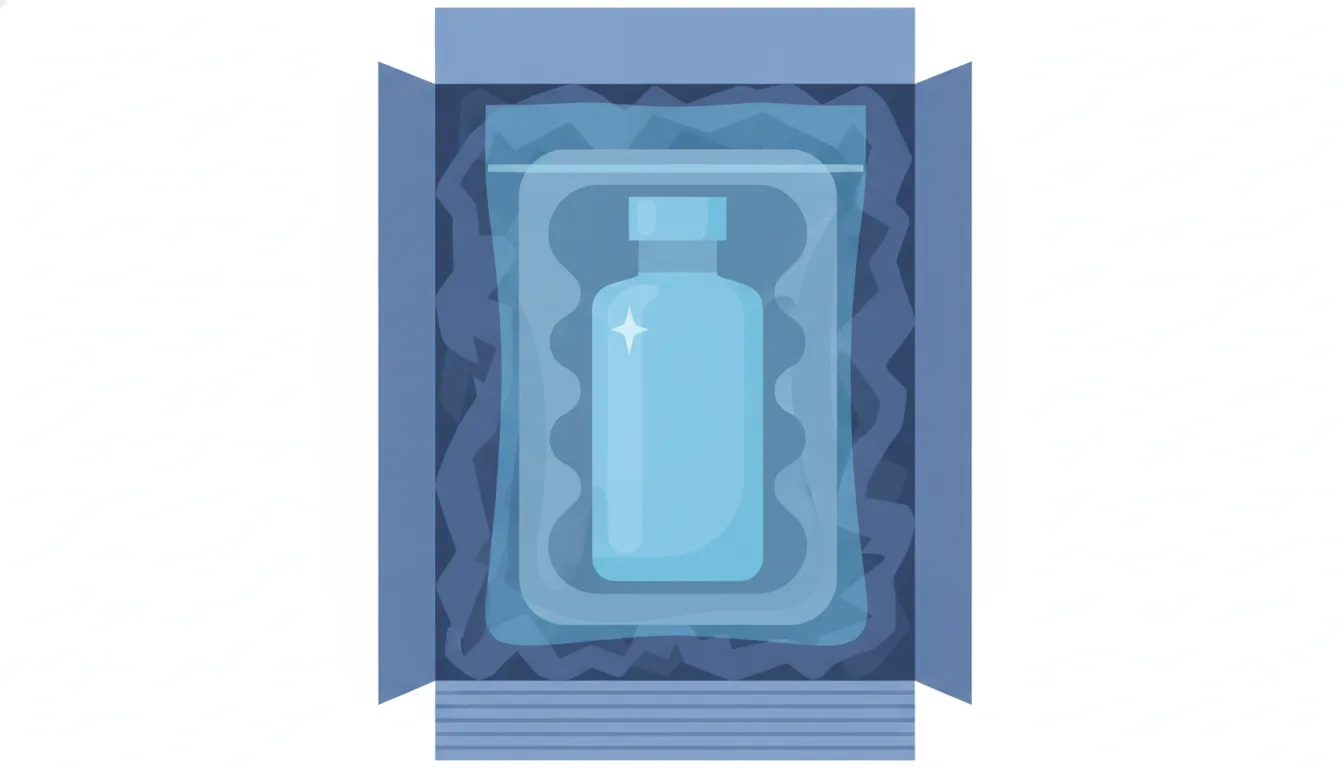
- For glass bottles and jars, what void fill materials do you stock, and do you use product-specific packing instructions (also called pack guides or pack specs)?
- For liquid products, do you apply secondary containment (inner poly bags or shrink wrap) before boxing?
- What is your damage claim rate across beauty SKUs, and how is that measured?
Kitting and Assembly for Beauty Sets
Gift sets, subscription boxes, and limited-edition bundles are revenue drivers in beauty. Kitting is the process of assembling multiple individual SKUs into a single shippable unit with its own SKU or UPC. This can happen at inbound (pre-kitted by the brand) or on demand at the fulfillment center (virtual kitting). On-demand kitting gives brands flexibility to create or retire bundles without committing to pre-built inventory, but it requires clear assembly instructions, quality-check steps, and component-level inventory tracking. YouParcel offers kitting and assembly services as part of its fulfillment operations.
Temperature Sensitivity
Many skincare formulations, natural and organic cosmetics, and certain active-ingredient serums are sensitive to temperature extremes. Warehouses without climate control can cause separation, discoloration, or degradation of product. Ask specifically about summer and winter temperature ranges in storage areas, not just whether the facility is "temperature controlled."
Comparing 3PL Capabilities for Beauty Brands
| Capability | Why It Matters for Beauty | Minimum Acceptable Standard |
|---|---|---|
| Lot and expiration tracking | Recall readiness, FEFO picking, retail compliance | Lot captured at receiving; visible in merchant portal; traceable to order level |
| Fragile pack-out protocols | Damage prevention for glass, liquid, pressed powder SKUs | SKU-level packing instructions on file; void fill stocked; QC step documented |
| Kitting and assembly | Gift sets, subscriptions, limited editions | On-demand and pre-kitted options; component inventory tracked separately |
| Returns processing | DTC return rates in beauty can exceed 10%; restockable vs. non-restockable grading needed | Grading by condition (sealed, opened, damaged); lot-level restock or quarantine |
| Labeling and compliance support | Retailer routing guides, hazmat labels for aerosols, INCI-compliant inserts | Ability to apply labels per retailer spec; EDI support for wholesale channels |
| International shipping | Cross-border duty, HS code accuracy, destination labeling | Carrier partnerships (DHL, FedEx, Aramex, USPS); HS code documentation support |
| Platform integrations | Shopify, Amazon, and marketplace sync for real-time inventory | Native or API integration with your sales channels |
Retail and Wholesale Distribution for Beauty Brands
Beauty brands that sell through specialty retailers, department stores, or regional grocery chains face a compliance layer that goes beyond DTC: retailer routing guides. A routing guide specifies carrier requirements, carton labeling formats (typically UCC-128 or GS1-128 barcodes), pallet configuration, advance ship notice (ASN) transmission via EDI, and sometimes product-level labeling requirements. Failure to comply results in chargebacks, which can be significant.
YouParcel supports EDI and retailer compliance requirements, including routing guide adherence and labeling, for brands distributing through wholesale channels. If your brand is moving from DTC-only to an omnichannel model, confirm that your 3PL has existing retailer compliance experience before your first purchase order ships.
Cross-Border Cosmetics: Duty, Classification, and Labeling
Beauty and personal care products shipped internationally require accurate HS (Harmonized System) codes for customs classification. Common HS chapters for cosmetics include Chapter 33 (essential oils, perfumes, cosmetics, toiletries). Misclassification results in customs delays, incorrect duty assessment, and potential seizure. U.S. de minimis duty-free entry provisions have been suspended, meaning low-value cosmetics shipments entering the U.S. from abroad are now subject to applicable duties regardless of value.
For brands exporting, many destination countries require in-country language labeling, safety assessments, or local regulatory registration before cosmetics can be sold. These are brand-side obligations. YouParcel does not act as importer of record (IOR); brands should work with a licensed customs broker or freight forwarder familiar with cosmetics regulations in their target markets to structure IOR arrangements correctly.
YouParcel ships to 100+ countries and works with carriers including DHL, FedEx, Aramex, USPS, and EasyPost, with real-time tracking and alerts across international lanes. For a closer look at how these capabilities come together, see YouParcel's ecommerce fulfillment services and the DTC fulfillment capabilities overview.

Returns Management for Beauty and Cosmetics
Returns (reverse logistics) in beauty require careful grading. An unopened, sealed product in perfect condition may be resaleable. An opened or used product typically cannot be restocked for regulatory and hygiene reasons. A 3PL processing beauty returns should:
- Grade each return on arrival as: sealed and resaleable, opened but intact, or damaged and unsaleable.
- Quarantine opened or used items immediately, separate from sellable inventory.
- Record lot numbers for any returned product to maintain traceability.
- Flag any returns that include customer-reported adverse reactions so the brand can assess serious adverse event reporting obligations under MoCRA.
- Provide disposition reports so the brand can decide on liquidation, donation, or destruction for non-resaleable units.
Return windows and policies are set by the brand, not the 3PL, but the 3PL's process determines whether the returns data you receive is actionable or a black box.
Technology and Visibility Requirements
Beauty brands managing multiple SKUs, frequent launches, and limited-edition drops need real-time inventory visibility to avoid overselling and to catch expiring stock before it ships. At minimum, your fulfillment technology stack should provide:
- Real-time inventory levels by SKU, lot, and location across all warehouse sites
- Order status and tracking from pick confirmation through carrier delivery, with alerts for exceptions
- Reporting on inventory aging, expiry dates approaching, and lot-level stock positions
- Integration with your ecommerce platform (Shopify, Amazon, etc.) so inventory syncs automatically across channels
YouParcel integrates with Shopify, Amazon, Salesforce, Tableau, and 70+ other platforms, and provides BI and analytics alongside real-time tracking. For brands operating at scale, those data feeds are what allow operations teams to make decisions on replenishment, promotion, and discontinuation without guessing.
Frequently Asked Questions
Does my 3PL need to register with the FDA under MoCRA?
In most cases, no. MoCRA facility registration applies to entities that manufacture or process cosmetic products, not to 3PLs performing downstream warehousing and order fulfillment. However, the definition of "processing" in FDA guidance has nuance, so consult regulatory counsel if your 3PL does any labeling, repackaging, or secondary processing of your products.
What is lot tracking and why does it matter for beauty fulfillment?
Lot tracking (also called batch tracking) is the practice of recording which specific production batch of a product was received, stored, and shipped with which orders. It is the operational foundation of a recall response: without it, a brand cannot identify which customers received affected product. For beauty brands, lot tracking also supports FEFO picking to prevent expiring inventory from shipping.
Can a 3PL help with MoCRA product listing or labeling compliance?
A 3PL can apply labels to your products according to specifications you provide and can manage compliant pack-out workflows, but the 3PL does not submit FDA product listings or design your label copy. Those obligations belong to the brand or the responsible person as defined under MoCRA. Brands should work with regulatory counsel to ensure their listings and labels meet current FDA, FTC, and CPSC requirements.
How do I manage beauty kits and gift sets with a 3PL?
Most experienced 3PLs offer two approaches: pre-kitted inventory (the brand ships assembled sets to the warehouse) and on-demand kitting (the 3PL assembles component SKUs into finished sets per order or in bulk). On-demand kitting gives greater flexibility for seasonal sets and bundle testing, but requires clear written assembly instructions, a quality check step, and component-level inventory records so you always know what is available to build.
What happens to beauty returns that cannot be restocked?
Non-resaleable beauty returns, typically opened, used, or damaged units, should be quarantined and disposed of according to your brand's documented policy and any applicable local disposal regulations. Common disposition options include liquidation to secondary-market buyers, donation (where legally permissible for cosmetics), or destruction with a certificate of destruction. Your 3PL should provide a returns disposition report so you have a record for inventory accounting and regulatory purposes.
Ready to evaluate whether your current fulfillment operation is built for beauty? Talk to an Expert at YouParcel to walk through your SKU mix, channel setup, and compliance requirements with a team that handles 10,000+ orders a day across multiple marketplaces.