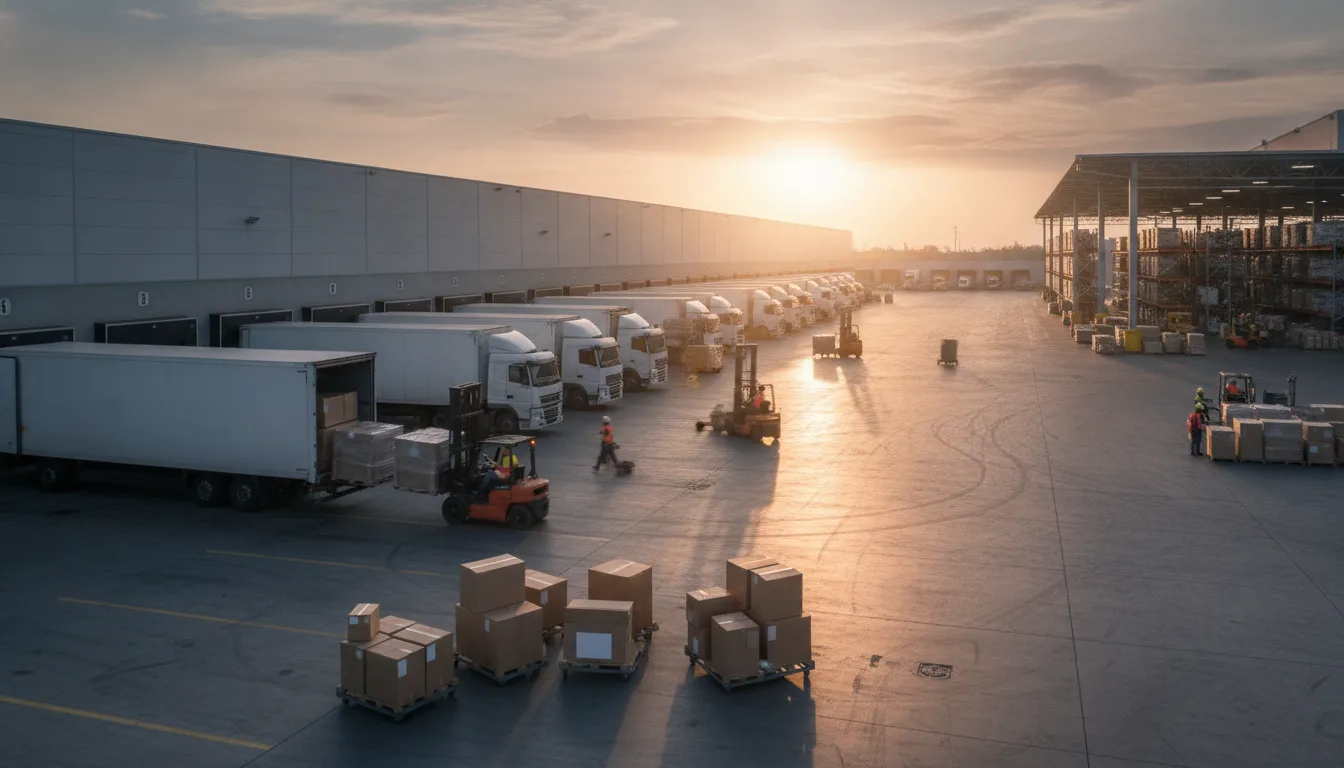


Back-to-school season is one of the fastest-moving demand windows in ecommerce order fulfillment. For US brands selling apparel, electronics, school supplies, dorm essentials or sporting goods, the window from mid-July through late August compresses weeks of volume into a handful of shipping days. YouParcel handles 10,000-plus orders a day across multiple marketplaces, and the brands that come through the season cleanly are the ones that start planning in May, not July.
Key takeaways
- Inbound freight for back-to-school should arrive at your fulfillment center by late June to allow receiving, inspection and putaway before the first promotional wave hits.
- Promotional spikes require written capacity conversations with your 3PL at least six to eight weeks in advance.
- Staffing, kitting and labeling decisions made now determine whether your 3PL can absorb a 2x to 3x daily order surge without service-level degradation.
- Real-time tracking, BI dashboards and clean SKU data are the operational backbone that separates brands that scale cleanly from those that fall behind on SLAs.
Why back-to-school is a genuine fulfillment challenge
The National Retail Federation reported that back-to-school and back-to-college combined represented over $135 billion in planned consumer spending in 2024, making it the second-largest retail season after the winter holidays. The demand does not build gradually. It spikes inside a narrow band: parents and students typically complete most purchasing between mid-July and the third week of August, driven by school start dates that cluster in those same weeks.
For an ecommerce brand, that means your fulfillment center must be fully stocked, staffed and tested before the window opens. A late inbound shipment, an uninspected return backlog from spring, or an unplanned promotional event can cascade into missed ship dates, customer service tickets and negative marketplace reviews that affect rank well into Q4.
Building your inbound freight timeline
Working backward from a July 14 soft-launch date gives you a practical inbound schedule. Ocean freight from Asia to the US West Coast is running roughly 25 to 35 transit days, plus two to five days drayage and two to five business days receiving at the warehouse. Air freight cuts transit to four to seven days but at a significantly higher per-unit cost. Domestic ground freight from a US supplier or a port deconsolidation point is typically three to seven business days.
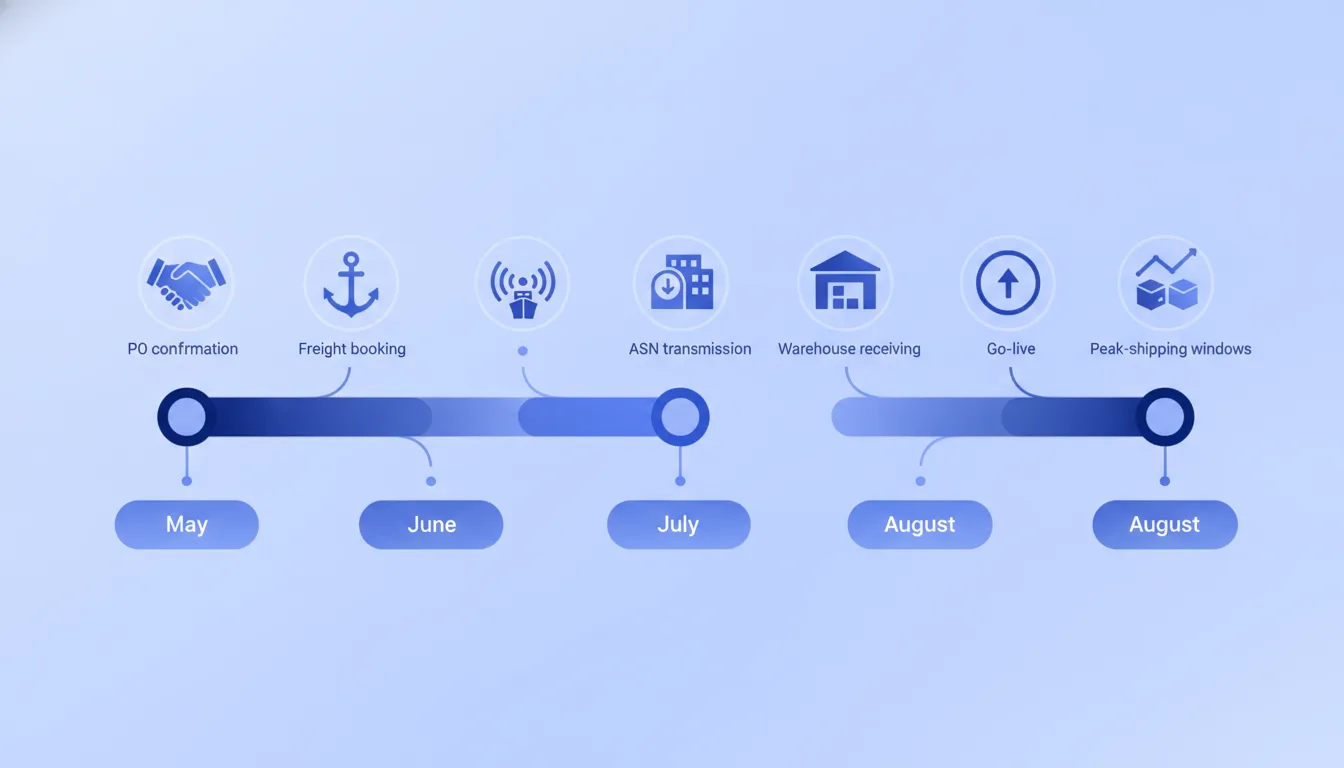
- Confirm purchase orders and supplier production dates by the first week of June. Any delay at the factory compounds every downstream step.
- Book freight capacity early. Transpacific and transatlantic lanes tighten in June as other seasonal shippers move holiday product. Waiting until late June often means paying spot-rate premiums or accepting later vessel departures.
- Send an advance shipping notice (ASN) to your 3PL the moment cargo ships. An ASN is a structured electronic document, often transmitted via EDI 856, that tells the warehouse exactly what is arriving, in how many cartons, with what SKU breakdown. Clean ASNs cut receiving time significantly compared to undocumented arrivals.
- Schedule receiving appointments at your fulfillment center. YouParcel facilities in New Jersey, California and Illinois require appointment booking for inbound freight. Walk-in pallet arrivals are deprioritized and can sit on a dock for days during peak intake periods.
- Allow a buffer for inspection and putaway. Plan for three to five business days between cargo arrival and inventory becoming pick-ready. If your product requires kitting, assembly or custom labeling, add another two to four days depending on volume and complexity.
A target inbound arrival date of June 23 through June 30 at your primary fulfillment center gives adequate buffer before a mid-July promotional launch.
Structuring your promotional calendar
Back-to-school promotions in ecommerce tend to fall into three phases. Understanding each phase helps you sequence inventory positioning and staffing correctly.
| Phase | Typical window | Demand character | Fulfillment priority |
|---|---|---|---|
| Early BTS | July 7 to July 18 | Deal-seekers, teachers, early shoppers | Inventory available; standard SLA testing |
| Prime peak | July 19 to August 8 | Mass market; highest single-day volumes | Full staffing; kitting and bundle support; real-time inventory sync |
| Late rush | August 9 to August 25 | Last-minute buyers; college move-in | Expedited shipping options; clear cut-off communication |
Some marketplace platforms schedule their own mid-summer sale events in July. Specific dates are announced by the platforms themselves, typically with four to six weeks of notice. If you sell on Amazon, Shopify or other channels, monitor your seller portal and seller communications in June for any sale event windows that could compress your demand curve further.
Promotional SKU and bundle planning
Promotions that bundle multiple SKUs, for example a five-piece stationery set or a backpack-plus-lunch-bag combo, require kitting and assembly work at the warehouse. This is not a same-week request. Your 3PL needs:
- Written kitting instructions with diagrams or photos of the finished unit
- Barcode specifications for the assembled unit (FNSKU for Amazon FBA, your own UPC for DTC or Shopify)
- Completed component inventory in the warehouse before kitting begins
- A count of how many assembled units you need and by what date
Submit kitting requests to your 3PL at least three weeks before the promotional launch date, with all components in stock. Submitting on short notice during a staffing-intensive period is one of the most common causes of BTS fulfillment delays.
The staffing conversation with your 3PL
Third-party logistics providers (3PLs) allocate labor, dock doors and equipment across all clients simultaneously. A 3PL that handles thousands of orders daily manages labor planning weeks in advance. If you have not told your 3PL about your expected July and August volume uplift, you may not get the capacity you need when the orders arrive.
What to share with your 3PL, and when
The following conversation should happen no later than mid-June, and ideally earlier:
- Projected daily order volume for each week from July 7 through August 25, with your best-case and worst-case range. If your typical daily volume is 500 orders and you expect 1,200 to 1,500 during peak BTS, say so explicitly.
- SKU count and complexity. Are you adding 20 new SKUs for the season? Are any of them oversized, fragile, or subject to special packaging requirements? The answer changes labor and space planning.
- Kitting and assembly scope. How many assembled bundles do you need, and what is the component count per kit? This is labor-intensive work that must be scheduled separately from pick-and-pack.
- Carrier and service-level requirements. What percentage of orders do you expect to ship via USPS Ground Advantage versus FedEx or a two-day service? Carrier mix affects both cost and staffing at the pack station.
- Returns expectations. Back-to-school does generate returns, particularly in apparel and electronics. Agree in advance on a returns processing SLA (service-level agreement) so that refurbished or restockable units cycle back into sellable inventory quickly.
What a good 3PL response looks like
After you share projections, a capable fulfillment partner should confirm available dock appointments for inbound freight, confirm labor capacity for your projected volume, identify any constraints, and provide a point of contact for day-of escalations. If your current 3PL cannot give you these answers in writing, that is a signal worth examining. These signs that your inventory management strategy has room for improvement are worth reviewing before you commit inventory to a peak season.
Inventory positioning: one warehouse or two?
Split inventory positioning, placing stock in both an East Coast and a West Coast fulfillment center, reduces average transit time to the customer and cuts shipping cost per order because parcels travel shorter distances. For a brand doing meaningful BTS volume across the continental US, the tradeoff is worth evaluating.
YouParcel operates fulfillment centers at 20 Farinella Dr, East Hanover, NJ 07936 serving the NY/NJ metro region, and at 3700 S. Riverside Ave, Rialto, CA 92324 serving Southern California and the western US. Positioning inventory in both locations typically brings two-day ground delivery within reach of 90-plus percent of the US population without paying air freight rates.
The practical question is whether your volume justifies splitting. A brand shipping fewer than 100 orders a day may find that dual-node complexity outweighs the shipping savings. A brand at 500-plus daily orders during BTS will almost certainly benefit from at least a rough East-West split based on historical zip code distribution in orders.
Technology and visibility requirements
A fulfillment operation running at 2x to 3x normal volume surfaces problems fast. Real-time inventory visibility is not optional during BTS; it is operational infrastructure.
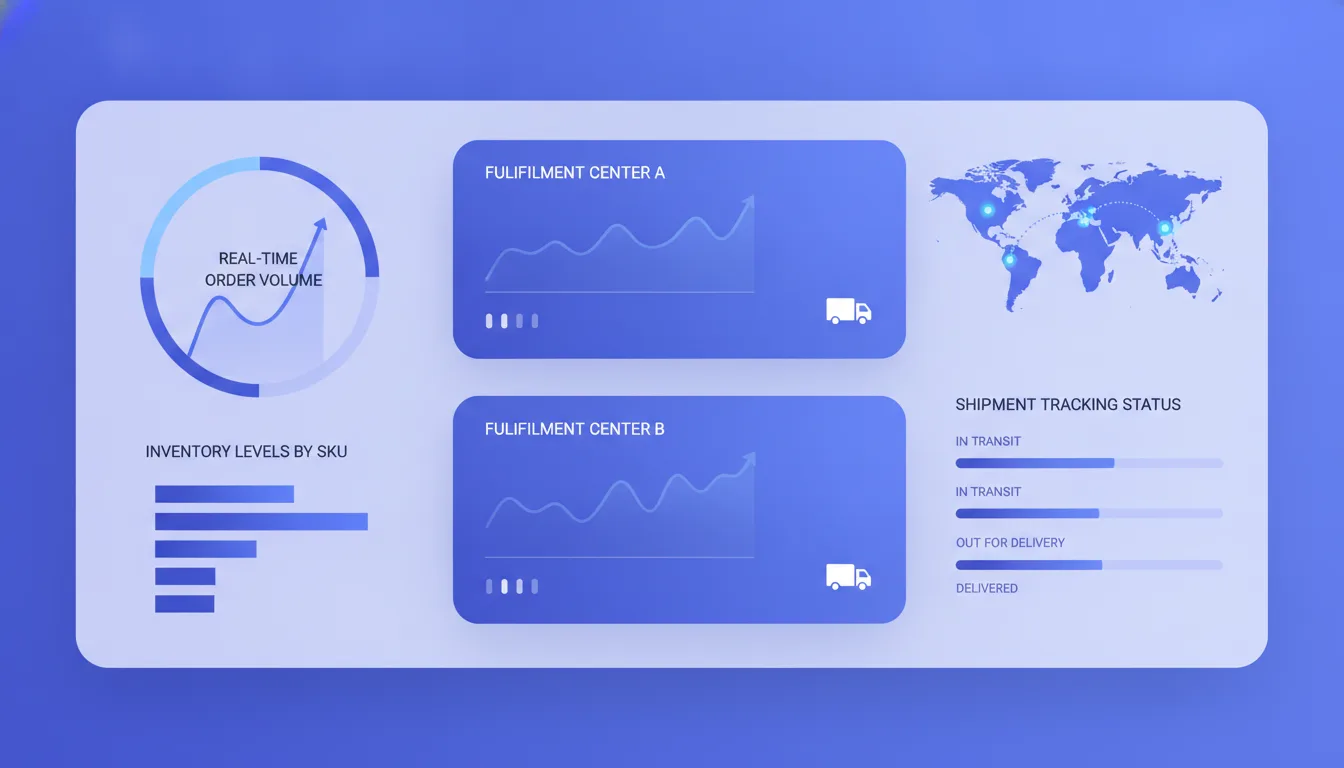
YouParcel integrates with Shopify, Amazon, Salesforce, Tableau and 70-plus other platforms, which means order data, inventory levels and tracking events flow automatically between your storefront and the warehouse management system. During a BTS surge, you need to know:
- Exactly how many units of each SKU are pick-ready versus reserved versus in receiving
- Which orders are at risk of missing the carrier pickup cutoff
- What the current fill rate is per SKU so you can suppress a product listing before you oversell
- Real-time tracking status so customer service can answer WISMO (where is my order) tickets without calling the warehouse
If your current setup requires a manual inventory export from the warehouse each morning, that lag will cost you during peak. Integrating your storefront with your 3PL before BTS begins is a technical task that typically takes one to three weeks including testing. Do not start that project in July.
Carrier selection and shipping cost management
YouParcel works with USPS, FedEx, DHL, Aramex, EasyPost and other carriers. Carrier selection during BTS involves balancing delivery speed, cost and reliability under volume pressure. A few practical points to consider:
- Dimensional weight (DIM weight) applies on virtually all parcel carriers. DIM weight is calculated by multiplying package length by width by height and dividing by a divisor, typically 139 for domestic US parcels on most carriers. If your BTS kits are light but bulky, such as foam pencil cases or collapsible lunch boxes, DIM weight will govern the billable weight. Optimize your packaging size before the season opens.
- Carrier surcharges for peak periods are typically announced by major carriers in advance. Review your carrier agreements or ask your 3PL what surcharges apply in July and August for your package profiles.
- USPS Ground Advantage offers competitive two- to five-day transit for lightweight parcels and is often the lowest-cost domestic option for small BTS items. It does not carry a guaranteed delivery date, so communicate realistic delivery windows to customers clearly.
International shipping considerations for BTS
If you sell internationally, BTS creates cross-border complexity. YouParcel ships to 100-plus countries. Key points for the 2026 season:
- The US de minimis duty-free threshold for imported goods has been suspended. Low-value parcels entering the US are subject to duties regardless of value. If any of your back-to-school product is sourced internationally and imported for fulfillment, factor customs duties into landed cost calculations.
- For brands shipping BTS product to international customers, customs documentation, HS codes and declared values must be accurate. Errors cause clearance delays that can push delivery beyond the school-start deadline.
- YouParcel does not act as importer of record (IOR). Brands should work with a licensed customs broker or freight forwarder to identify the appropriate IOR arrangement for their supply chain.
Returns planning for the BTS season
Back-to-school returns typically arrive in late August through September as students discover sizing issues or duplicate purchases. Planning your returns process before the season means you are not building the returns workflow while processing it.
Agree with your 3PL on a returns SLA that specifies how quickly received returns are inspected, what condition grades trigger restock versus quarantine versus disposal, whether a return portal or prepaid label program is part of the flow, and how return inventory updates are pushed back to your storefront. A restocked item sitting in a receiving queue during a live sale is lost revenue.
A condensed BTS planning checklist
- Confirm purchase orders and production dates with suppliers: by June 6
- Book inbound freight capacity (ocean or air): by June 13
- Submit kitting and assembly specifications to 3PL: by June 20
- Share volume projections and staffing needs with 3PL: by June 20
- Send ASNs for all inbound shipments: as cargo departs origin
- Confirm warehouse appointments for inbound freight: by June 23
- Complete storefront-to-3PL integration testing: by June 30
- Target inbound cargo at fulfillment center: June 23 to June 30
- Verify inventory is pick-ready in WMS: July 10
- Launch early BTS promotions: July 14 onward
- Monitor real-time fill rates and WISMO volume daily during peak
- Agree on returns SLA and activate returns portal: before July 14
For a deeper look at how YouParcel structures pick-and-pack, inventory management and multi-channel sync, the ecommerce order fulfillment services overview covers the full operational picture from receiving through returns.
Frequently asked questions
When should I send my back-to-school inventory to a 3PL?
Aim for inbound cargo to arrive at your fulfillment center between June 23 and June 30. This allows three to five business days for receiving, inspection and putaway before a mid-July promotional launch, and additional time if kitting or assembly is required.
How much lead time does a 3PL need to staff for a BTS volume surge?
Most 3PLs plan labor four to eight weeks in advance for significant volume increases. Share your projected daily order volume and any kitting scope with your 3PL no later than mid-June, and ideally by early June to compete for the best staffing allocation.
What is an advance shipping notice and why does it matter for BTS?
An ASN is a structured document, often an EDI 856 transaction, sent to the warehouse before a shipment arrives. It lists what SKUs are coming, in how many units and cartons. Clean ASNs cut receiving time significantly and reduce the risk of inventory sitting on a dock during a time-sensitive season.
Should I split inventory between East Coast and West Coast fulfillment centers for back-to-school?
At higher order volumes, splitting inventory between an East Coast facility such as YouParcel in East Hanover, NJ and a West Coast facility such as Rialto, CA can put two-day ground delivery within reach of most US customers at lower shipping cost than air. The benefit typically becomes material at 300 to 500 or more daily orders during peak.
Does US de minimis still apply to BTS shipments in 2026?
No. The US de minimis duty-free threshold has been suspended. Imported goods entering the United States, including low-value BTS parcels, are subject to applicable customs duties. Factor this into your landed cost planning and ensure all import documentation is accurate to avoid clearance delays.
Ready to get your back-to-school fulfillment plan in place? Talk to an Expert at YouParcel and walk through inbound timing, staffing capacity and carrier options before the season opens.