

A customs broker is a licensed professional who prepares and files the documentation required to import goods into the United States on behalf of an importer. With US de minimis duty-free treatment suspended for all countries since August 29, 2025, every commercial shipment entering the US, regardless of value, is subject to formal Customs and Border Protection (CBP) review, duty assessment, and entry filing. YouParcel works with licensed customs brokers as part of its freight forwarding and customs service, so brands moving from parcel-level imports to container or pallet shipments have one point of contact from origin to warehouse.
- De minimis duty-free entry is suspended under EO 14324, effective August 29, 2025 (CBP CSMS #66065494): no low-value parcel enters the US duty-free.
- Any container or pallet shipment entering the US now requires a formal CBP entry, filed by or through a licensed customs broker (a customs house broker, or CHB).
- A broker classifies goods under the Harmonized Tariff Schedule (HTS), calculates duties and fees, files entry documents, arranges surety bonds, and coordinates release with CBP on the importer's behalf.
- Brands that previously sent low-value parcels directly to US customers must now structure their supply chain around bulk imports, formal entries, and a broker relationship, or face delays, penalties, and unexpected landed costs.
Why the end of de minimis changes the import equation
Until August 2025, Section 321 of the Tariff Act allowed goods valued at $800 or less per person per day to enter the US duty-free and with minimal documentation. That threshold was used widely by direct-to-consumer brands shipping individual orders from overseas warehouses. Executive Order 14324 suspended that treatment for all countries, effective August 29, 2025, as confirmed by CBP in CSMS message #66065494 (CBP CSMS #66065494, August 29, 2025).
What that means operationally: every parcel, every pallet, every container now triggers a duty event. There is no value floor below which goods slip through without assessment. For brands that were shipping thousands of individual low-value orders into the US, the administrative and cost burden of per-parcel duty collection is prohibitive. The practical alternative is to consolidate inventory into bulk shipments, import in volume into a US fulfillment center, and fulfill domestically from there.
That shift from parcel imports to bulk imports is precisely where a customs broker relationship becomes non-negotiable. For information on how de minimis suspension affects your overall cross-border strategy, see our full breakdown of the US de minimis rule change.
What a customs broker actually does on a formal entry
A formal entry is the standard CBP process for commercial shipments, as opposed to informal entries (used for lower-value personal imports) or the now-suspended Section 321 de minimis pathway. For any ocean or air freight shipment entering the US as commercial cargo, a formal entry is required. Here is what a licensed broker does at each stage.
Step 1: Obtain a power of attorney from the importer
Before a broker can act, the importer of record (the entity legally responsible for the shipment) must grant a written power of attorney. This authorizes the broker to sign entry documents, make statements to CBP, and pay duties on the importer's behalf. The importer of record can be a US or a foreign party, but from January 5, 2027 a foreign importer must be CTPAT validated or use a CTPAT validated customs broker (see below). Note: YouParcel does not act as importer of record; brands must arrange their own IOR or work with a third-party IOR service. Your customs broker can walk you through IOR options.
Step 2: Classify every product under the HTS
The Harmonized Tariff Schedule of the United States (HTSUS) is a 10-digit classification system that determines the duty rate for every product category. A broker reviews the commercial invoice, product specifications, and country of origin, then assigns the correct HTS code. Getting this wrong has real consequences: underclassification can trigger penalty proceedings; overclassification means overpaying duty. For a container of mixed goods, a broker may classify dozens of distinct line items. The correct HTS code also determines whether Section 301 additional duties, antidumping duties, or countervailing duties apply on top of the base Most Favored Nation (MFN) rate. The USITC HTSUS database is the authoritative public reference.
Step 3: File the Importer Security Filing (ISF) before vessel departure
For ocean shipments, CBP requires an Importer Security Filing, commonly called a 10+2 filing, no later than 24 hours before the vessel departs the foreign port. The ISF includes the seller, buyer, ship-to party, manufacturer, country of origin, HTS codes, container stuffing location, and consolidator. Late or inaccurate ISF filings carry liquidated damages of up to $5,000 per violation. Most brokers file the ISF as a standard service when they are engaged early enough in the shipment cycle. If you are new to ocean freight, the ISF is one of the strongest reasons to engage a broker before the goods leave the factory.
Step 4: Prepare and file the entry summary (CBP Form 7501)
When the vessel or aircraft arrives at a US port of entry, the broker files a formal entry. The core document is CBP Form 7501, the Entry Summary. It lists the HTS classifications, country of origin, entered value (the transaction value or an alternative basis under CBP valuation rules), applicable duty rates, and the calculated duties owed. The broker also arranges a surety bond: a continuous bond (covering all entries in a calendar year) or a single-entry bond for one-off shipments. The bond guarantees that duties will be paid; CBP will not release goods without one.
Step 5: Coordinate examination and release
CBP may select a shipment for examination, either documentary (review of paperwork only) or physical (a devanning of the container). A broker communicates with CBP on the importer's behalf, responds to requests for additional information, and coordinates with the port or terminal to arrange examinations. Physical examinations add cost and delay, so experienced brokers often advise on documentation practices that reduce examination risk, such as detailed packing lists and accurate commercial invoices.
Step 6: Pay duties and obtain the customs entry bond liquidation
Once CBP releases the shipment, duties are paid, typically within 10 business days of entry filing for most entry types. CBP then liquidates the entry, which finalizes the duty assessment. If CBP disagrees with the classification or value, it issues a rate advance notice; the broker can file a protest on the importer's behalf within 180 days of liquidation. This protest window is an often-overlooked benefit of having a broker: it preserves the importer's right to dispute an incorrect assessment after the goods have already moved.
What documentation a broker needs from you
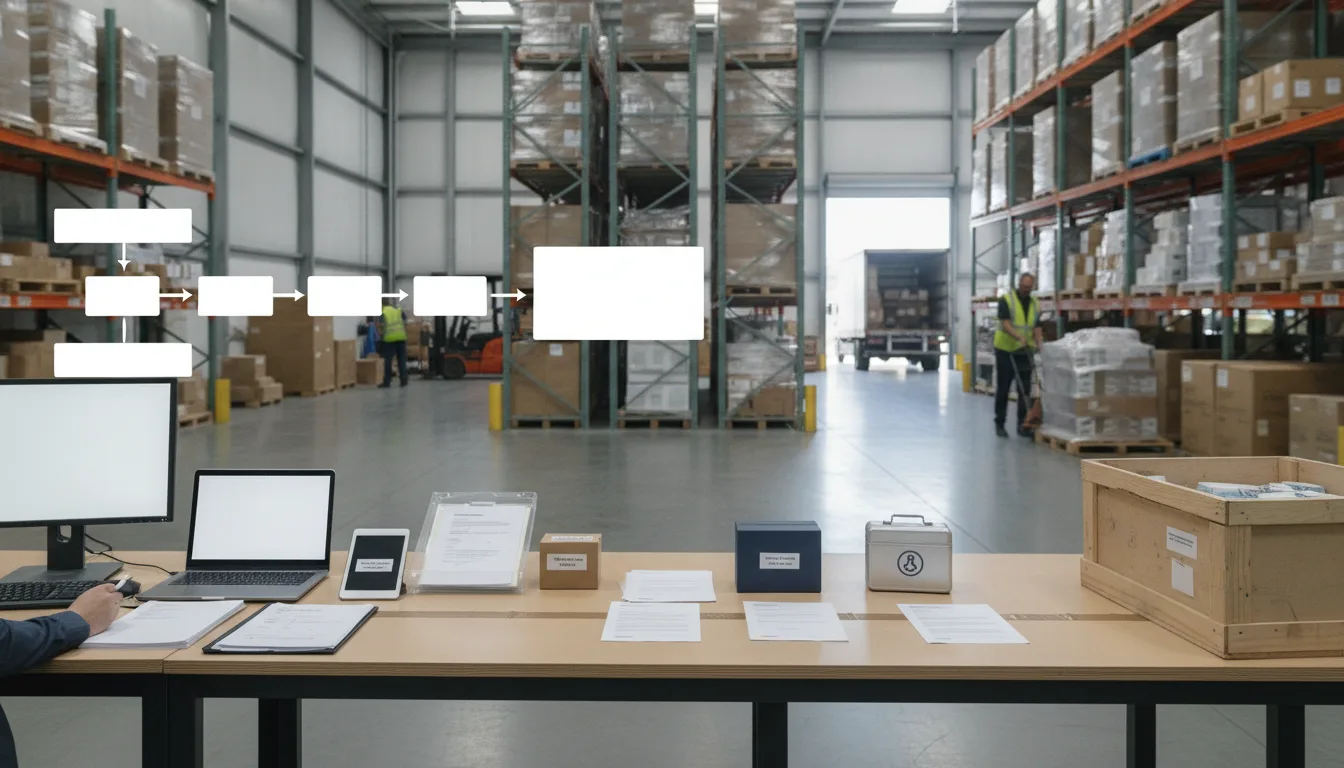
A broker cannot file accurately without complete documentation from the shipper. For a container or pallet shipment, plan to provide the following before or at time of arrival.
| Document | What it contains | Who prepares it |
|---|---|---|
| Commercial invoice | Seller and buyer details, product descriptions, quantities, unit values, country of origin, Incoterms | Exporter / seller |
| Packing list | Carton-level breakdown of contents, weights, dimensions | Exporter / seller |
| Bill of lading (ocean) or air waybill | Carrier-issued transport document; identifies shipper, consignee, port of loading, port of discharge | Freight carrier |
| Certificate of origin | Certifies the country where goods were manufactured; determines whether preferential tariff rates apply | Exporter / chamber of commerce |
| Customs bond | Surety guarantee to CBP; covers duties, taxes, and fees | Broker arranges via surety company |
| FDA prior notice (food, supplements, cosmetics) | Required for FDA-regulated products entering the US | Importer or broker |
| TSCA certification (chemicals) | Toxic Substances Control Act compliance statement for applicable products | Importer or broker |
The commercial invoice is the single most important document. CBP uses it to verify entered value and origin. Undervaluing goods on an invoice to reduce duties is a federal offense; a broker will not file on an invoice they believe is fraudulent.
How duty is calculated on a formal entry
Duty on a formal entry is calculated as a percentage of the entered value, using the applicable HTSUS rate. The entered value is usually the transaction value: the price actually paid or payable for the goods. Additional duty components can stack on top.
| Duty component | Description | Who sets it |
|---|---|---|
| MFN / Column 1 duty rate | Base rate from the HTSUS for countries with normal trade relations | Congress / USTR |
| Section 301 additional duties | Additional tariffs on goods from specific countries, including China; rates vary by HTS code and country | USTR |
| Antidumping / countervailing duties (ADD/CVD) | Case-specific duties on goods found to be sold below cost or subsidized by a foreign government | International Trade Commission / Commerce |
| Merchandise Processing Fee (MPF) | CBP user fee: 0.3464% of entered value, with a minimum of $31.67 and a maximum of $614.35 per entry (rates as of 2025) | CBP |
| Harbor Maintenance Fee (HMF) | 0.125% of entered value for ocean entries arriving at maintained ports | CBP |
A single HTS code can carry MFN duty plus Section 301 additional duty plus MPF plus HMF. For goods from countries subject to current trade actions, the combined rate can be substantial. This is why landed cost planning, done before purchase orders are placed, is essential. A broker can run a duty estimate for your product mix; treat it as directional information and confirm current rates because tariff schedules are subject to change by executive or regulatory action.
Why brands that relied on de minimis now need a broker relationship, not a one-off broker transaction
Many DTC brands used parcel forwarding or dropshipping arrangements precisely because individual low-value orders required no formal entry and no broker. That operational model no longer exists for US-bound shipments. The shift to bulk imports introduces complexity that compounds over time: classification rulings evolve, duty rates change with trade actions, ISF deadlines are unforgiving, and protests must be filed within strict windows.
An ongoing broker relationship, rather than a one-off transaction, provides several practical advantages. The broker builds familiarity with your product catalog and HTS classifications, reducing the risk of error on repeat shipments. They can apply for binding ruling requests from CBP, which provide written classification certainty before goods are imported. They monitor trade action updates, such as new Section 301 lists or exclusion renewals, that affect your duty exposure. And they maintain the continuous bond that covers all your entries, rather than requiring a new bond for every shipment.
For brands scaling into the US market, the move to formal bulk entries also creates the opportunity to build a smarter inbound supply chain: consolidate at origin, ship in full container loads (FCL) or less-than-container loads (LCL), import once per month or quarter rather than thousands of times per day, and fulfill domestically from a US warehouse. YouParcel coordinates freight forwarding and customs support alongside its US fulfillment network, so the goods clear customs and arrive at the right warehouse without a handoff gap.
Incoterms and who pays duty: what a broker needs to know
Incoterms (International Commercial Terms, published by the International Chamber of Commerce) define who bears cost and risk at each stage of a shipment. The Incoterm on the commercial invoice directly affects the broker's work because it determines who the importer of record is and who is responsible for arranging customs entry.
Under DDP (Delivered Duty Paid), the seller is responsible for all costs including import duties; the seller typically acts as, or appoints, the importer of record. Under DAP (Delivered at Place) or FCA (Free Carrier), the buyer is the importer of record and therefore the entity that must engage a customs broker. Brands new to formal US entries often discover mid-shipment that their supplier quoted DDP but cannot legally act as a US importer of record, leaving the buyer scrambling to appoint a broker at port. Clarifying Incoterms before the purchase order is signed is not a paperwork detail; it determines who files the entry and who pays duty.
The January 5, 2027 CTPAT requirement for foreign importers
Under a CBP interim final rule published on November 6, 2026, a foreign importer of record may enter goods only if it is CTPAT validated or designates a licensed customs broker that is. A license alone is no longer enough for these importers. Among foreign importers, only Canadian companies are currently eligible for CTPAT validation themselves, and only 643 of 3,100 active customs brokers are validated.
A US company is not automatically a US importer. It must be organized and located in the United States and either have at least 51% beneficial ownership by US citizens or lawful permanent residents with control, or directly own a significant amount of unencumbered US real estate. For what this means for inbound stock, see our guide to the foreign importer rule and US warehouse inventory.
What to look for in a licensed customs broker
In the United States, customs brokers must hold a license issued by CBP under 19 U.S.C. 1641. Individuals take a written CBP examination; corporations must have at least one licensed individual broker. When evaluating a broker for your bulk import program, consider the following.
- License verification: CBP maintains a public list of licensed brokers. Verify the license is active before engaging.
- CTPAT status: if your importer of record is foreign, ask for written confirmation that the broker is CTPAT validated before January 5, 2027.
- Category experience: A broker experienced with apparel will know the textile fiber content labeling requirements that an electronics-focused broker may not. Ask for experience with your HTS chapters.
- Port coverage: A broker with a permit at the port where your goods arrive avoids the need for a remote broker arrangement, which adds a step and sometimes a fee.
- Technology: Modern brokers use ACE (Automated Commercial Environment), CBP's import data system. Ask whether their system provides visibility into entry status, examination notices, and liquidation dates.
- Communication standards: Entry deadlines are measured in hours, not days. Confirm how quickly the broker responds to CBP requests for information and how they communicate examination notices to you.
YouParcel coordinates with licensed customs brokers as part of its freight forwarding offering but does not itself hold a customs broker license or act as importer of record. The information in this article is intended to help you understand the process; confirm all classifications, duty rates, and filing requirements with a licensed customs broker before importing.
From customs clearance to fulfillment: closing the gap
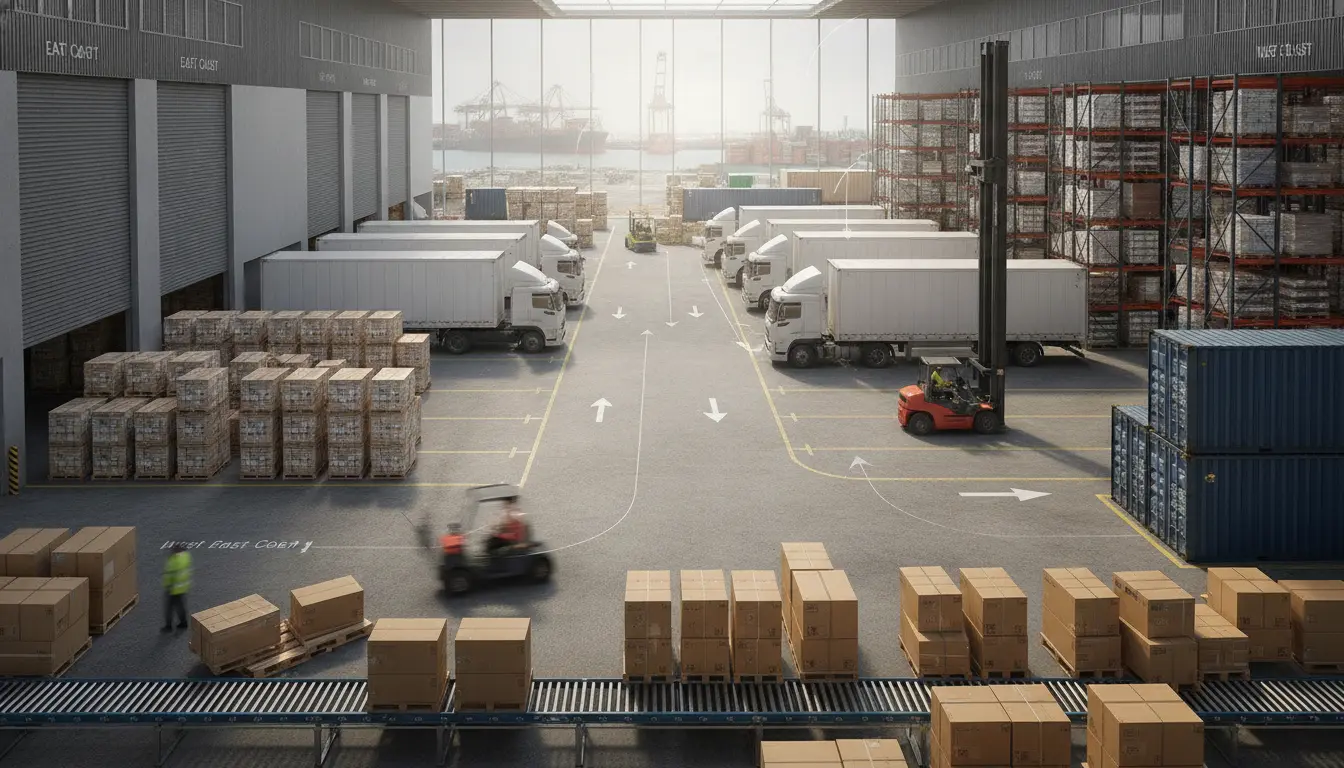
Clearing customs is the beginning of the inbound supply chain, not the end. Once CBP releases a container, the goods still need to move from the port to a warehouse, be received and inventoried, and be positioned for outbound fulfillment. For brands entering the US market, that last mile of the inbound journey, drayage from port to warehouse and proper receiving at the 3PL, is where delays and costs accumulate if the logistics partner and the customs broker are not coordinated.
YouParcel operates fulfillment centers in East Hanover, NJ (20 Farinella Dr, East Hanover, NJ 07936) and Rialto, CA (3700 S. Riverside Ave, Rialto, CA 92324), positioned to receive inbound ocean freight from the Port of New York and New Jersey and the ports of Los Angeles and Long Beach respectively. Coordinating freight forwarding, customs clearance, and 3PL receiving through one relationship reduces the documentation handoff gap and the risk of a container sitting at port accruing demurrage charges while the warehouse waits for arrival confirmation.
Frequently asked questions
Do I need a customs broker for every import shipment into the US?
Technically, importers can file their own entries as self-filers, but CBP's ACE system and the complexity of classification, bond requirements, and examination coordination make self-filing impractical for most commercial importers. Practically speaking, any recurring bulk import program benefits from a licensed broker relationship, and many freight forwarders and carriers require a broker for formal entries on behalf of their clients.
How much does a customs broker charge for a formal entry?
Broker fees vary by entry complexity, number of HTS lines, and volume of shipments. Common charges include a base entry filing fee, an ISF filing fee, an add-on per additional HTS line, and a bond fee. For accurate pricing relevant to your shipment profile, speak directly with a licensed broker or contact YouParcel's freight team to discuss coordinated options.
What happens if my goods are misclassified on a formal entry?
CBP can issue a bill for unpaid duties, assess a penalty for negligence or fraud, and in serious cases seize the goods. If you discover a misclassification after liquidation, your broker can file a protest within 180 days. Getting the HTS code right before the entry is filed is far less costly than correcting it afterward.
Can my overseas supplier act as the US importer of record and handle customs for me?
An overseas supplier can act as importer of record under a DDP Incoterm arrangement, but they need an accepted CBP identifier and, from January 5, 2027, a CTPAT validated customs broker acting on their behalf unless they are CTPAT validated themselves. Many overseas suppliers cannot or will not take on US IOR liability. Confirm the arrangement contractually before the goods ship, and consult a licensed broker or trade attorney on the specific requirements.
Is de minimis suspension permanent?
As of August 29, 2025, de minimis duty-free treatment is suspended under EO 14324. Congressional legislation to formally repeal the statutory exemption has been moving through the legislative process. For the current status, consult CBP's official CSMS messages and Federal Register notices, and confirm the applicable rules with a licensed customs broker before structuring your import program around any assumption about de minimis treatment.
To discuss how YouParcel can coordinate inbound freight, customs broker relationships, and US warehouse receiving for your bulk import program, talk to an expert on the freight team.