


Order fulfillment during Cyber Week is not simply a faster version of a normal week. It is a compressed, high-stakes sequence of wave planning, priority pick-and-pack runs, coordinated carrier pickups, and real-time inventory decisions that a 3PL like YouParcel runs at scale across its warehouse network. For brands that want parcels delivered before Christmas, the operational preparation starts now, not on Black Friday morning.
- USPS 2025 holiday send-by dates are Ground Advantage December 17, Priority Mail December 18, and Priority Mail Express December 20, meaning Cyber Week orders shipped after those dates carry real delivery risk.
- USPS is applying a peak surcharge on Ground Advantage, Priority Mail, Priority Mail Express, and Parcel Select from October 5, 2025 through January 18, 2026, raising the landed cost of every parcel shipped in that window.
- Brands that share clean inventory data, promotional forecasts, and packaging specs with their 3PL at least two weeks before Black Friday give operations teams enough lead time to slot inventory, build wave plans, and pre-position carrier capacity.
- YouParcel processes 10,000-plus orders per day across multiple marketplaces and can absorb Cyber Week spikes, but the brands that perform best are the ones who treat pre-peak communication as a deliverable, not an afterthought.
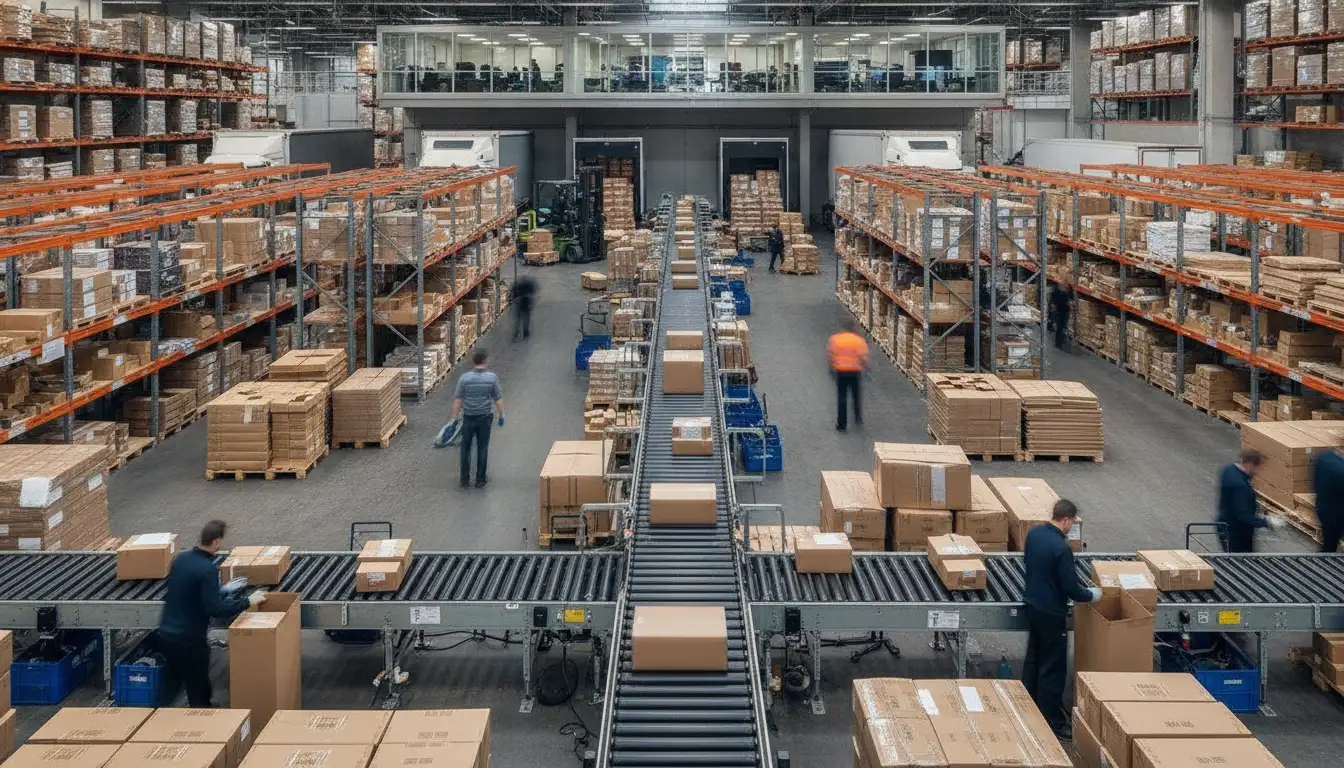
What peak season actually means inside a fulfillment center
Peak season in ecommerce fulfillment is typically defined as the period from mid-October through the first week of January, when order volumes can be two to five times higher than a baseline August week. Cyber Week, covering Black Friday through Cyber Monday, is the single densest cluster inside that period. For a 3PL, peak is not one event. It is an extended operational mode that requires staffing adjustments, inventory positioning, carrier negotiation, and inbound receiving cutoffs weeks before the first promotional email goes out.
Understanding what happens inside the four walls of a fulfillment center during Cyber Week is useful for two reasons. First, it helps brands set realistic expectations about cut-off times and transit windows. Second, it shows exactly where preparation on the brand side directly determines whether a customer gets a package before Christmas or after.
The 2025 USPS holiday surcharge and send-by dates: what brands must know now
USPS introduced a peak-period price change that applies to Ground Advantage, Priority Mail, Priority Mail Express, and Parcel Select from October 5, 2025 through January 18, 2026. Supply Chain Dive reported this surcharge when USPS filed the rate adjustment in early October, confirming that every parcel moving through those service levels carries a higher per-piece cost during the entire holiday window. Brands absorbing carrier cost increases should factor this into their Q4 margin models rather than discovering it on a December invoice.
The 2025 USPS holiday send-by dates for standard residential delivery are as follows:
| USPS Service | 2025 Send-By Date | Typical Transit (business days) |
|---|---|---|
| Ground Advantage | December 17, 2025 | 2 to 5 days |
| Priority Mail | December 18, 2025 | 1 to 3 days |
| Priority Mail Express | December 20, 2025 | 1 to 2 days |
Sources: Saltbox holiday shipping deadlines 2025; Supply Chain Dive, USPS 2025 holiday price increases, October 2025.
Working backward from December 17 for Ground Advantage: a Cyber Monday order placed on December 1 needs to leave the fulfillment center no later than December 16 to meet that deadline, assuming a one-business-day pick-pack-and-ship cycle. That is a narrow window. Brands shipping high-volume promotional orders on Cyber Monday should discuss same-day or next-business-day ship commitments with their 3PL well in advance.
How wave planning works during Cyber Week
Wave planning is the process of grouping orders into batches, called waves, that move through a fulfillment center at scheduled intervals. Each wave is sized to match available pick labor, packing station capacity, and the outbound carrier pickup window. During a normal week a 3PL might run two or three waves per day. During Cyber Week, operations teams often run five or more waves in a single day, starting before dawn and running through late-afternoon carrier pickups.
The wave plan during peak season typically works like this:
- Order download and triage: Orders from connected marketplaces and storefronts, including Shopify, Amazon, and 70-plus other platforms that YouParcel integrates with, are pulled into the warehouse management system (WMS) and sorted by ship-method priority. Priority Mail Express orders are batched first. Ground Advantage orders fill later waves.
- Zone allocation: Each wave is broken into pick zones. A picker assigned to Zone A handles SKUs stored in that aisle section and does not cross to Zone B, reducing travel time significantly on a congested floor.
- Pick execution: Pickers use scan-verified workflows. Each item is scanned at the shelf location and again at the tote to confirm the right SKU and quantity before it leaves the pick zone.
- Pack station processing: Totes arrive at packing stations where associates select the right box or poly mailer, apply any required inserts (packing slips, marketing collateral, kitting components), and seal the package. Dimensional weight (DIM weight) rules apply: most carriers divide the package volume in cubic inches by a divisor of 139 for domestic parcels, so right-sizing cartons directly affects postage cost on every single order.
- Label generation and manifest: Labels print at the pack station from live carrier rate logic. Manifests are generated by ship window so the carrier dock can sort outbound by pickup time.
- Sortation and staging: Packages move to the outbound sortation area, organized by carrier and service level, and staged for the pickup truck or trailer.
- Carrier pickup: USPS, FedEx, DHL, and other carriers arrive at scheduled windows. The manifest is tendered electronically. Packages are scanned into carrier custody, and tracking events fire in real time.
During Cyber Week, every step in this sequence is under time pressure simultaneously. A wave that starts thirty minutes late can cascade into a missed carrier pickup, which means those orders sit overnight and ship the next business day. That one-day slip can be the difference between delivery before Christmas and delivery after.
Carrier pickup cutoffs: the number that actually controls your customer experience
The public-facing order cut-off time that brands advertise, for example "order by 11 PM for same-day shipping," is only valid if the fulfillment center can complete pick, pack, and label within the time remaining before the carrier pickup window closes. That window is not negotiable. FedEx, USPS, and DHL arrive at a scheduled time. If a pallet is not staged and manifested, it does not go on the truck.
During Cyber Week the carrier pickup windows at most high-volume fulfillment centers are compressed further because the carriers themselves are running extended routes. This is why YouParcel coordinates pickup schedules with carriers in advance of peak, not reactively. Brands should ask their 3PL partner for the actual last-unit-shipped time by carrier and service level for each day of Cyber Week, and communicate that directly to customers in promotional messaging.
What happens to inbound receiving during Cyber Week?
Most 3PLs, including YouParcel, enforce inbound receiving cutoffs in the two to three weeks before Cyber Week. The reason is straightforward: dock labor that is receiving and putting away new inventory is not available to pick and pack outgoing orders. Inbound volume that arrives during Cyber Week without prior coordination can sit on the dock for 24 to 72 hours before it is slotted and available for order fulfillment.
For brands, this means two things. First, all replenishment inventory intended to cover Black Friday and Cyber Monday demand should arrive at the fulfillment center by mid-November. Second, any new SKUs or promotional bundles that require kitting and assembly, such as gift sets or promotional multi-packs, need to be completed and slotted before the inbound cutoff, not arriving for assembly during the peak itself.
What brands should send their 3PL before Black Friday
The most common reason a brand underperforms during Cyber Week is not a carrier failure or a staffing shortage at the warehouse. It is insufficient advance information from the brand itself. Here is a practical checklist of what operations teams need to build an accurate wave plan and staffing model:
| What to Send | Why It Matters Operationally | Recommended Lead Time Before Black Friday |
|---|---|---|
| SKU-level promotional forecast (units by day) | Drives wave sizing, pick labor scheduling, and carrier capacity pre-booking | 3 to 4 weeks |
| Kitting and bundle specifications | Assembly labor must be scheduled and components pre-picked before order volume hits | 3 to 4 weeks |
| Promotional insert or packaging changes | Pack station setup and supply ordering require lead time; last-minute changes slow throughput | 3 weeks |
| Confirmed inbound shipment details (ASN) | Advance ship notices (ASNs) allow receiving teams to pre-slot locations and schedule dock appointments | 2 to 3 weeks |
| Customer-facing order cut-off times for review | Your 3PL must confirm that the advertised cut-off is achievable given actual pickup windows | 2 weeks |
| Returns authorization rules for the holiday period | Return merchandise authorization (RMA) logic and restocking disposition rules affect post-peak labor planning | 2 weeks |
Inventory positioning across multiple warehouses
YouParcel operates fulfillment warehouses in New Jersey, California, and Illinois. For brands that distribute inventory across those locations, Cyber Week adds a layer of planning complexity: which SKUs should be in which warehouse, and in what proportion? The goal is to minimize the carrier zones a package crosses on its way to the customer. A package shipped from the New Jersey facility to a customer in Connecticut moves through fewer zones and typically costs less and arrives faster than the same package shipped from California.
The practical rule for Cyber Week inventory split is to match inventory distribution to your customer geography. If 60 percent of your US orders ship to the Northeast and Mid-Atlantic, the majority of your bestselling SKUs should be in the East Hanover, NJ facility at 20 Farinella Dr. If your West Coast customer base is comparable, the Southern California facility at 3700 S. Riverside Ave, Rialto, CA should carry a proportionate share. Brands that have not yet analyzed their order-destination zip code distribution should pull that data before finalizing inbound shipments in October and November.
Pick and pack fulfillment services during peak: accuracy over speed
Pick and pack fulfillment describes the process of retrieving a specific SKU from storage, packing it into the right container with the correct documentation, and routing it to outbound. During Cyber Week, throughput pressure is high, but accuracy cannot be sacrificed. A mispick that ships the wrong item generates a return, a replacement shipment, and a customer service contact, all of which multiply across thousands of orders and consume capacity that should be going toward forward fulfillment.
Scan-verify workflows at both the pick location and the pack station are the operational control that keeps error rates manageable at high throughput. YouParcel uses real-time tracking and alerts so that exceptions, a failed scan, a stockout, a weight discrepancy at the pack station, trigger immediate queue intervention rather than propagating through the wave. This is what allows the operation to process high daily order counts with the accuracy that brands and their customers expect.
For a deeper look at how the pick and pack process is structured across normal and peak periods, see our guide to building a bulletproof fulfillment strategy.
USPS peak surcharges and carrier cost management
The USPS peak surcharge running through January 18, 2026 affects Ground Advantage, Priority Mail, Priority Mail Express, and Parcel Select. For brands shipping predominantly domestic parcels under two pounds, Ground Advantage is often the default choice. The surcharge means those per-parcel costs are higher for the entire Q4 and early Q1 period.
Carrier diversification is one practical response. Where Ground Advantage is cost-effective for lightweight, non-urgent shipments, regional carrier options through aggregators or multi-carrier routing logic can reduce per-label cost on certain zip code combinations. YouParcel works with USPS, FedEx, DHL, Aramex, and EasyPost, among other carriers, so rate-shopping across those networks is built into the fulfillment workflow rather than managed manually by the brand.
Dimensional weight also matters more during peak when carrier surcharges are compounding. The standard domestic DIM divisor used by major carriers is 139 (length x width x height in inches, divided by 139, compared to actual weight, with the higher value used for rating). A product that weighs 0.5 pounds but ships in an 8x6x4 inch box has a DIM weight of about 1.4 pounds, and that is what gets rated. Right-sizing packaging during Cyber Week is not a cosmetic improvement; it is a direct cost lever on every order.
Post-Cyber Week: the return wave that starts December 26
Peak season fulfillment planning is incomplete without a plan for the return wave that follows. The National Retail Federation has consistently reported that holiday return rates exceed standard return rates, and operations teams know that the inbound return volume in the first week of January can rival a Cyber Week outbound day. Brands should communicate their holiday return window and disposition rules, whether items are restocked, quarantined for inspection, or liquidated, to their 3PL before Black Friday, not after the returns start arriving.
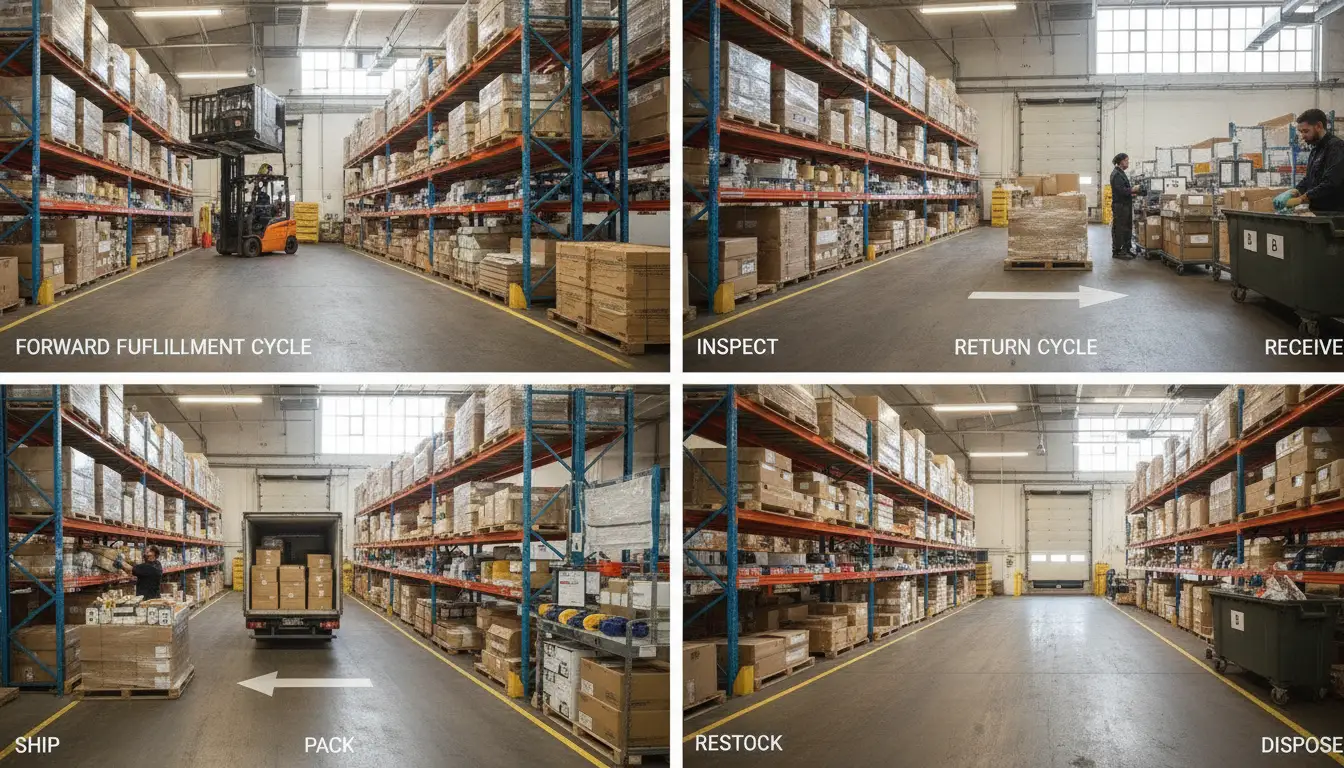
YouParcel handles reverse logistics alongside forward fulfillment, which means return merchandise authorization (RMA) processing, grading, restocking, and disposal routing are part of the same operational setup rather than a separate contract with a separate vendor. This matters during peak because return processing labor and inbound receiving compete for the same dock and floor space. Planning the return flow in advance keeps both streams moving.
To understand how ecommerce order fulfillment connects to your broader logistics setup, including returns, inbound freight, and multi-channel selling, visit the YouParcel fulfillment services overview.
Frequently asked questions
When should I send my Black Friday promotional forecast to my 3PL?
Three to four weeks before Black Friday is the practical minimum. That lead time allows your 3PL to adjust wave plans, pre-schedule pick labor, confirm carrier capacity, and receive any replenishment inventory before inbound receiving cutoffs go into effect. Sending the forecast the week before Black Friday significantly limits what operations teams can do with it.
What are the 2025 USPS holiday shipping deadlines?
USPS has published the following send-by dates for standard Christmas delivery in 2025: Ground Advantage by December 17, Priority Mail by December 18, and Priority Mail Express by December 20. These dates apply to packages tendered to USPS on or before those dates; packages leaving a fulfillment center after those dates carry meaningful delivery risk for pre-Christmas arrival.
Does the USPS peak surcharge apply to all my holiday shipments?
The 2025 USPS peak surcharge applies to Ground Advantage, Priority Mail, Priority Mail Express, and Parcel Select shipments accepted from October 5, 2025 through January 18, 2026. Any domestic parcel moving through those service levels during that window is subject to the higher rate. Brands should review their per-unit shipping cost assumptions for Q4 and Q1 budgets accordingly.
What is wave planning and why does it matter during Cyber Week?
Wave planning is the practice of batching orders into scheduled processing groups that match pick labor, packing capacity, and carrier pickup windows. During Cyber Week a fulfillment center may run five or more waves per day, each timed to reach the outbound dock before a specific carrier arrives. A delayed wave can mean orders miss the pickup window and ship a full day later, which compresses the time available before USPS send-by dates.
How does multi-warehouse inventory positioning help during peak season?
Distributing inventory across East Coast and West Coast fulfillment locations, such as YouParcel's New Jersey and California facilities, reduces the number of carrier zones a package crosses before reaching the customer. Fewer zones typically mean lower shipping cost and shorter transit time. Brands that analyze their order-destination geography and position inventory accordingly before Black Friday generally achieve better delivery performance and lower per-order shipping costs during Cyber Week.
Cyber Week rewards preparation, not reaction. If you want to review your cut-off times, inventory split, kitting requirements, or carrier mix before Black Friday, the YouParcel operations team is ready now. Talk to an expert and get your peak fulfillment plan in place.