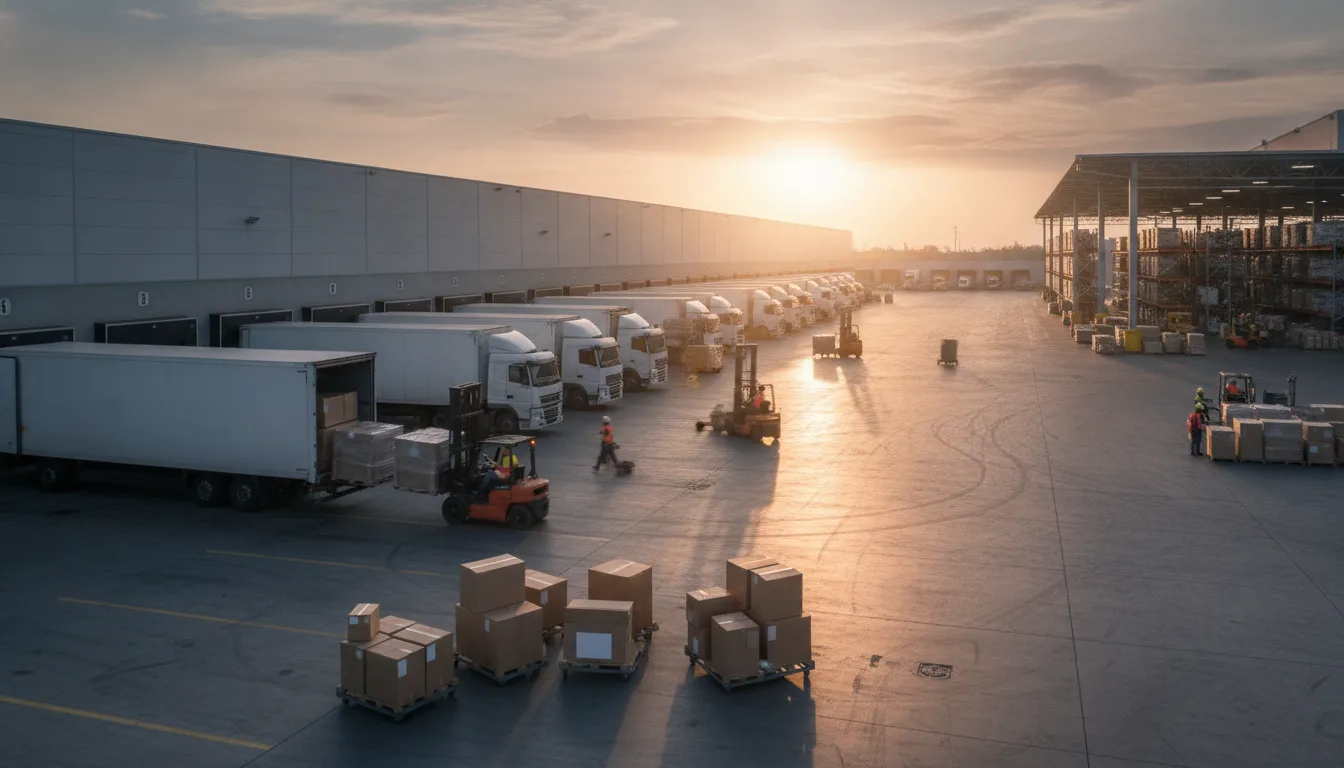


eBay fulfillment services fall into two broad categories: marketplace-run programs that use eBay's own fulfillment network, and third-party logistics (3PL) providers that store your inventory, pick and pack orders, and ship across all your channels. YouParcel supports both eBay and WooCommerce sellers through its fulfillment centers in New Jersey and California, handling 10,000-plus orders a day across multiple marketplaces and integrating with 70-plus platforms so you can manage every sales channel from one place.
- eBay's marketplace-run fulfillment program (eBay Fulfillment by Orange Connex, available in select markets) works well for sellers whose volume is concentrated on eBay, but it limits carrier choice and cross-channel flexibility.
- WooCommerce has no native fulfillment network; sellers must connect to a 3PL or manage their own warehouse, making integration quality the deciding factor.
- A 3PL like YouParcel lets eBay and WooCommerce sellers share inventory across channels, reduce split shipments, and scale without committing to warehouse leases.
- At sufficient order volume, a 3PL typically delivers lower per-unit fulfillment cost and faster shipping times through multi-node inventory placement than a single-warehouse in-house operation.
What "ebay fulfillment services" actually means
Fulfillment, in the supply chain sense, covers everything from receiving inbound inventory to delivering a picked-and-packed parcel to the end customer and processing any returns. The Council of Supply Chain Management Professionals (CSCMP) defines order fulfillment as the complete process from order placement to customer receipt. When sellers talk about "eBay fulfillment," they usually mean one of three things:
- Self-fulfillment: the seller stores inventory at home or in a rented space, picks and packs each order manually, and drops it at a carrier location.
- Marketplace-run fulfillment: eBay's own program (branded eBay Fulfillment by Orange Connex in key markets), where eBay or its logistics partner holds your stock and ships on your behalf.
- Third-party fulfillment: a 3PL holds your inventory in its warehouse, ships via contracted carrier rates, and feeds tracking data back into your eBay and WooCommerce dashboards through direct integrations.
Each path has distinct cost structures, service-level implications, and growth ceilings. The right choice depends on your order volume, the number of channels you sell on, and how much operational control you want to retain.
eBay's marketplace-run fulfillment program: how it works and where it falls short
eBay Fulfillment by Orange Connex (the branded service eBay has rolled out in markets including the US and UK) works similarly to Amazon FBA: you send bulk inventory to eBay's designated fulfillment partner, listings are marked with a fast-shipping badge, and orders are picked and shipped without your involvement. eBay updates the tracking directly on the order record.
Advantages of the marketplace program
- Listings can qualify for eBay's guaranteed delivery badge, which the platform has shown increases buyer conversion.
- No separate warehouse contract to negotiate; you use eBay's inbound shipping process.
- Works well for sellers whose revenue is 80 percent or more eBay-concentrated and who carry a relatively narrow SKU count.
Limitations to plan around
- Inventory sent to the eBay fulfillment network is dedicated to eBay orders only. If you also sell on WooCommerce, Shopify, or Amazon, you must maintain a separate stock pool, which ties up working capital and complicates replenishment planning.
- Carrier selection is determined by the fulfillment partner, not by you. You cannot switch to USPS Priority Mail for a lighter parcel to save on cost, for example.
- Program availability and fee structures have changed several times. Sellers who built their cost models around a specific rate have faced margin compression when fees were revised.
- Returns come back to the fulfillment network; condition grading and restocking decisions follow the program's rules, not yours.
WooCommerce fulfillment: why there is no built-in option
WooCommerce is an open-source plugin for WordPress. It handles product listings, cart, checkout and payment, but it has no fulfillment or warehouse infrastructure of its own. Every WooCommerce seller must either fulfill orders in-house or connect to a third-party provider. That openness is a strength for large operations that want maximum flexibility, but it means the fulfillment setup is entirely the seller's responsibility.
WooCommerce fulfillment services, in practice, means choosing a 3PL that exposes an API or a pre-built plugin that WooCommerce can call when an order is placed. The integration pushes the order to the 3PL warehouse management system (WMS), the WMS triggers pick-and-pack, and tracking is pushed back to WooCommerce so the customer receives automated shipping notifications. YouParcel connects to WooCommerce and 70-plus other platforms, so order data flows automatically without manual CSV exports.
Comparing your three fulfillment options side by side
| Criteria | Self-fulfillment | eBay marketplace program | 3PL (e.g., YouParcel) |
|---|---|---|---|
| Inventory flexibility | Full control; stock serves all channels | Inventory locked to eBay orders only | Single inventory pool serves all integrated channels |
| Carrier choice | Your choice; no negotiated rates | Program-determined carrier | Multi-carrier: USPS, FedEx, DHL, Aramex, EasyPost and others |
| Shipping speed | Dependent on your location and drop-off schedule | Consistent; eBay badge eligibility | Multi-node placement shortens last-mile distance |
| Scalability | Limited by your space and labor | Limited by program capacity and SKU eligibility | Scales with order volume; no warehouse lease required |
| Multi-channel support | Yes, but operational burden grows with channels | No; eBay orders only | Yes; eBay, WooCommerce, Amazon, Shopify, and more from one inventory pool |
| Returns handling | You manage grading and restocking | Program rules apply; limited customization | Configurable returns workflows, grading, and restocking |
| Visibility and reporting | Manual or via store dashboard only | eBay seller hub data | Real-time tracking, BI and analytics across all channels |
| International shipping | Your responsibility to book and document | Program-dependent; not all destinations covered | Ships to 100-plus countries; carrier network managed by the 3PL |
When a 3PL makes economic sense for eBay and WooCommerce sellers
The break-even point between self-fulfillment and outsourcing to a 3PL depends on your average daily order volume, SKU count, parcel dimensions and weight, and the value of your own time. As a practical starting point, most operations find that the per-unit cost of a 3PL (which bundles storage, pick-and-pack labor, packing materials, and carrier rate) becomes competitive with self-fulfillment once you reach roughly 50 to 100 orders per day, because the 3PL's negotiated carrier rates and labor efficiency begin to outweigh the fixed costs.
Beyond cost, consider three operational triggers that commonly push sellers toward a 3PL:
- Expanding to a second sales channel. Adding WooCommerce to an existing eBay store, or vice versa, doubles the fulfillment coordination burden if stock is not centralized. A 3PL that integrates with both channels means one inventory pool, one reorder trigger, and one set of outbound workflows.
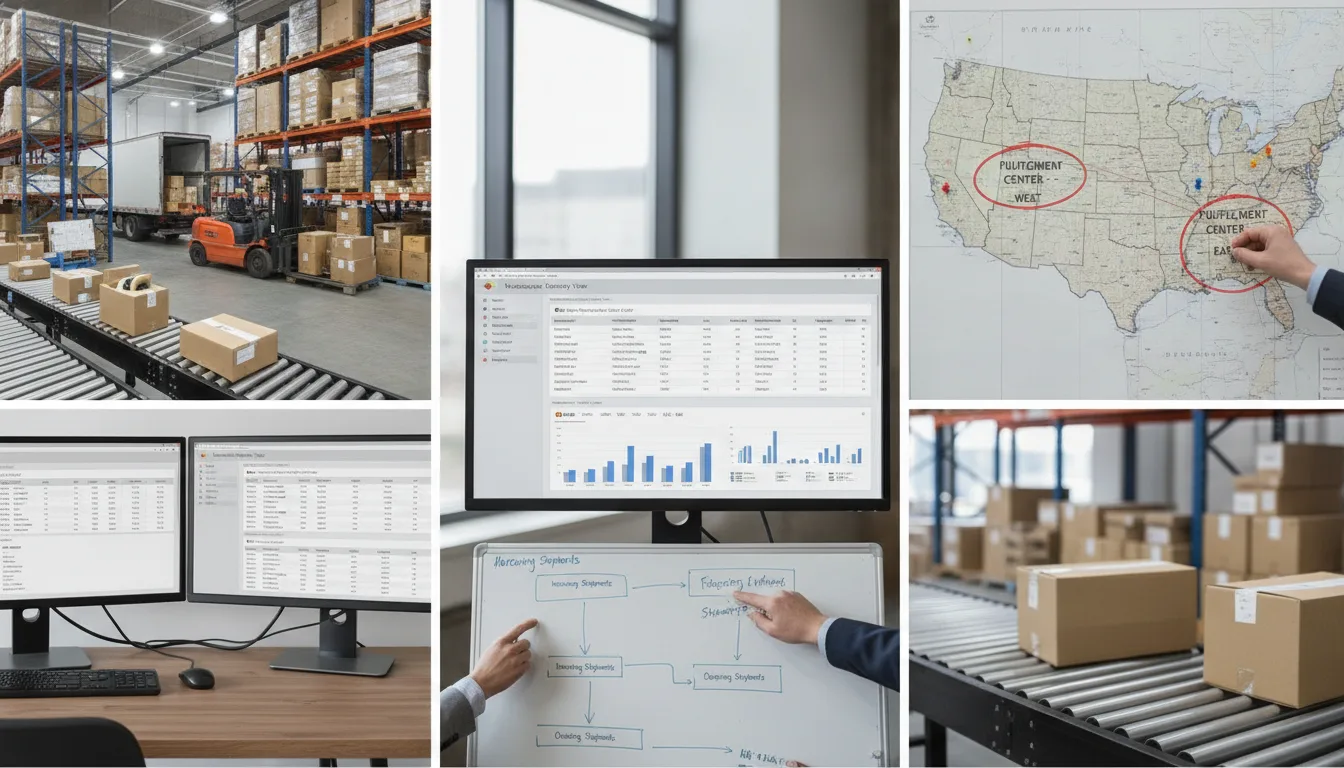
- Geographic coverage. A single home-based or leased warehouse in one state means every order shipped cross-country incurs the longest possible transit time. YouParcel's warehouses in New Jersey and California let sellers split inventory east-west. Orders from East Coast buyers ship from the NJ facility; West Coast orders ship from Rialto, CA, cutting transit days and reducing zone-based shipping costs.
- Peak-season capacity. Q4 order volume often spikes two to four times the monthly average. A 3PL absorbs that surge without you hiring temporary staff or renting overflow space.
How 3PL integration works for eBay and WooCommerce
Integration is where many sellers have been burned. A 3PL that requires manual order imports or nightly batch files introduces delays and error risk. Here is how a modern integration should work in practice:
- Connect your store. You authenticate your eBay seller account and your WooCommerce store with the 3PL's integration layer. YouParcel connects through its integration hub, which covers 70-plus platforms including WooCommerce.
- Map your SKUs. Each product in your store catalog is matched to a physical SKU in the warehouse management system. Bundles and kits are configured at this stage so they pick correctly as assembled units.
- Set routing rules. You define which warehouse ships which orders (east-west split, for example), which carrier service applies to which parcel profile (weight, dimensions, destination), and what packing materials to use.
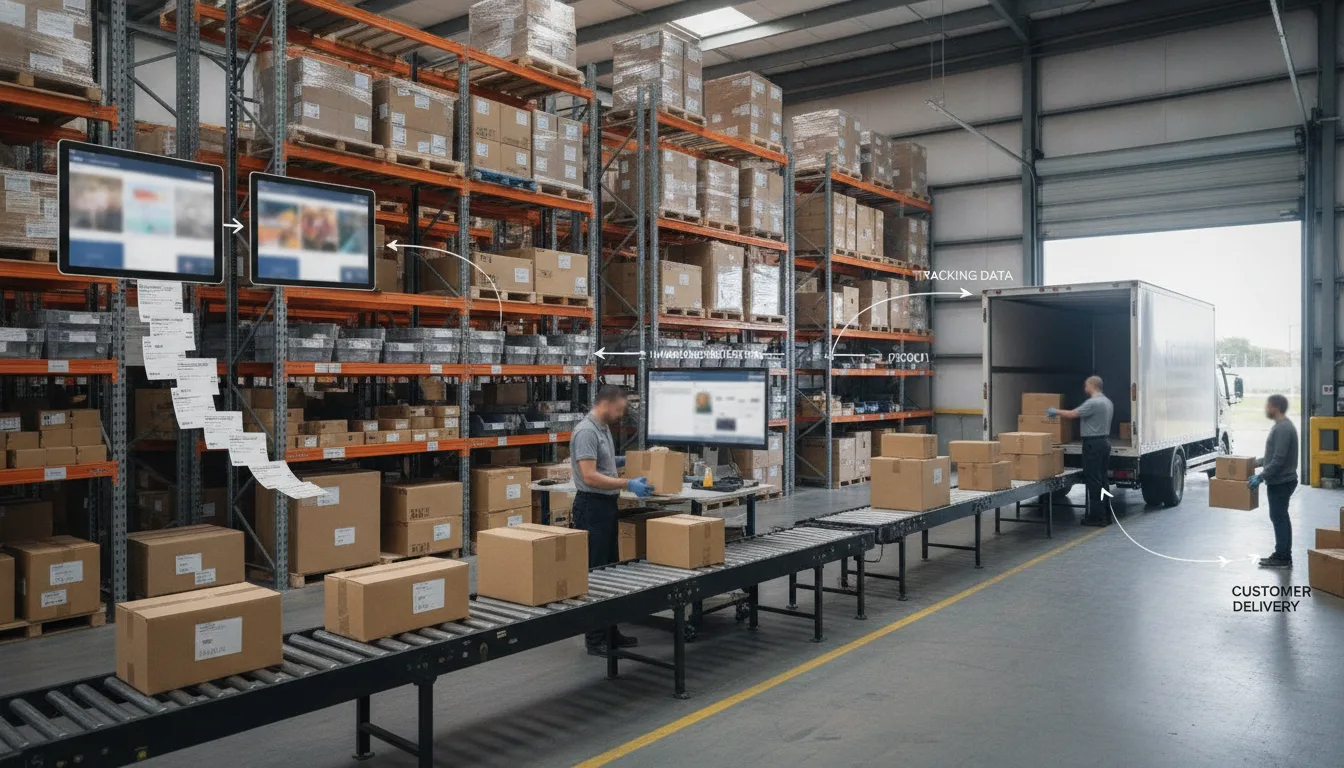
- Orders flow automatically. When a buyer pays on eBay or WooCommerce, the order hits the WMS within minutes. A picker receives a pick ticket, selects the correct items, packs them, and scans the parcel for a carrier label.
- Tracking syncs back. Once a label is generated, the tracking number is pushed back to eBay or WooCommerce automatically. The buyer receives a shipping notification from the marketplace or store without any manual step from you.
- Inventory levels update in real time. Every shipment and every return decrements or increments your on-hand count. You see live stock levels across both channels through the 3PL dashboard or your connected BI tool.
Dimensional weight and packaging: what eBay and WooCommerce sellers often miss
Dimensional weight (also called DIM weight) is a pricing method used by carriers that charges based on the volume a parcel occupies rather than its actual weight, whichever is greater. The standard formula for domestic US parcel carriers is: length x width x height (all in inches) divided by a divisor, typically 139 for USPS and FedEx Ground. If your parcel measures 12 x 10 x 8 inches, the dimensional weight is 960 divided by 139, which equals approximately 6.9 pounds. If your product weighs only 2 pounds, you are billed at 6.9 pounds.
A good 3PL actively manages this. At YouParcel, packaging selection is part of the inbound setup: choosing the right box size for each SKU reduces dimensional weight and directly lowers per-shipment cost. Sellers who self-fulfill often use oversized boxes because they are convenient, without realizing the carrier surcharge they are paying on every order.
Returns: a channel-specific consideration for eBay sellers
eBay's buyer protection policies tend to be generous. Return windows of 30 days are common, and eBay can step in and authorize returns even when a seller's policy does not explicitly allow them. If your returns volume is meaningful (above 3 to 5 percent of orders, which is typical for apparel, electronics accessories, and collectibles), having a 3PL manage the reverse logistics workflow saves significant time.
A 3PL returns process typically works as follows: the buyer ships the item back to the fulfillment center; a receiving team inspects and grades the item (sellable, requires repackaging, unsellable); sellable items are restocked to available inventory; items needing repackaging go through a prep step; unsellable items are quarantined for your disposal instructions. YouParcel handles this workflow with configurable grading criteria, so your restocking rules are applied consistently rather than at the discretion of whoever happens to open the box.
For more on how outsourced fulfillment works from receiving through returns, see the YouParcel ecommerce fulfillment services overview.
International orders on eBay and WooCommerce
Both eBay and WooCommerce support international sales, but the customs and duties complexity falls on the seller. Key points to understand:
- Every cross-border shipment needs a commercial invoice with an accurate description, declared value, and Harmonized System (HS) code. HS codes are the internationally standardized product classification numbers used by customs authorities worldwide to assess duties and taxes.
- The US eliminated its previous de minimis threshold for duty-free parcel entry in 2025. As of that change, there is no longer a low-value exemption that allows parcels to enter the US without duties assessed. Sellers shipping into the US from abroad, or US sellers receiving returned goods from international buyers, need to plan for duties on every shipment regardless of value.
- Incoterms (International Commercial Terms, published by the International Chamber of Commerce) define who pays duties and bears risk during transit. For direct-to-consumer international shipments, Delivered Duty Paid (DDP) means the seller handles all duties before delivery; Delivered Duty Unpaid (DDU, formally DAP) passes those costs to the buyer at delivery. Many buyers on eBay and WooCommerce abandon parcels held at customs because they were not expecting a duty bill.
- YouParcel ships to 100-plus countries and works with carriers including DHL, Aramex, FedEx, and EasyPost for international lanes. The team can advise on carrier selection for specific destination countries based on your product type and declared value.
YouParcel does not act as importer of record (IOR). If your business model requires an entity to formally import goods into a destination country on your behalf, you will need to arrange IOR services through a licensed customs broker or a specialist IOR provider for that country. This is worth planning in advance for markets where your products require specific certifications or where duties must be bonded.
Choosing between the eBay marketplace program and a 3PL: a practical decision framework
Use the following criteria to pressure-test which path fits your operation:
| Question | If yes, lean toward eBay program | If yes, lean toward 3PL |
|---|---|---|
| Is eBay your only or dominant sales channel (more than 85% of revenue)? | Yes | No |
| Do you sell on WooCommerce, Shopify, Amazon, or other channels simultaneously? | No | Yes |
| Do you need to control carrier selection for cost or branding reasons? | No | Yes |
| Is your SKU count above 100 active listings with varied dimensions? | No (narrow catalog fits program better) | Yes |
| Do you need custom packaging, inserts, or kitting for bundles? | No | Yes |
| Do you ship internationally to more than a handful of countries? | No | Yes |
| Do you need detailed analytics across all channels in one dashboard? | No | Yes |
YouParcel's fulfillment setup for eBay and WooCommerce sellers
YouParcel operates fulfillment centers at 20 Farinella Dr, East Hanover, NJ 07936 (serving the New York and New Jersey metro market) and 3700 S. Riverside Ave, Rialto, CA 92324 (serving Southern California and the West Coast). The two-node setup means sellers with nationwide buyers can split inventory and reduce average shipping distance, which typically shortens transit time and lowers zone-based carrier costs without any additional complexity on the seller's end.
The onboarding process for eBay and WooCommerce sellers follows a standard sequence: inbound shipment coordination, SKU mapping and system setup, integration testing (order pushed, picked, labeled, and tracking confirmed end-to-end), and then go-live. YouParcel's leadership team brings more than 50 years of combined logistics experience, which translates into faster troubleshooting when edge cases arise, such as oversized SKUs, fragile product packaging requirements, or carrier service disruptions during peak season.
For sellers who also run wholesale or B2B distribution alongside their eBay and WooCommerce stores, YouParcel supports EDI and retailer compliance requirements, including routing guides and labeling standards for retail partners. Kitting and assembly services are available for sellers who bundle products before shipping or need retail-ready packaging for omnichannel distribution.
To see how the platform integrations work in detail, visit the YouParcel integrations page, which covers the full list of connected platforms and how data flows between your store and the warehouse.
Frequently asked questions
Can I use a 3PL for eBay orders without enrolling in eBay's fulfillment program?
Yes. eBay does not require sellers to use its marketplace-run fulfillment program. You can connect a 3PL to your eBay seller account through an API integration, and the 3PL will fulfill orders, generate tracking numbers, and push that tracking data back to eBay automatically. The eBay fast-shipping badge eligibility depends on your shipping policy settings and the carrier service selected, not on which fulfillment provider you use.
Does WooCommerce have its own fulfillment network?
No. WooCommerce is an open-source ecommerce plugin and does not operate any warehouse or fulfillment infrastructure. WooCommerce fulfillment services means connecting your store to a third-party logistics provider through a plugin or API integration. The 3PL holds your inventory and fulfills orders on your behalf.
How does inventory sync work if I sell on both eBay and WooCommerce with a 3PL?
Both storefronts connect to the 3PL's warehouse management system. When a unit sells on either channel, the WMS decrements your on-hand count in real time and that updated count is pushed back to both storefronts. This prevents overselling and eliminates the manual step of adjusting quantities in each platform separately.
What is the minimum order volume to make a 3PL cost-effective for an eBay or WooCommerce seller?
There is no universal threshold, because the break-even depends on your parcel size, weight, carrier zone distribution, and how you value your own time. As a practical range, many sellers find that outsourcing becomes cost-competitive with self-fulfillment at around 50 to 100 orders per day, once negotiated carrier rates and labor savings are factored in. Reaching out to a 3PL for a quote with your actual order profile will give you a more precise comparison.
Can a 3PL handle returns from eBay buyers?
Yes. A 3PL with a configured returns workflow will receive items back from buyers, inspect and grade each return, restock sellable units, and quarantine or dispose of unsellable ones according to your instructions. This is especially useful for eBay sellers with higher return rates in categories like apparel, electronics accessories, or media, where manual returns processing adds significant labor cost.
Ready to compare fulfillment options with real numbers for your eBay and WooCommerce operation? Talk to an expert at YouParcel to review your order volume, SKU profile, and channel mix and find the setup that works for your business.