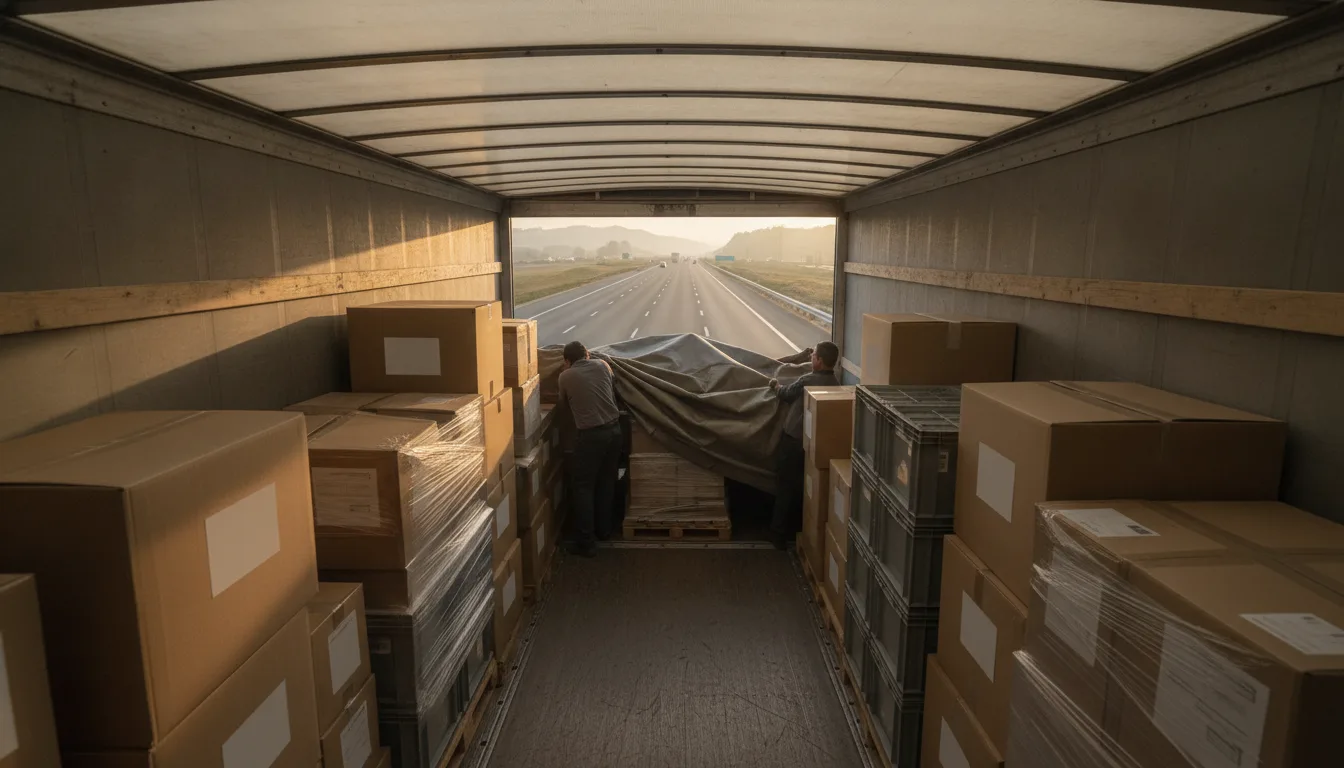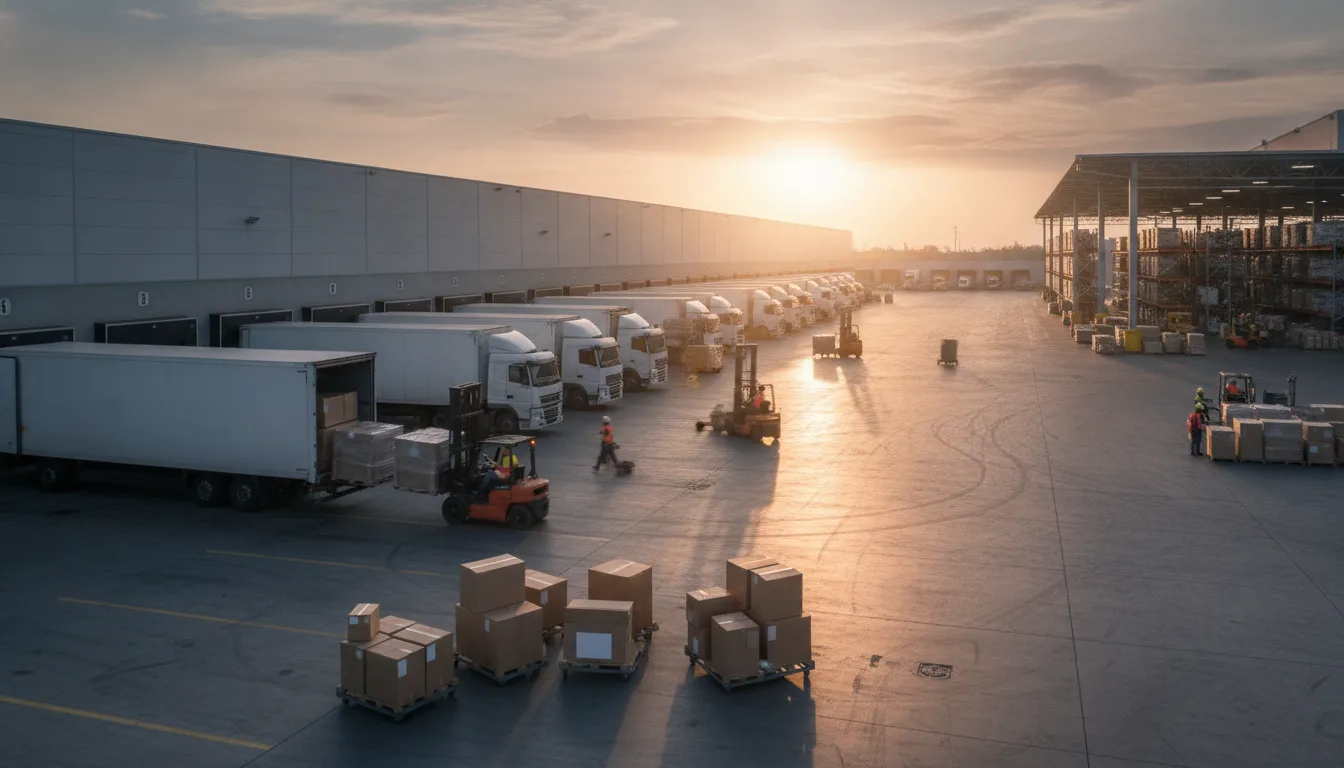


LTL freight shipping (less-than-truckload) lets you move a partial load of goods to your 3PL warehouse by sharing trailer space with other shippers, paying only for the cubic footage and weight your freight occupies. FTL (full truckload) gives you exclusive use of a 48- or 53-foot trailer. For brands replenishing stock at a third-party logistics facility, choosing the right mode depends on shipment size, budget, lead-time tolerance and whether a port move (drayage) is involved. YouParcel handles inbound freight at its warehouses in New Jersey, California and Illinois and coordinates both modes for clients shipping domestically and internationally.
- LTL is cost-effective for shipments roughly between 150 lb and 10,000 lb (68 kg to 4,536 kg) that do not fill a trailer; FTL wins on cost per pound once you approach 12 to 15 pallets or 20,000 lb (9,072 kg).
- Freight class (NMFC class 50 to 500) determines LTL pricing; misclassifying your product is one of the most common causes of unexpected carrier invoices.
- Drayage, the short port-to-warehouse leg after an ocean or rail container arrives, is a separate service that feeds both LTL and FTL replenishment flows.
- Scheduling a delivery appointment with your 3PL receiving team before the truck rolls is non-negotiable for avoiding detention charges and dock delays.
What Is LTL Freight Shipping?
LTL, or less-than-truckload, is a freight mode where your shipment shares a trailer with cargo from other companies. The carrier consolidates multiple partial loads at a cross-dock terminal, routes them along a hub-and-spoke network and delivers each consignment to its destination. You pay for the space and weight your freight uses, not the whole trailer.
Typical LTL shipments fall between 1 and 10 pallets. Transit times across the continental US generally range from 1 to 5 business days for regional lanes and 3 to 7 business days for cross-country lanes, though carriers publish their own service schedules and do not guarantee these windows on standard service. LTL carriers such as FedEx Freight, Estes and XPO publish transit-day tables by origin and destination zip code.
What Does FTL Mean?
FTL, or full truckload (sometimes written TL), means one shipper contracts the entire trailer. The driver picks up at your origin, goes directly to your destination and drops off without intermediate terminal stops. Because there is no cross-docking, transit is faster and the risk of freight damage is lower. FTL is priced per loaded mile plus fuel surcharge, with the rate negotiated per lane or through a spot market.
A standard 53-foot dry van holds up to 26 standard 48-inch by 40-inch pallets and a legal gross weight of roughly 44,000 lb (19,958 kg) of freight after accounting for equipment tare weight. If your replenishment shipment is large enough to fill the trailer to legal weight or to usable cube, FTL almost always beats LTL on total cost even if it costs more per booking.
LTL vs FTL: Which Mode Fits Your Replenishment Shipment?
| Factor | LTL | FTL |
|---|---|---|
| Typical shipment weight | 150 lb to ~10,000 lb (68 kg to 4,536 kg) | 10,000 lb to 44,000 lb (4,536 kg to 19,958 kg) |
| Pallet count (rule of thumb) | 1 to 11 pallets | 12 to 26 pallets |
| Pricing basis | Freight class + weight + distance + accessorials | Per loaded mile + fuel surcharge |
| Transit predictability | Moderate (terminal transfers add variability) | High (direct, no cross-dock) |
| Damage risk | Higher (multiple touch points) | Lower (single touch) |
| Minimum order flexibility | High (ship as inventory is ready) | Low (need full or near-full load to justify cost) |
| Best for | Steady-state replenishment, test SKUs, seasonal top-ups | Large replenishment runs, product launches, high-velocity SKUs |
Many brands use LTL week-to-week for routine replenishment and shift to FTL ahead of a peak season or a large promotional push when volumes spike. Both modes can deliver to YouParcel warehousing locations with a confirmed inbound appointment.
Understanding Freight Class (NMFC Classification)
Freight class is an LTL-specific pricing variable defined by the National Motor Freight Traffic Association (NMFTA) under the National Motor Freight Classification (NMFC) system. Classes run from 50 (cheapest, dense, easy-to-handle goods) to 500 (most expensive, light or fragile goods). Every LTL shipment must carry an NMFC item number and a declared class on the bill of lading (BOL).
Four density-related factors determine class:
- Density: pounds per cubic foot. Calculate it as (weight in lb) divided by (length x width x height in inches, divided by 1,728). A shipment at 30 lb per cubic foot typically lands in Class 50 to 65; below 1 lb per cubic foot can reach Class 400 to 500.
- Stowability: whether the freight can be stacked, is hazardous, or has unusual dimensions.
- Ease of handling: whether the freight requires special equipment or poses a handling risk.
- Liability: value per pound and susceptibility to theft or damage.
Carriers perform density inspections at the terminal. If your declared class is lower than the measured class, the carrier issues a reclassification notice and an additional charge. For high-density products (steel parts, canned goods, bottled liquids), confirm the NMFC item number before tendering. The NMFTA publishes the official classification guide, available through its member portal at nmfta.org.
Density calculation example
You are shipping a pallet of packaged supplements: 500 lb, stacked 48 in x 40 in x 60 in. Cubic feet = (48 x 40 x 60) / 1,728 = 66.67 cu ft. Density = 500 / 66.67 = 7.5 lb per cu ft. At that density, the NMFC typically assigns Class 150. Use that class on your BOL to avoid a carrier reclassification surcharge.
Key LTL Accessorial Charges to Know Before You Ship
LTL base rates cover only the line-haul move. Accessorial charges can add 20% or more to an invoice if you do not plan for them. Common ones for warehouse replenishment:
- Liftgate at delivery: required if the receiving dock does not have a dock-height loading bay. Many residential or ground-level facilities need a liftgate. Confirm with your 3PL whether a liftgate is needed.
- Inside delivery: moving freight beyond the trailer tailgate. Standard LTL ends at the curb or dock door.
- Detention: charged when the driver waits beyond the free time (typically 15 to 30 minutes) at pickup or delivery. Scheduling an appointment minimizes this.
- Redelivery: triggered if the consignee is unavailable when the driver arrives. Always confirm the appointment window.
- Residential delivery: applies when a delivery address is classified as residential in carrier routing systems, even if it is a small warehouse.
- Fuel surcharge: a percentage added to the base rate, adjusted weekly by most national LTL carriers based on the US Department of Energy diesel price index.
What Is Drayage, and When Does It Apply?
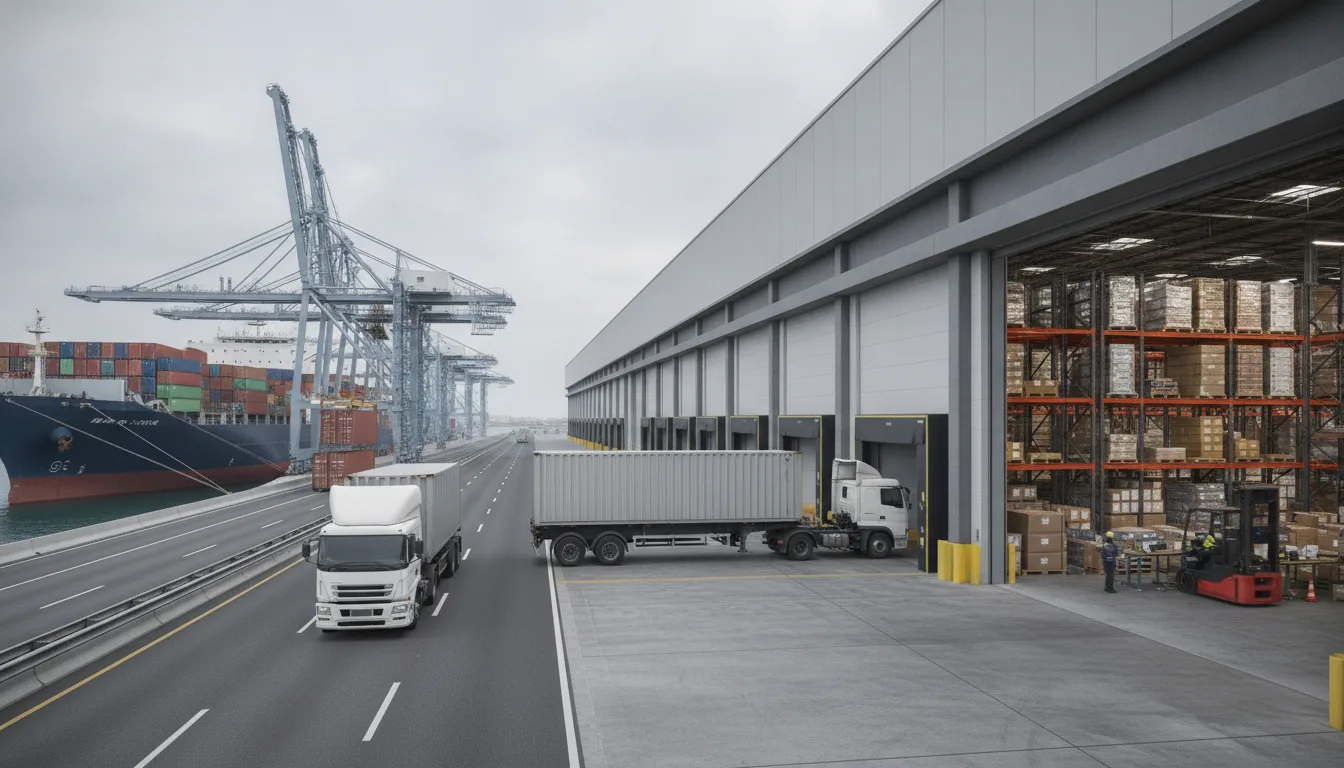
Drayage is the short-distance transport of a shipping container or trailer from a port, rail yard (intermodal ramp) or container freight station (CFS) to a warehouse or distribution point. The term comes from the historical use of low-sided carts (drays) to haul heavy loads short distances.
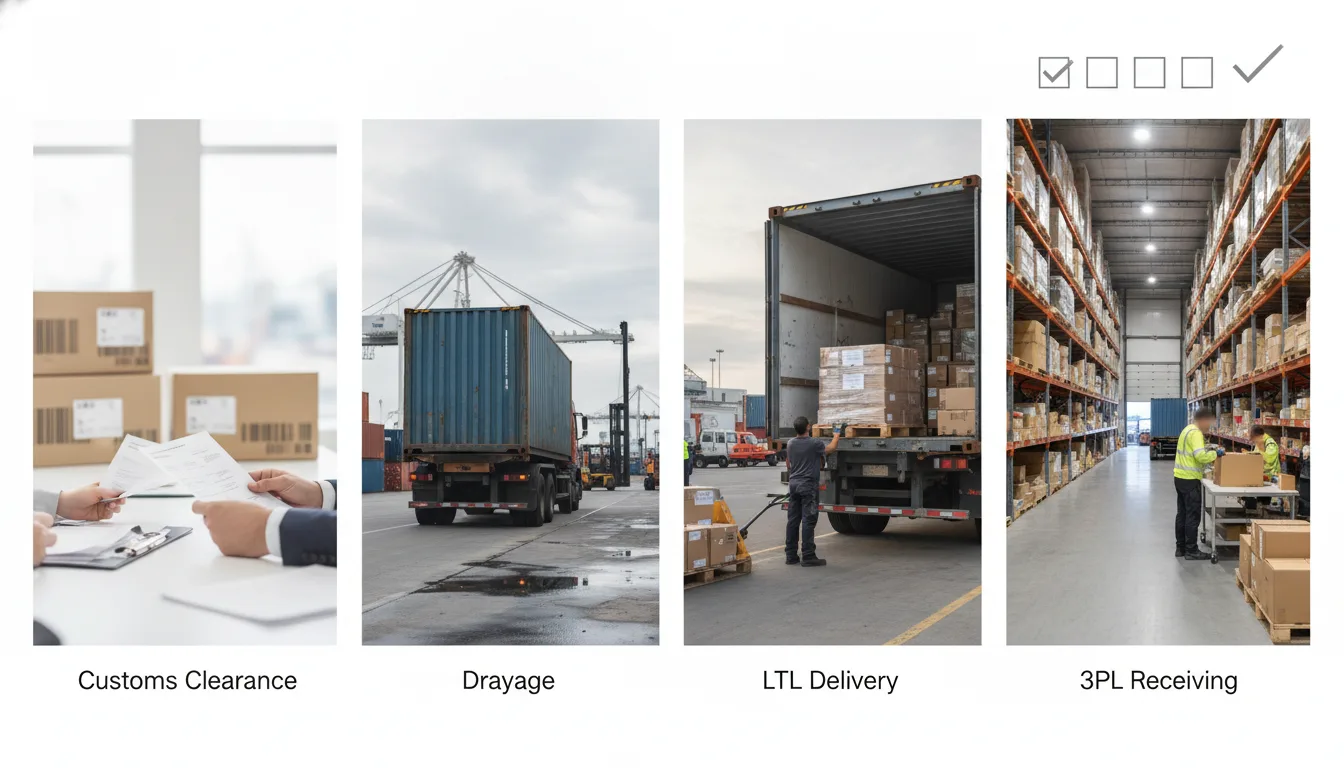
For brands importing goods that arrive by ocean or rail before replenishing a 3PL warehouse, drayage is the first domestic leg. The chain looks like this:
- Ocean vessel arrives at port (for example, Port of New York and New Jersey or Port of Los Angeles/Long Beach).
- Customs clearance is completed and the container is released by CBP.
- A drayage (port cartage) carrier picks up the container on a chassis and transports it to the destination facility, typically within 50 to 100 miles of the port.
- The container is unloaded (devanned) at the warehouse receiving dock.
- Goods are checked in, sorted and put away as inbound inventory.
Drayage is priced per container move (20-foot equivalent unit or 40-foot), with surcharges for chassis splits, pier pass fees (at Southern California ports), overweight containers and per-diem storage if the container is not returned to the port within the allowed free days (usually 2 to 5 days, varying by steamship line).
Once the container is unloaded at a 3PL cross-dock or CFS, goods are often palletized and moved onward by LTL or FTL to their final warehouse location. Brands sending inventory to YouParcel facilities in New Jersey (near the Port of New York/New Jersey) or in Rialto, California (within the Inland Empire, the principal distribution corridor for the Port of Los Angeles and Long Beach) can coordinate drayage as part of a broader freight forwarding arrangement.
Scheduling Delivery Appointments at Your 3PL Warehouse
Appointment scheduling is one of the most overlooked steps in LTL and FTL replenishment. Arriving without an appointment, or missing one, generates detention charges, potential refusal of the load and dock congestion that affects every other shipper using the facility.
How to book a receiving appointment
- Notify your 3PL in advance: send an advance shipping notice (ASN) with carrier name, PRO number (LTL tracking number) or BOL number, expected arrival date and window, pallet count, item count and purchase order numbers. Most 3PLs require the ASN 24 to 72 hours before arrival.
- Confirm the carrier has the appointment reference: LTL carriers will not always call ahead. Share the appointment date and time with your freight broker or carrier contact so the driver has the reference number.
- Prepare compliant pallet labels: pallets should carry a label with the PO number, SKU, quantity and destination facility. Many 3PLs have specific label format requirements; request the template before you ship.
- Have the BOL accurate and complete: the bill of lading must list the correct consignee address, freight class, weight and piece count. Errors delay receiving and can trigger redelivery charges.
- Allow for dock processing time: receiving a full FTL of mixed SKUs can take 2 to 4 hours or more depending on inspection requirements and system check-in. Plan inventory availability accordingly.
What happens when freight arrives at a YouParcel warehouse
When a shipment arrives at a YouParcel facility, the inbound team checks freight against the ASN, counts pieces, inspects for visible damage and logs the receipt into the warehouse management system (WMS). Items are then slotted to their assigned bin locations. Discrepancies (shorts, damages, unexpected SKUs) are flagged and documented before inventory is made available for order fulfillment. Real-time tracking and BI dashboards let operations teams see inbound status without calling the warehouse floor.
FTL Specifics: Spot Market vs Contract Rates
FTL pricing moves with supply and demand. Contract rates (agreed annually with a carrier or broker) provide budget predictability but require volume commitments. Spot rates reflect current market conditions and can run 20% to 40% higher or lower than contract rates depending on the season and lane.
For replenishment planning, brands with predictable volume on a consistent lane benefit from contract rates. Brands with irregular shipment patterns or seasonal spikes often source capacity on the spot market or through a freight broker who maintains relationships with multiple asset and non-asset carriers.
FTL also includes specialized equipment options relevant to replenishment: temperature-controlled (reefer) trailers for perishables, flatbeds for oversized or pallet-racked goods, and curtainside trailers for side-loading at certain facilities. Standard dry-van FTL covers the majority of consumer goods replenishment.
When to Use Partial Truckload (PTL)
Between LTL and FTL sits partial truckload (PTL), sometimes called volume LTL or spot LTL. PTL applies when a shipment is too large for standard LTL pricing (usually above 10 pallets or 10,000 lb) but not large enough to justify a dedicated trailer. PTL carriers move freight with fewer intermediate stops than a standard LTL network, reducing transit time and damage risk. Pricing is negotiated per move rather than by freight class. PTL is worth quoting when you have 6 to 11 pallets moving on a consistent lane.
Inbound Freight and Customs Clearance for International Replenishment
Brands importing goods from outside the US before replenishing a domestic 3PL warehouse must clear US Customs and Border Protection (CBP) before goods can be released for drayage or domestic freight. The importer of record (IOR), the entity legally responsible for the shipment and applicable duties, must hold a valid CBP bond. YouParcel does not act as importer of record; brands need to appoint their own IOR or work with a licensed customs broker to handle entry.
Once goods clear customs, the domestic LTL or FTL leg proceeds exactly as described above. For a fuller picture of freight forwarding, customs documentation and the international-to-domestic replenishment flow, see the freight forwarding expert consultation page.
Key import documents needed before drayage can begin include the commercial invoice, packing list, bill of lading or airway bill, CBP Form 3461 (entry for immediate delivery) or Form 7501 (entry summary), and the Importer Security Filing (ISF, also known as 10+2) for ocean shipments. The ISF must be filed at least 24 hours before vessel loading at the foreign port. CBP publishes ISF requirements at cbp.gov/trade/cargo-security/importer-security-filing.
Practical Decision Framework: Which Mode Should You Choose?
Use this sequence when planning a replenishment shipment:
- Measure your freight: weight (lb), pallet count, dimensions (L x W x H in inches per pallet).
- Calculate density and look up the NMFC class if shipping LTL.
- Get quotes for LTL, PTL and FTL on the lane. For FTL, check both contract and spot rates if you do not have a standing agreement.
- Factor in transit time against your stockout risk. If a SKU has 7 days of cover left and LTL transit on the lane is 5 to 7 days, FTL or PTL may be the better operational choice even at higher cost.
- Confirm whether drayage is needed (import shipment arriving at a port) and book the chassis and drayage carrier before the vessel arrives to avoid per-diem fees.
- Send the ASN and book a delivery appointment with the 3PL warehouse at least 48 hours before the estimated arrival.
- Transmit the accurate BOL (class, weight, pieces, PO numbers) to both the carrier and the warehouse.
Frequently Asked Questions
What is the difference between LTL and FTL freight?
LTL (less-than-truckload) means your shipment shares trailer space with other shippers and you pay only for the portion you use; it suits smaller, frequent replenishment loads. FTL (full truckload) gives you exclusive use of a trailer for a single direct move; it is more cost-effective for large, high-weight shipments and faster because there are no intermediate terminal stops.
How is freight class determined for LTL shipping?
Freight class is set by the NMFC system and based on four factors: density (lb per cubic foot), stowability, handling difficulty and liability. Density is the dominant factor for most consumer goods. Calculate your shipment density by dividing weight in pounds by cubic feet, then look up the matching NMFC class. Incorrect classification leads to carrier reclassification fees on delivery.
What is drayage and do I need it for 3PL replenishment?
Drayage is the short-haul container move from a port or rail terminal to a nearby warehouse. You need it only if your goods arrive by ocean or rail freight and you are not arranging your own container pickup. If your supplier ships directly to your 3PL via domestic LTL or FTL, drayage does not apply.
How do I schedule a delivery appointment at a 3PL warehouse?
Send an advance shipping notice to your 3PL with the carrier name, tracking or PRO number, expected arrival date and time window, pallet count and purchase order details at least 24 to 72 hours before arrival. Confirm that the carrier driver also has the appointment reference number to avoid detention charges at the dock.
When should I consider partial truckload instead of LTL or FTL?
Partial truckload (PTL) is worth quoting when your shipment is roughly 6 to 11 pallets or between 10,000 lb and 20,000 lb on a consistent lane. PTL pricing is negotiated per move rather than by freight class, transit is usually faster than standard LTL because there are fewer cross-dock stops, and cost per pallet can beat both LTL and FTL at that shipment size.
Ready to coordinate inbound freight, drayage and warehouse receiving under one roof? Talk to an Expert about how YouParcel can manage your replenishment freight from port to put-away.