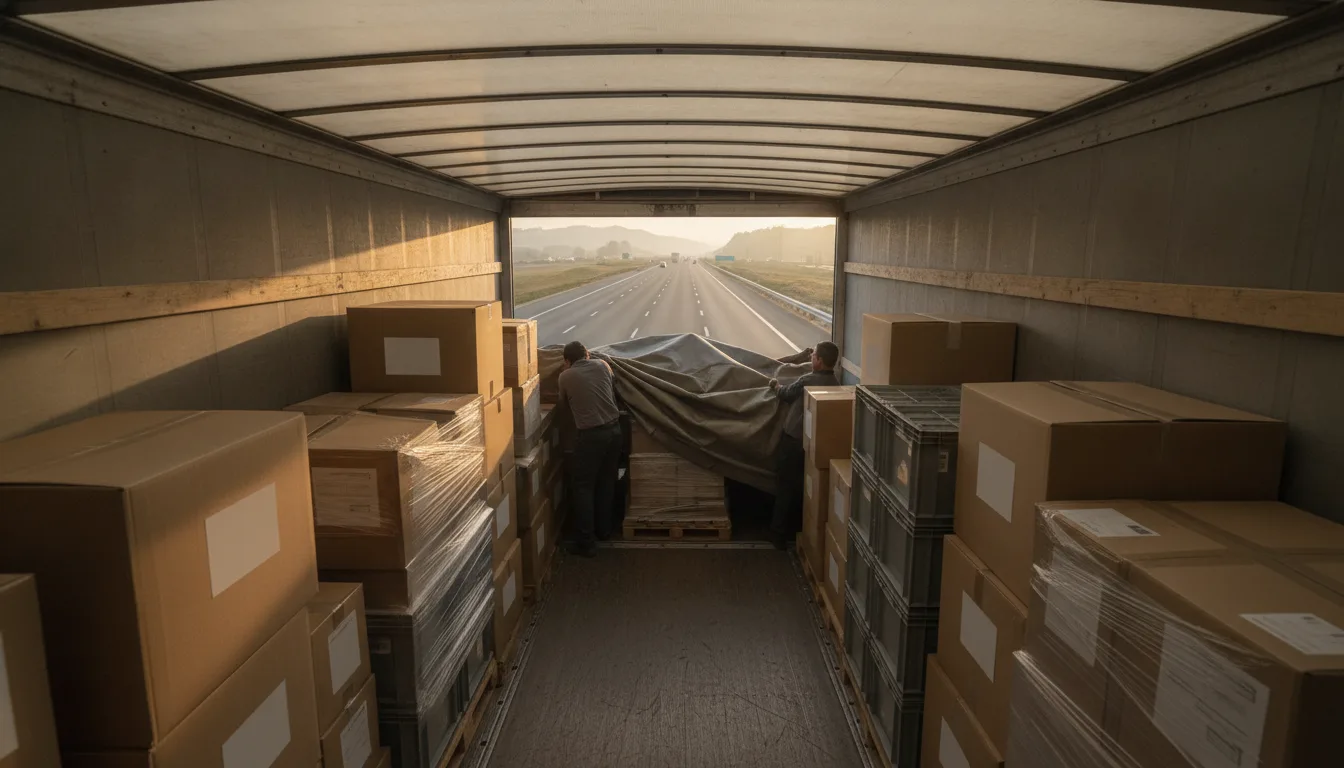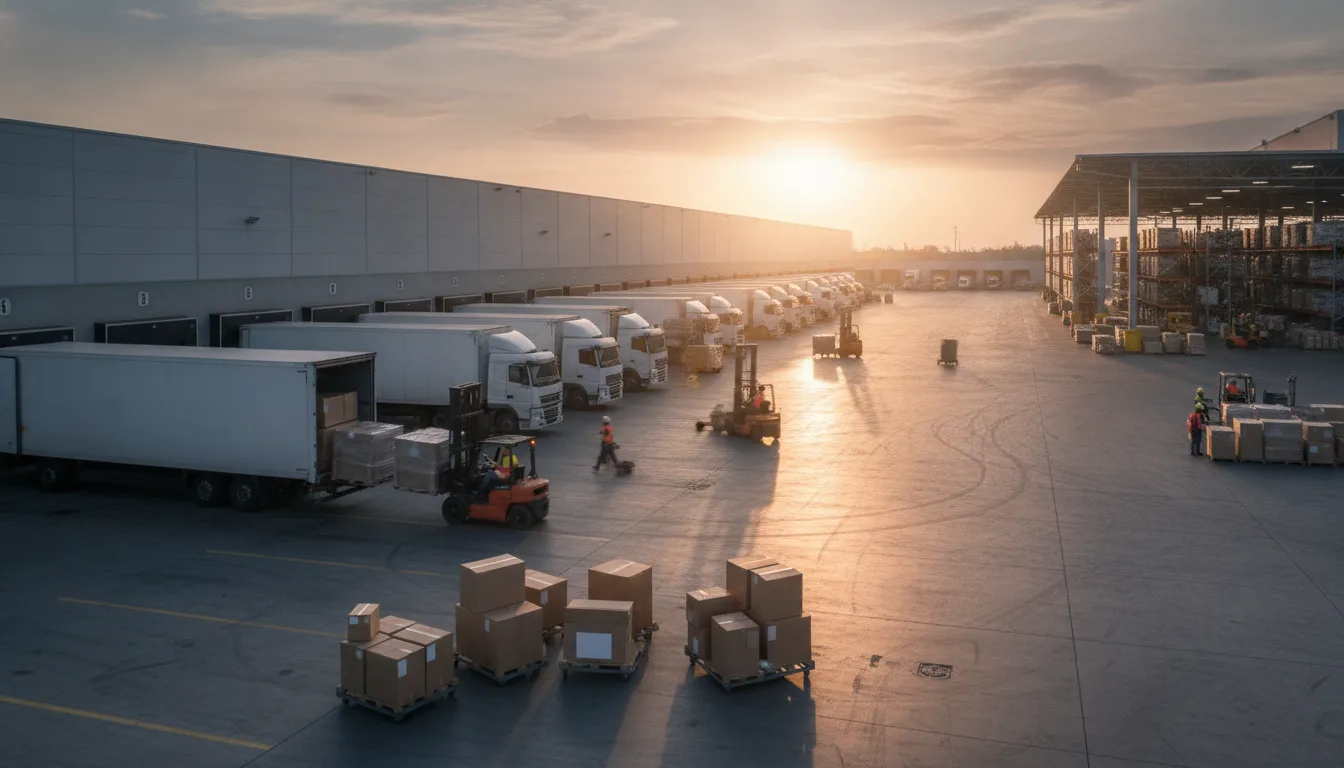


Shipping from Canada to USA just became significantly more expensive for a defined list of goods. A 50% additional duty under Section 338 of the Trade Act of 1974 took effect on August 22, 2026, targeting roughly 569 specified HTS lines of Canadian origin. Critically, the Canada-United States-Mexico Agreement (CUSMA, also known as USMCA) does not exempt goods covered by this action. Canadian brands selling to US customers need to act now: classify every SKU, recalculate landed costs and talk to a licensed US customs broker before the next shipment crosses the border.
- Section 338 imposes a 50% additional duty on specified Canadian-origin goods, effective August 22, 2026; CUSMA preference does not override this tariff action.
- Roughly 569 HTS lines are covered; brands must verify their specific tariff classifications before assuming coverage or exemption.
- No low-value parcel is duty-free on entry to the United States; every cross-border shipment is now a duty event regardless of declared value.
- Pre-positioning inventory in a US fulfillment center through a formal import entry is the most practical structural fix for brands with sustained US order volume.
What Is Section 338 and Why Does It Apply to Canadian Goods?
Section 338 of the Trade Act of 1974 authorizes the President to impose duties, fees or other import restrictions on goods from a country that maintains unreasonable or discriminatory trade practices against the United States. It is a unilateral instrument, separate from and not constrained by bilateral free trade agreements. That distinction matters enormously for Canadian exporters who assumed CUSMA preference rates would protect them.
The proclamation covering Canadian goods became effective on August 22, 2026. The Association of Canadian Customs Brokers reported the action as now in effect, and the same guidance noted that at least one secondary source had reported a possible cancellation, so brands should verify current status directly with a licensed customs broker or through the official Federal Register federalregister.gov and CBP guidance before each shipment. For sourcing and planning purposes, treat the 50% additional duty as operative until a licensed professional confirms otherwise. The AACB trade tariff advisory published August 22, 2026 is the most current confirmed trade source: 50% Section 338 Tariff on Canadian Goods Is Now in Effect.
Does CUSMA Preference Offset Section 338?
No. CUSMA (Canada-United States-Mexico Agreement) grants preferential tariff treatment under Chapter 98 and the general notes of the Harmonized Tariff Schedule of the United States (HTSUS). That preference applies to the base Most Favored Nation (MFN) column-1 rate and to duties assessed under ordinary trade remedy instruments. Section 338 is invoked under a separate statutory authority that sits outside the preferential tariff framework. The legal structure is analogous to Section 301 tariffs, which the US applied to goods from multiple trading partners regardless of applicable free trade agreements.
In practical terms: a Canadian garment that previously entered at 0% under CUSMA preference now carries a 50% additional duty if its HTS classification falls within the covered lines. The CUSMA certificate of origin still reduces the base MFN rate to zero, but the Section 338 additional duty is layered on top. The combined effective rate for a covered good could therefore be 50% above whatever the duty-paid baseline would otherwise be.
Which Goods Are Covered? Understanding HTS Line Coverage
Approximately 569 HTS lines are specified in the proclamation. HTS codes (Harmonized Tariff Schedule codes) are the 10-digit US import classification numbers that determine duty rates, admissibility and trade statistics. Coverage is defined at the 8- or 10-digit level, meaning two products that look similar on a commercial invoice could be treated very differently depending on their precise classification.
Categories reported as covered include certain steel and aluminum derivatives, specified agricultural and food products, lumber and wood products and selected consumer goods, though the definitive list is in the official proclamation text. Brands should not rely on summaries, including this one, as a substitute for reviewing the official annexure against their specific classifications. A licensed US customs broker can run a binding tariff classification review and confirm whether each SKU is affected.
How to Check Your HTS Classification
- Retrieve the 10-digit HTS number for each product from your most recent US import entry or from CBP's online HTSUS tool at hts.usitc.gov.
- Cross-reference each 10-digit code against the official annexure published in the Federal Register proclamation for Section 338 Canadian goods.
- If any classification is uncertain, do not self-classify for a duty decision of this magnitude. Commission a formal binding ruling request (CBP Form 4212) through a licensed customs broker.
- Document the country-of-origin determination for each SKU, since substantial transformation rules may affect goods assembled or processed in Canada from third-country inputs.
- Recalculate landed cost for every affected line using the new effective duty rate before accepting any US purchase orders or setting retail prices.
The De Minimis Issue: No Duty-Free Entry Regardless of Parcel Value
Many Canadian brands built their US direct-to-consumer model on the assumption that small parcels would enter the US duty-free under the Section 321 de minimis threshold. That assumption has been incorrect since August 29, 2025, when the US suspended duty-free de minimis treatment across all countries under Executive Order 14324 and CBP CSMS guidance 66065494. The statutory de minimis exemption under 19 U.S.C. 1321 is further set for full repeal effective July 1, 2027.
Every parcel shipped from Canada to a US consumer is now a duty event, regardless of declared value. For goods covered by Section 338, the duty rate on each of those parcels is 50% additional on top of any applicable MFN or other rate. Brands that have been absorbing or ignoring de minimis-era duty exposure will find the combined effect on margins material.
What Canadian Brands Should Do Right Now
Step 1: Engage a Licensed US Customs Broker
A licensed customs broker (licensed by US Customs and Border Protection under 19 CFR Part 111) can classify your goods authoritatively, calculate your duty exposure across your full SKU catalog, advise on country-of-origin documentation and flag any first-sale or other valuation strategies that may be applicable. The information in this article is general trade context, not legal or customs advice. For decisions involving significant duty liability, work with a licensed professional.
Step 2: Model Your Landed Cost for Every Covered SKU
Landed cost is the total cost of a product at the buyer's door, including goods cost, international freight, insurance, customs duties and fees and last-mile delivery. The 50% Section 338 additional duty changes the landed cost calculation substantially. Build a landed cost model that reflects the current duty rate for each HTS classification, and test whether your current retail prices remain viable at those costs. Some brands will find that price adjustments are unavoidable. Others may find that sourcing goods outside Canada, where the Section 338 action does not apply, reduces duty exposure for certain lines.
Step 3: Review Your US Inventory Strategy
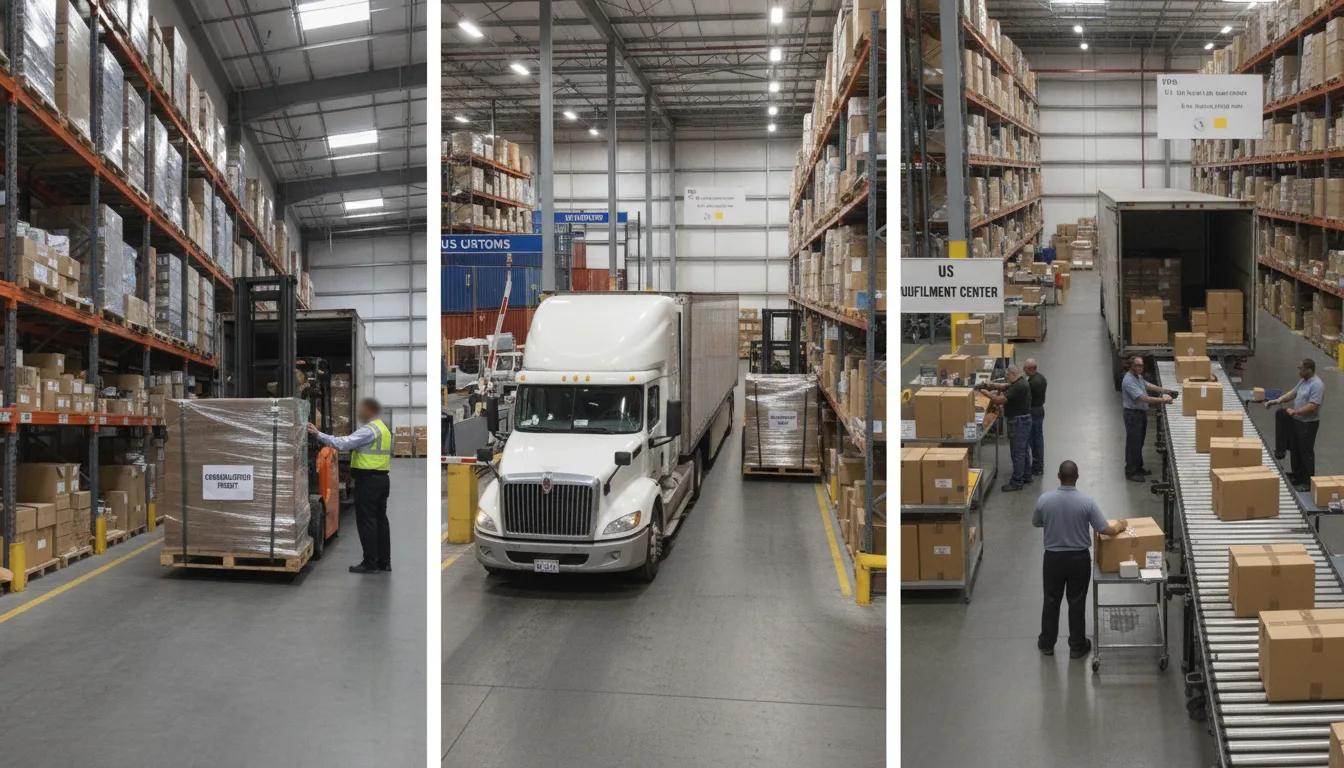
The structural alternative to paying duties on every individual parcel is to consolidate Canadian inventory into a formal bulk inbound shipment to a US warehouse, pay duty once on the full commercial entry, and fulfill US orders from US soil. This model, often called the parcel-to-pallet shift, changes both when duty is paid and how logistics costs scale.
Under this model, a Canadian brand ships a container or LTL (less-than-truckload) freight consignment into a US ecommerce fulfillment center. A customs broker files a formal entry at the US port of entry, the applicable duty (including any Section 338 rate) is assessed on the commercial value of the full shipment, and the goods are released into the US warehouse. Subsequent US customer orders ship domestically from that warehouse, with no further customs clearance per parcel. This is how YouParcel operates: inbound freight arrives at fulfillment centers in New Jersey or California, clears customs through a formal entry, and orders go out to US customers via USPS, FedEx, DHL and other carriers, with real-time tracking on every shipment.
Duty is not removed by this method. The 50% Section 338 rate still applies to covered goods. However, paying duty once on a consolidated commercial entry can be simpler operationally than managing parcel-by-parcel duty collection, and it removes the friction that duty-at-delivery creates for the end customer experience.
US Fulfillment as a Structural Response: What to Consider
Moving to US-based fulfillment requires planning across several dimensions. The table below summarizes the key factors Canadian brands should evaluate when deciding whether to shift from cross-border parcel shipping to US warehouse inventory.
| Factor | Cross-border parcel shipping (current model) | US fulfillment center (warehouse-first model) |
|---|---|---|
| Duty payment point | At or after each parcel entry; consumer may face duties at delivery | Once, at formal entry for the inbound bulk shipment |
| Duty rate exposure | Section 338 50% additional duty applies per shipment for covered HTS lines | Section 338 50% additional duty applies to the inbound commercial entry for covered HTS lines |
| Minimum order volume to justify | Low; suitable for small or irregular volume | Higher; storage, receiving and fulfillment fees apply; works best at sustained volume |
| Customer delivery experience | International transit; potential duty-at-door surprises | Domestic US delivery; no additional duty for end customer |
| Inventory risk | Low capital tied up in US stock | Higher capital commitment; requires inventory forecasting |
| Carrier options | International carriers; limited domestic rate access | Full US carrier network: USPS, FedEx, DHL, Aramex, EasyPost |
| Returns | International returns to Canada are costly and slow | US return address; domestic returns processing at the fulfillment center |
| Importer of record (IOR) | Canadian exporter or US customer may be IOR | Brand or its designated US entity acts as IOR for inbound shipment; YouParcel does not act as IOR |
A Note on Importer of Record
The importer of record (IOR) is the party legally responsible for the accuracy of the customs entry, payment of duties and compliance with US import regulations. For a Canadian brand shipping bulk inventory to a US fulfillment center, the brand or its US legal entity typically needs to act as IOR. YouParcel does not act as importer of record. Your customs broker can explain the options for establishing IOR status, including the use of a US-based entity or a licensed customs broker acting under a power of attorney for customs transactions.
Freight Forwarding Into the US: The Inbound Supply Chain
Shifting from parcel shipping to warehouse-first fulfillment requires a reliable inbound freight lane from Canada to the US. Options include truck (truckload or LTL across the US-Canada border), rail intermodal and, for goods originating offshore that transit Canada, ocean or air freight. Freight forwarding services handle carrier booking, export documentation on the Canadian side, US customs clearance documentation and delivery to the fulfillment center. Coordinating freight forwarding and fulfillment through one logistics partner reduces handoff risk and simplifies data flow for inbound receiving.
YouParcel's fulfillment centers in East Hanover, New Jersey (20 Farinella Dr, East Hanover, NJ 07936) and Rialto, California (3700 S. Riverside Ave, Rialto, CA 92324) are positioned to serve US customers efficiently from both coasts. For Canadian brands primarily serving the US Northeast and Midwest, the New Jersey facility offers short domestic transit times. For brands with significant West Coast volume, the California facility provides better geographic coverage. Brands with high national volume can split inventory between both locations.
Sourcing Review: When Section 338 Makes Third-Country Sourcing Worth Examining
Section 338 applies to specified Canadian-origin goods. If a product is manufactured entirely in a third country, Canada is not the country of origin for US customs purposes, and Section 338 does not apply, though other duty rates may. For some Canadian brands, this may prompt a review of whether sourcing certain product lines from outside Canada, or shifting manufacturing to a country not covered by this action, reduces total duty cost on US-bound shipments. This is a strategic sourcing decision with significant supply chain implications, and it should be modeled carefully with a customs broker and a sourcing advisor before any changes are made. Country-of-origin rules under US customs law involve substantial transformation analysis and are not simple to apply without professional guidance.
Frequently Asked Questions
Does Section 338 apply to all Canadian goods or only specific products?
Section 338 applies only to goods classified under approximately 569 specified HTS lines listed in the official proclamation. Not all Canadian exports to the US are covered. Brands must check their specific 10-digit HTS classifications against the official annexure, ideally with a licensed US customs broker, before drawing any conclusions about coverage or exemption.
Can I still use CUSMA preference to reduce duties under Section 338?
CUSMA preference reduces or eliminates the base MFN duty rate on qualifying Canadian goods, but it does not offset the Section 338 additional duty. The 50% Section 338 rate is layered on top of whatever the CUSMA-adjusted base rate would otherwise be. Having a valid certificate of origin does not exempt a covered good from Section 338.
Is there any low-value threshold below which shipments from Canada enter the US duty-free?
No. The US suspended duty-free de minimis entry for all countries in August 2025, and that suspension remains in effect. Every parcel shipped from Canada to a US consumer is subject to applicable duties, including Section 338 rates where the HTS classification is covered. There is no value threshold that creates a duty-free entry for Canadian goods at this time.
How does stocking inventory in a US warehouse help if the duty rate is the same either way?
Moving to US warehouse fulfillment does not reduce the duty rate; Section 338 applies equally to bulk inbound commercial entries for covered goods. The benefit is operational: duty is paid once on a consolidated shipment rather than managed parcel by parcel, and US customers receive a fully domestic delivery experience with no duty surprise at the door. For brands with high US order volume, this can simplify compliance and improve customer satisfaction.
Who is responsible for paying Section 338 duties when shipping from Canada to US customers?
The importer of record is legally responsible for paying duties on goods entering the United States. For cross-border parcels, that may be the exporter or the US recipient depending on the shipping terms. For bulk shipments to a US warehouse, the brand or its designated US entity typically acts as importer of record and pays the duties at formal entry. A licensed customs broker can structure the transaction and advise on importer of record obligations.
If you are a Canadian brand reassessing your US shipping and inventory strategy in light of Section 338, the right starting point is a conversation with a logistics partner that can connect freight forwarding, US warehousing and fulfillment under one roof. Talk to an Expert at YouParcel to review your options for getting goods into the US efficiently and fulfilling US customer orders from US soil.