


A 3PL USA partner gives a UK brand a US warehouse address, domestic carrier rates and same-country returns without maintaining a physical US operation. YouParcel runs fulfillment centers in New Jersey and California, processes 10,000+ orders a day across multiple marketplaces, and can receive your first inbound pallet within a structured 90-day onboarding window that covers customs setup, systems integration and go-live.
- Days 1 to 30 are about legal and customs readiness: appointing an importer of record, classifying your goods and understanding duties under the Section 122 surcharge currently in force.
- Days 31 to 60 cover freight coordination, warehouse onboarding and your first inbound shipment to a US fulfillment center.
- Days 61 to 90 focus on platform integrations, inventory accuracy and a phased go-live to US customers.
- YouParcel does not act as importer of record; the plan identifies who can, and why getting that right before Week 1 protects everything that follows.
Why UK Brands Are Moving to a US Fulfillment Model Now
Until mid-2025, many UK sellers shipped individual US orders from British stock and relied on the Section 321 de minimis threshold to pass goods under 800 USD duty-free. That option is no longer available. The US suspended the duty-free de minimis treatment for commercially shipped parcels, meaning every consignment now attracts applicable duties and fees at entry, regardless of value.
Layered on top of that, a temporary 10% Section 122 import surcharge took effect on 24 February 2026 and is currently scheduled to run through 24 July 2026, applying broadly to goods entering the US from most origins, including the UK. You can review the operative Federal Register guidance and a plain-English summary at the GHY Trade Compliance notice published on the effective date (GHY: US 10% Section 122 Tariff). The combined effect is that per-parcel cross-border shipping from the UK to US customers is now materially more expensive and administratively heavier than holding stock inside the US.
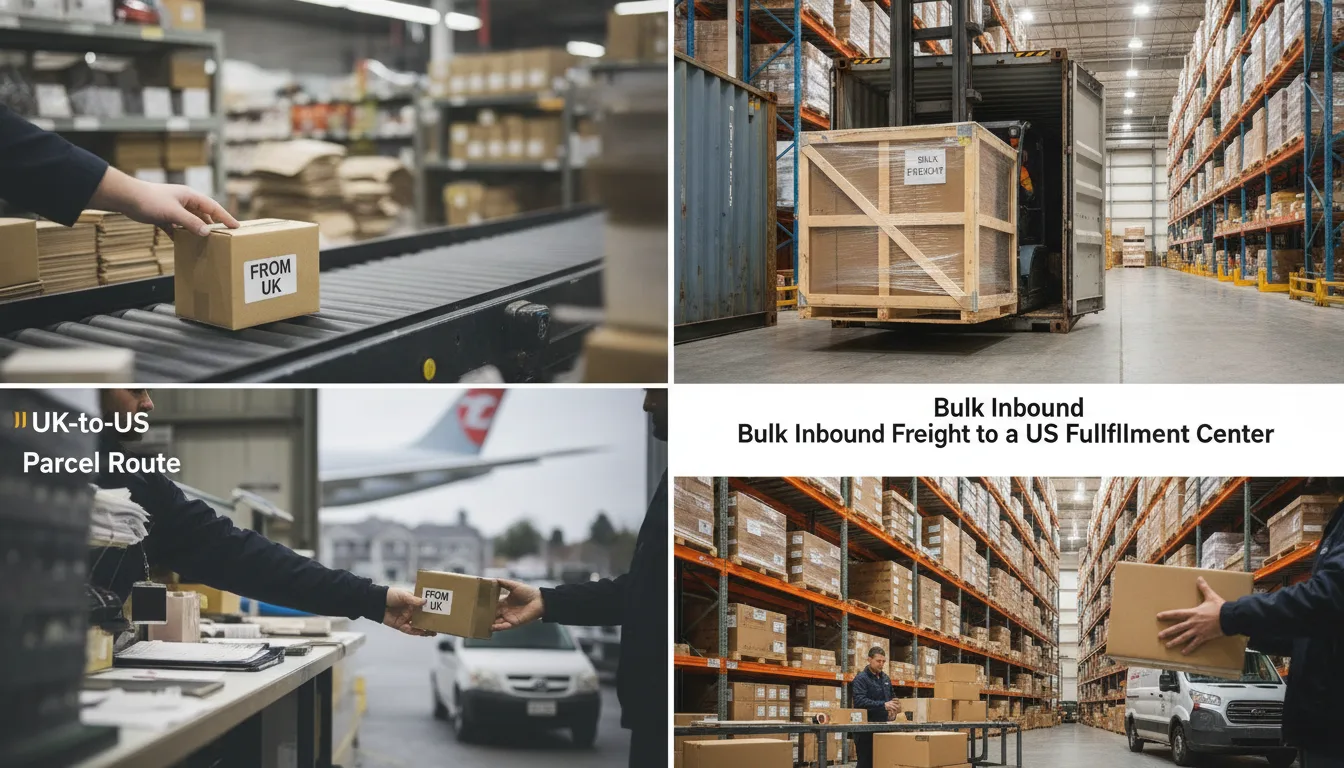
Stocking in a US fulfillment center means duties and any applicable surcharges are paid once on the bulk inbound shipment, not separately on every customer order. US customers receive packages from a domestic address via USPS, FedEx or UPS at domestic rates, and returns come back to a US warehouse rather than crossing the Atlantic.
Understanding the Section 122 Surcharge Before You Ship
Section 122 of the Trade Act of 1974 authorises the President to impose a temporary surcharge of up to 15% on imports when the US balance of payments is under sustained pressure. The current 10% surcharge became operative on 24 February 2026. As of the date of this guide, it remains in force. Consult a licensed US customs broker for the specific Harmonized Tariff Schedule (HTS) chapters that apply to your product category and for any exclusions that may have been granted.
For a UK brand planning its first US inbound shipment, the practical implication is to build the Section 122 surcharge into your landed cost calculation alongside your product-specific duty rate and any anti-dumping or countervailing duties. Do not assume the surcharge will still be in force after July 2026, but also do not assume it will have expired: at the time of writing, no extension or termination announcement has been made. A licensed customs broker can give you a current picture at the time you file.
Days 1 to 30: Legal and Customs Readiness
Who Will Act as Importer of Record?
The importer of record (IOR) is the party legally responsible for the accuracy of the customs entry, payment of duties and compliance with US import regulations. Every commercial shipment entering the US must have a named IOR. YouParcel does not act as importer of record, which is standard practice for third-party logistics providers. UK brands have three common IOR options:
- Establish a US legal entity (most common for scaling brands). A US LLC or C-Corp can hold an Employer Identification Number (EIN) from the IRS and an importer number from US Customs and Border Protection (CBP). This gives you full control over your import record and simplifies long-term compliance. Allow four to six weeks to form the entity and another one to two weeks to receive the EIN.
- Use a Foreign Importer arrangement. A foreign company can import goods into the US using a CBP-issued importer number without a US entity, but must post a customs bond and ensure a US-based customs broker represents the entry. This is operationally viable but can complicate future FDA registrations, state sales-tax nexus management and retailer compliance programmes.
- Appoint a third-party IOR service provider. Specialist IOR service companies exist specifically to act as the named importer on your behalf, typically charging a fee per shipment or per entry line. This can work for an initial test shipment, but note that the IOR service provider takes on legal liability and will have strict requirements about what they will import, particularly for regulated product categories (electronics, supplements, cosmetics, textiles).
Whichever route you choose, confirm it in writing with a licensed US customs broker before you ship a single carton. CBP guidance on importer requirements is published at CBP.gov: Importer/Exporter Tips.
Classify Your Products and Build a Landed Cost Model
HTS (Harmonized Tariff Schedule) classification determines the base duty rate for every product line you plan to import. Work through the following steps with your customs broker:
- Identify the correct 10-digit HTS code for each SKU. Minor differences in product description, material composition or end use can shift the duty rate substantially.
- Calculate the duty rate from the HTS chapter.
- Add the Section 122 surcharge (currently 10%) to the applicable duty rate.
- Add any Section 301 (China-origin) duties if any component was manufactured in China, even if assembled in the UK. Substantive transformation rules determine country of origin for duty purposes, not where the product was packed or labelled.
- Add customs bond premiums, CBP merchandise processing fee (MPF) and harbour maintenance fee (HMF) where applicable.
- Add freight, insurance and drayage to your US fulfillment center to arrive at a true landed cost per unit.
Build this landed cost into your US retail pricing before you publish listings. Adjusting prices after go-live frustrates customers and erodes margin.
Procurement: Which US Fulfillment Center Location Fits Your Customer Base?
YouParcel operates fulfillment centers on the East Coast (20 Farinella Dr, East Hanover, NJ 07936) and on the West Coast (3700 S. Riverside Ave, Rialto, CA 92324). New Jersey covers the dense Northeast corridor and gives fast ground transit to major East Coast population centres. California covers the West Coast and enables economical ground delivery across the Southwest.
If your US order mix is unknown at launch, start with a single location. Pull your existing cross-border order postcodes, map them by region and let the data guide the split when you are ready to add a second node. Many UK brands entering the US for the first time place their opening inbound in New Jersey because the port of New York and New Jersey is one of the largest container gateways on the East Coast and aligns naturally with ocean freight lanes from UK and European ports.
Days 31 to 60: Freight, Inbound and Warehouse Onboarding
Booking Your First Inbound Shipment
For a first US inbound, most UK brands ship one to three pallets as LCL (less-than-container-load) ocean freight or as air freight if the product is high-value relative to its weight. LCL consolidates your freight with other shippers in a shared container; you pay for the cubic metres your goods occupy rather than the full container. Transit time from UK ports to the US East Coast via ocean freight typically runs three to four weeks, plus drayage (the short overland move from the port to the fulfillment center). Air freight is faster but significantly more expensive per kilogram, and the Section 122 surcharge applies regardless of mode.
YouParcel offers freight forwarding services that coordinate the end-to-end move from the UK to your chosen US fulfillment center, covering ocean or air booking, customs brokerage coordination, ISF (Importer Security Filing, also called the 10+2 filing) and drayage. The ISF must be filed at least 24 hours before cargo is loaded onto the vessel at the origin port, so plan your documentation timeline accordingly.
Preparing Your Inbound Shipment Correctly
Warehouse receiving errors at a fulfillment center almost always originate in how the inbound freight was prepared, not in the warehouse itself. Follow these steps before your freight leaves the UK:
- Label every carton with a scannable barcode that matches the SKU in your warehouse management system (WMS) account. Use GS1-128 or ITF-14 format for case-level barcodes.
- Prepare an accurate packing list listing SKU, description, quantity per carton, carton count and gross weight. The packing list must match the commercial invoice used for customs entry.
- Include a commercial invoice with the correct HTS classification, declared value in USD, country of origin and the IOR name and address. Undervaluing goods on the commercial invoice to reduce duties is a federal customs offence.
- Confirm pallet dimensions and weight with the freight forwarder. Standard North American pallets are 48 x 40 inches; European pallets (1200 x 800 mm) may require restacking before they can move through US distribution networks.
- Submit an advance ship notice (ASN) to YouParcel through the integration or merchant portal before the freight departs. This allows the warehouse to pre-allocate receiving slots and reduces dock-to-shelf time.
Warehouse Onboarding: What Happens at the Fulfillment Center
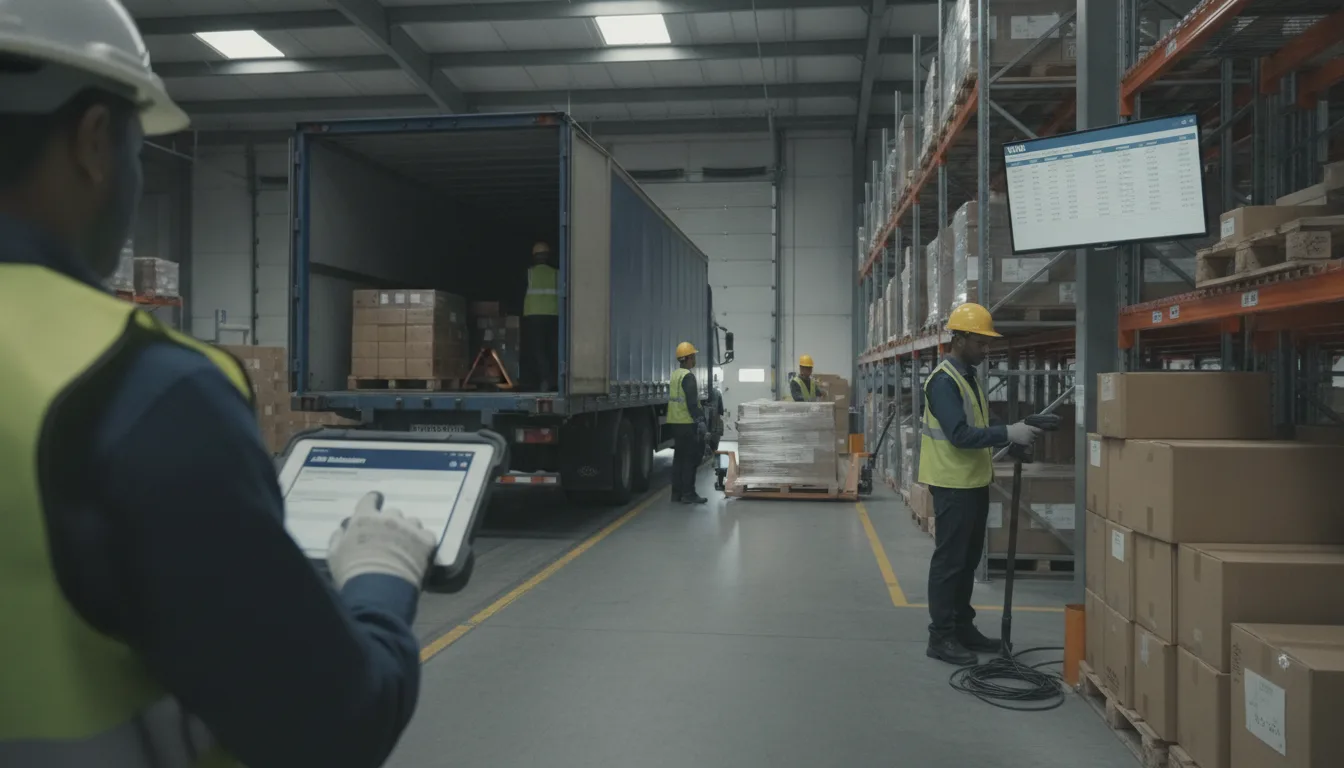
Once freight arrives at the fulfillment center, the receiving team verifies the carton count against the ASN, breaks down pallets, scans each unit into inventory and flags any discrepancies within an agreed window. Units are then slotted into storage locations within the WMS. From this point, every pick-and-pack operation, carrier label generation, shipment dispatch and inventory movement is tracked in real time.
YouParcel's ecommerce fulfillment service connects your inventory directly to your sales channels so that stock levels update as orders are placed, preventing overselling during the early weeks when you are still calibrating demand.
Days 61 to 90: Integrations, Testing and Go-Live
Connecting Your Sales Channels
YouParcel integrates with 70+ platforms including Shopify, Amazon and Salesforce. For a UK brand, the most common integration pattern at US launch is:
| Sales Channel | Integration Method | Key Setup Steps |
|---|---|---|
| Shopify (US storefront) | Native Shopify integration | Connect store, map SKUs, set US warehouse as fulfillment location, configure shipping zones and rates |
| Amazon US (FBM or MCF) | Amazon Seller Central API | Link merchant account, map ASINs to fulfillment SKUs, set handling time, confirm carrier eligibility |
| B2B / wholesale portals | EDI or API | Confirm trading partner EDI spec (850 purchase order, 856 ASN, 810 invoice), test transaction set |
| ERP / Salesforce | API or middleware | Map order objects to fulfillment events, configure inventory sync frequency, set alert thresholds |
Run end-to-end test orders before opening the US storefront to real customers. Place a minimum of five to ten test orders across different SKU combinations, shipping zones and carrier services. Verify that tracking numbers are generated, that tracking events appear in real time and that order status updates flow back to your sales channel correctly.
Carrier Selection for US Domestic Delivery
YouParcel works with USPS, FedEx, DHL and other carrier partners. For a UK brand at launch, the carrier mix for US domestic delivery typically looks like this:
| Package Profile | Likely Carrier Options | Notes |
|---|---|---|
| Under 1 lb, small parcel | USPS First-Class or Ground Advantage | Cost-effective for lightweight items; residential delivery included |
| 1 to 5 lb, standard parcel | USPS Priority Mail, FedEx Ground | Balance of speed and cost; FedEx Ground covers residential via Home Delivery |
| 5 to 70 lb, larger parcel | FedEx Ground, UPS Ground | Zone-based pricing; dimensional weight (divisor 139 for FedEx and UPS ground) may govern billable weight |
| International returns inbound | DHL, Aramex | Route returned US parcels to YouParcel's US address for processing |
Dimensional weight (dim weight) applies when the package volume divided by the carrier's dim divisor exceeds the actual weight. For FedEx and UPS ground services, the standard domestic dim divisor is 139 (cubic inches per pound). Always calculate both actual and dim weight and use the higher value for cost planning.
Returns: Setting Up a US Returns Address From Day One
US consumers expect a domestic returns address. Requiring a UK return address leads to higher refusal rates and lower conversion. Configure your returns policy to direct US customers to the US fulfillment center address from launch day. YouParcel's returns processing capability means returned units are received, inspected and either restocked or flagged for disposition without leaving the US, keeping your inventory active and your customers satisfied.
Analytics and Visibility
YouParcel provides real-time tracking and alerts at the shipment level, and business intelligence reporting that connects to tools like Tableau and Salesforce. In the first 90 days, set up weekly reporting on the following metrics:
- Units received vs. units ordered (receiving accuracy)
- Order processing time from receipt to ship
- Carrier on-time performance by zone
- Return rate by SKU
- Inventory days on hand by SKU
These five data points will surface the adjustments you need to make heading into Month 4 and beyond.
A Week-by-Week Summary
| Week | Phase | Key Actions |
|---|---|---|
| 1 to 2 | Legal and compliance | Select IOR structure; engage US customs broker; confirm US entity timeline or foreign importer arrangement |
| 3 to 4 | Classification and landed cost | Classify all SKUs (HTS codes); build landed cost model including Section 122 surcharge; finalise US retail pricing |
| 5 to 6 | Fulfillment partner onboarding | Sign 3PL agreement; confirm warehouse location (NJ or CA); open merchant portal account; configure SKU catalogue |
| 7 to 8 | Freight booking | Book LCL ocean freight or air freight; prepare commercial invoice and packing list; submit ISF 24+ hours before vessel load |
| 9 to 10 | Freight in transit | Monitor freight status; prepare ASN for warehouse; complete US entity/EIN registration if not yet finalised |
| 11 | Receiving and put-away | Freight arrives at US fulfillment center; receiving team verifies and scans inventory; confirm stock levels in WMS |
| 12 | Integration setup | Connect Shopify, Amazon or ERP; map SKUs; configure carrier services and shipping zones; set up returns flow |
| 13 | Testing | Place 5 to 10 test orders; verify tracking, carrier label generation, order status sync and returns processing |
| 14 | Go-live | Open US storefront or activate US marketplace listings; monitor first real orders closely; review daily reports for first two weeks post-launch |
Common Mistakes UK Brands Make in the First 90 Days
Underestimating Duty and Surcharge Costs
The most frequent financial surprise is a landed cost that is 20 to 40% higher than expected because the brand calculated only the base duty rate and ignored the Section 122 surcharge, MPF, HMF and freight insurance. Build every line item into your cost model in Week 3, not after your first entry.
Skipping the ISF Filing or Filing Late
CBP requires the Importer Security Filing (the 10+2 filing) to be submitted at least 24 hours before cargo is loaded onto the vessel at the origin port. A late or missing ISF results in liquidated damages and can lead to cargo holds at the US port of entry. Your freight forwarder or customs broker files the ISF on your behalf, but you are responsible for supplying accurate data.
Sending Inventory Before the Integration Is Ready
Receiving inventory into a fulfillment center before your sales channel integration is tested means orders can be placed that the warehouse cannot fulfill accurately. Complete the integration and run test orders before your freight arrives, or at minimum before go-live.
No US Returns Policy in Place at Launch
Returns are not optional for US consumers. Launch without a clear US domestic returns process and you will face chargebacks, negative reviews and higher return-to-sender volumes. Configure your returns address at the fulfillment center before the first customer order ships.
Frequently asked questions
Does a UK brand need a US company to import goods into the United States?
No, a US legal entity is not strictly required. A UK company can import into the US as a foreign importer using a CBP-issued importer number and a customs bond. However, forming a US entity (LLC or C-Corp) simplifies long-term compliance, state sales-tax registration and retailer onboarding. A licensed US customs broker can advise on the most appropriate structure for your volume and product category.
Does the Section 122 surcharge apply to goods shipped from the UK?
The 10% Section 122 surcharge that took effect on 24 February 2026 applies broadly to US imports. Your customs broker can confirm the current applicability to your specific HTS codes and origin country, including any exclusions in force at the time you file your entry.
Which YouParcel US fulfillment center should a UK brand use first?
Most UK brands starting with a single US warehouse location choose New Jersey, because it is served by the port of New York and New Jersey (a natural East Coast ocean freight gateway) and covers the densely populated Northeast US. YouParcel also has a California facility for West Coast coverage.
How long does it take to go live with a US fulfillment partner?
A realistic timeline from first conversation to live US orders is 10 to 14 weeks when legal setup, HTS classification, freight booking and warehouse onboarding are run in parallel. The binding constraints are usually the IOR/entity setup (four to six weeks) and ocean freight transit time (three to four weeks). Starting the IOR process in Week 1 keeps the plan on track.
Can YouParcel handle both freight into the US and ongoing ecommerce fulfillment?
Yes. YouParcel offers freight forwarding services to coordinate the inbound move from the UK to the US fulfillment center, and then handles pick, pack and ship for every customer order on an ongoing basis. Having one partner manage the full chain, from freight-in to doorstep and returns, reduces coordination overhead and gives you a single point of contact for operational issues.
Ready to map out your US launch? Talk to an Expert at YouParcel and get a fulfillment plan built around your product, your volume and your go-live date.