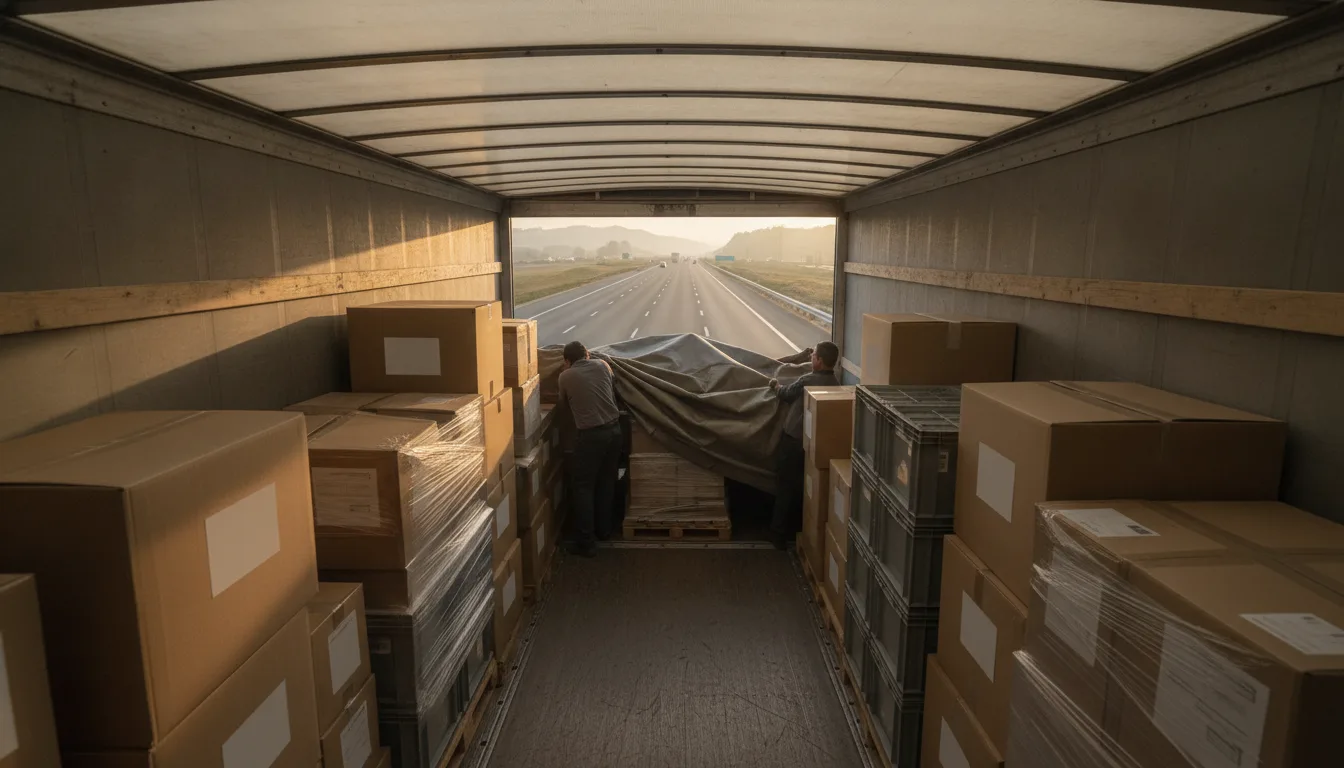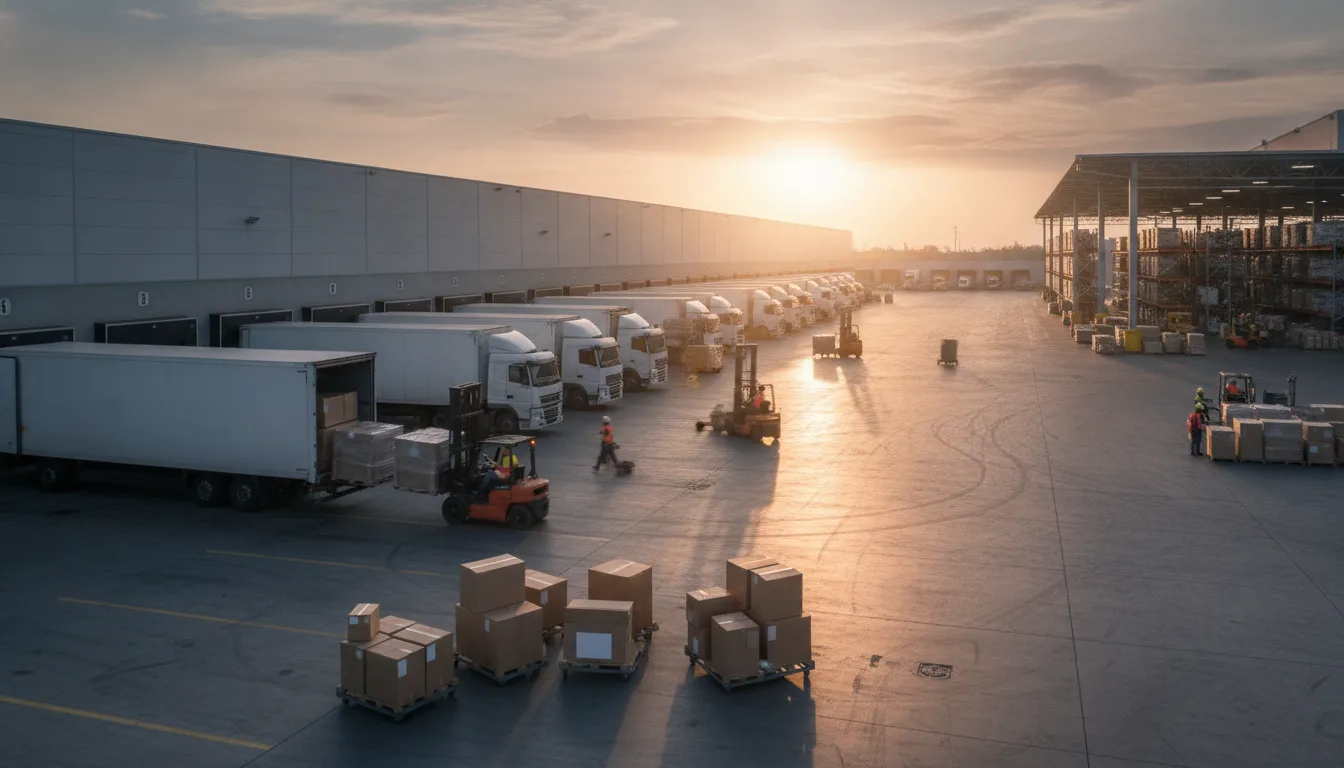


Return to origin (RTO) is the process by which an undeliverable parcel is sent back to the shipper or fulfillment center instead of reaching the customer. It is one of the costliest failure modes in reverse logistics: the brand pays for outbound shipping, absorbs the return freight cost, and receives inventory in an uncertain condition, all without completing a single sale. YouParcel handles RTO processing as part of its reverse logistics service, receiving returned parcels, grading items and routing them back into inventory or to disposal.
- RTO is triggered by bad addresses, customer refusals, failed delivery attempts and customs rejection, not by buyer-initiated returns.
- Every RTO event creates a double freight cost plus potential inventory damage, making it one of the highest-margin drains in outbound logistics.
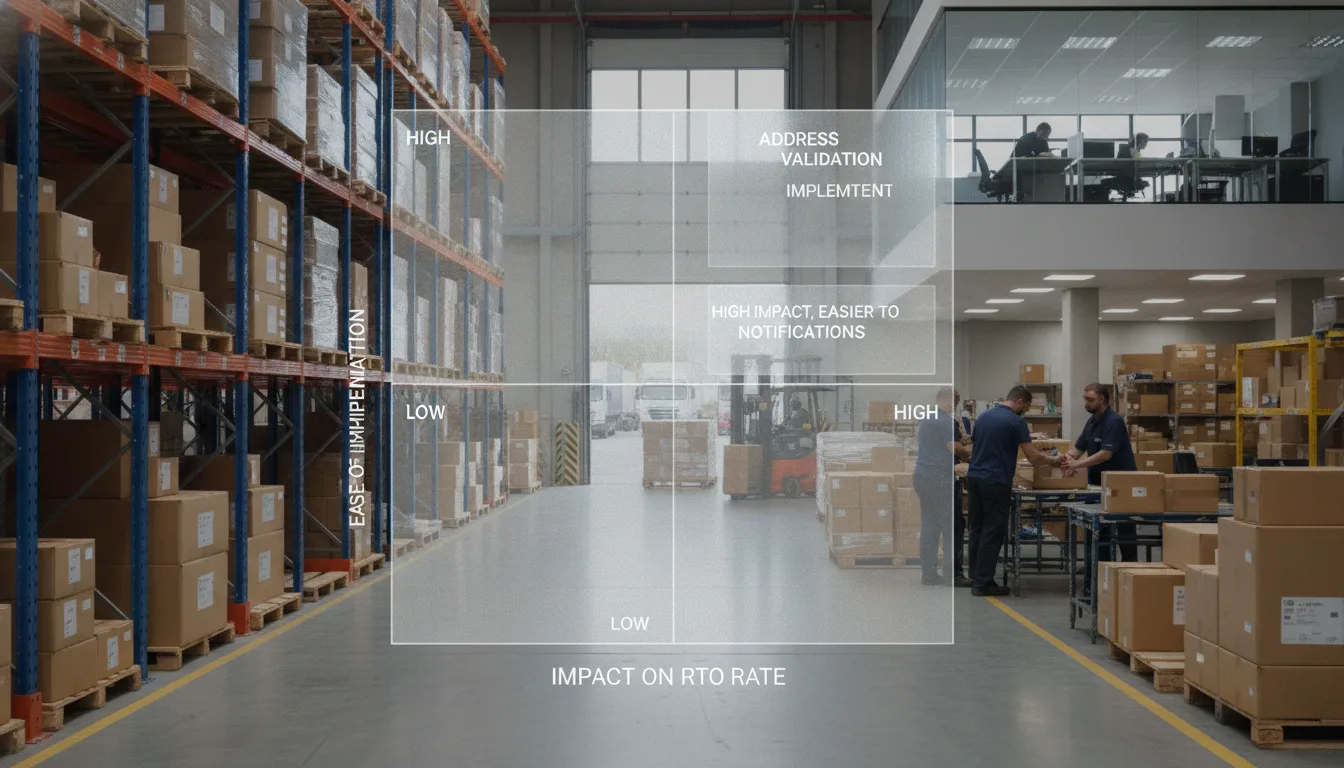
- Address validation, carrier selection, proactive delivery alerts and clear warehouse receiving workflows are the four levers that cut RTO rates the most.
- Partnering with a 3PL that handles both outbound shipping and returns processing closes the loop faster and reduces the cost per RTO event.
What Does Return to Origin Mean in Ecommerce?
RTO (sometimes written as "return to origin" or "RTO shipment") refers specifically to parcels that the carrier could not deliver and that are returned to the originating warehouse rather than held for pickup or forwarded. It is distinct from a customer-initiated return, where the buyer requests a return merchandise authorization and ships the item back, and from a failed delivery that the carrier reattempts the next day.
RTO is the terminal outcome of repeated failed delivery: the carrier exhausts its reattempt window, the parcel goes back into the carrier network, and it is physically transported back to the shipper. At that point, the brand has paid two freight bills and owns an item it never sold.
What Causes RTO Shipments?
Understanding the root cause of each RTO is the first step toward eliminating it. In practice, most RTO events fall into one of four categories.
Incorrect or Incomplete Delivery Addresses
An address that cannot be geocoded by the carrier is the single most common RTO trigger. This includes missing apartment numbers, transposed zip codes, misspelled street names and addresses that exist in the customer's mind but not in the postal database. USPS, FedEx and other carriers each maintain address validation databases; a parcel that fails that check at the sort facility may be rerouted, delayed or immediately flagged for return depending on the carrier's policy.
The practical fix is address validation at checkout, before the order is ever picked and packed. Most major ecommerce platforms and order management systems support real-time validation through tools such as the USPS Address Information API, which corrects and standardizes addresses against the official postal database. Running a secondary validation pass at the time of label generation adds a second checkpoint, particularly useful for orders that arrive through marketplaces or EDI channels where customer address data is formatted differently.
Customer Refusals at the Door
Some customers refuse delivery intentionally. This happens when the item arrives damaged, when the customer has already purchased a replacement elsewhere, when cash-on-delivery (COD) orders cannot be settled at the door, or when the buyer simply changed their mind. In B2B and wholesale channels, a receiving dock may refuse a shipment if it arrives outside a routing guide window, with wrong labeling, or on an unauthorized carrier.
Refusals are harder to prevent than address errors because they involve a human decision at delivery time. The most effective countermeasure is proactive communication: a confirmed shipment notification with a photo of the parcel, a delivery window estimate and a clear link to reschedule or redirect the shipment gives the customer agency before the carrier arrives, reducing the likelihood of a cold refusal.
Failed Delivery Attempts
Carriers make one to three delivery attempts, depending on their service level and the destination. If nobody is home, there is no safe place to leave the parcel and no access to a secure building, the parcel moves to a carrier facility or locker for a hold period. If the customer does not collect it within that window, commonly five to fifteen business days depending on carrier and service, it is returned to origin.
Residential deliveries with no access instructions and no alternative delivery location are the most common scenario. Apartment buildings without package rooms, gated communities and rural routes with no mailbox access are recurring problem profiles. For high-value items that require a signature, the probability of a first-attempt success drops significantly because the customer must physically be present.
Customs Rejection and Import Compliance Failures
For cross-border shipments, a parcel can be returned to origin by customs authorities if the declared value is incorrect, the goods are restricted or prohibited in the destination country, documentation is missing or inconsistent, or duties and taxes are unpaid under a DDU (Delivered Duty Unpaid, meaning the receiver owes duties on arrival) arrangement and the recipient refuses to pay. When customs rejects a shipment and the shipper cannot provide corrected documentation in time, the parcel is returned to its country of origin at the shipper's expense.
Since August 2025, U.S. imports no longer benefit from a low-value duty-free threshold, so parcels entering the United States now face duty assessment regardless of declared value. Incorrect duty calculations or missing Harmonized System (HS) codes on inbound commercial invoices are a growing source of customs-triggered RTOs for brands shipping into the US.
How Much Does RTO Actually Cost?
The financial impact of an RTO event is larger than most brands calculate, because they often count only the return freight charge. The true cost per RTO includes:
| Cost Component | What It Covers | Who Bears It |
|---|---|---|
| Outbound shipping | Original label cost from warehouse to customer | Brand |
| Carrier return fee | Fee to send the parcel back (varies by carrier and zone) | Brand |
| Warehouse receiving | Inbound receiving, check-in and grading at the 3PL | Brand |
| Restocking or disposal | Labor to inspect, repackage and return to shelf, or to dispose of unsellable units | Brand |
| Customer service | Agent time handling the failed delivery inquiry | Brand |
| Lost sale | Revenue not captured; potential customer churn | Brand |
| Inventory holding | Storage cost while item awaits re-listing | Brand |
For low-margin product categories, a single RTO can erase the gross margin on two or three successfully delivered orders. At scale, even a small RTO rate compounds into a significant drag on profitability.
Shipping Steps That Reduce RTO Before the Parcel Leaves the Warehouse
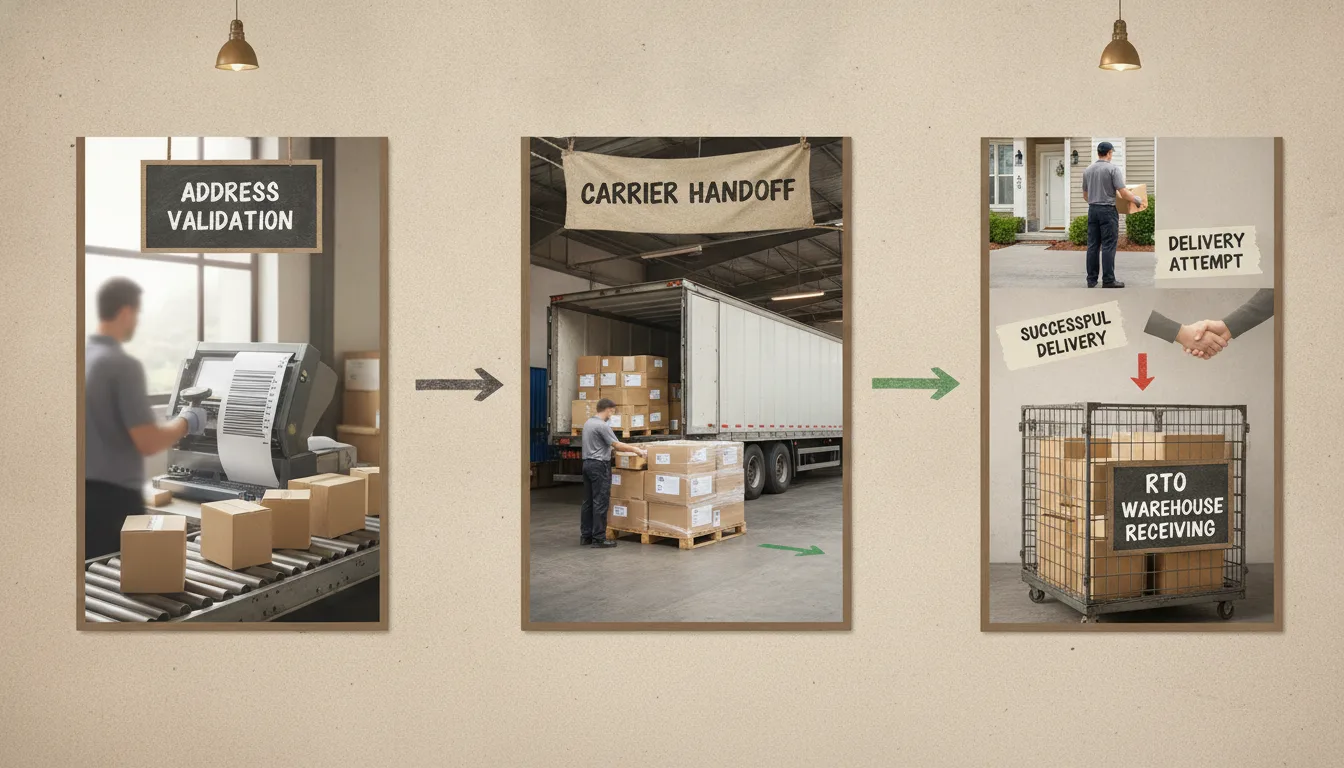
Step 1: Validate Addresses at Checkout and Again at Label Generation
Use a real-time address validation API at the point of purchase. Flag addresses that return a low confidence score and prompt the customer to confirm or correct. At label generation, run the validated address through the carrier's own standardization tool before printing. For high-value orders, a human review of flagged addresses takes under two minutes and prevents a costly RTO event.
Step 2: Choose Carriers and Service Levels That Match the Destination Type
Not all carriers perform equally across all delivery environments. A carrier optimized for urban residential delivery may have a poor record on rural routes, and vice versa. YouParcel's shipping service works with USPS, FedEx, DHL, Aramex and EasyPost, allowing the right carrier to be matched to each destination. USPS, for example, delivers to every US address including PO boxes and APO/FPO addresses where private carriers do not, reducing failed delivery attempts in difficult zones. For international shipments, selecting a carrier with a local last-mile partner in the destination country significantly reduces customs-related RTO events.
Step 3: Send Proactive Delivery Notifications
Real-time tracking and alerts give customers visibility into exactly where their parcel is and when it will arrive. When a customer knows a delivery is coming tomorrow before 1 PM, they can arrange to be home, redirect to a neighbor, or request a hold at a carrier location. YouParcel provides real-time tracking at the order level, which brands can surface through their own branded communications. A simple sequence of three notifications: dispatch confirmation, out-for-delivery alert, and delivery confirmation, can materially reduce refusals and failed attempts.
Step 4: Offer Delivery Alternatives Before the First Attempt
Include a link to the carrier's delivery preference portal in your dispatch notification. Most major carriers allow customers to redirect to an alternative address, hold at a facility, or leave a delivery instruction (safe place, neighbor) before the driver arrives. Building this redirect option into your post-purchase email sequence costs nothing and removes the most common cause of failed first attempts.
Step 5: Get Customs Documentation Right the First Time
For cross-border shipments, every commercial invoice must include the correct HS code for each item, an accurate declared value, a clear country of origin, and the correct Incoterm (DDP or DDU). Under DDP (Delivered Duty Paid), the shipper arranges and pays duties in advance, eliminating the most common reason customers refuse international parcels at the door. Under DDU, the customs agency contacts the receiver to collect duties; if the receiver does not respond or refuses, the parcel is returned. For most consumer ecommerce shipments, DDP is the lower-RTO choice, though it requires pre-calculating and remitting duties, which adds operational complexity.
Warehouse Steps That Reduce the Cost of RTOs That Do Happen
Even with strong prevention, some RTO events are inevitable. The warehouse receiving process determines how quickly and cheaply those units can be recovered.
Establish a Dedicated RTO Receiving Lane
RTO parcels should not share a receiving queue with new supplier inbound freight. They need a separate process because they require inspection, grading and a disposition decision, steps that do not apply to new inventory. A dedicated RTO lane at the warehouse means the parcel is opened, the item is graded (sellable, refurbishable or unsellable), the original order record is updated, and the unit is routed to the correct location: back to pick-able inventory, to a rework station, or to disposal or recycling.
Update Inventory Records in Real Time
An RTO unit that sits in a receiving queue for five days without being scanned is invisible to your order management system. If your warehouse management system (WMS) is integrated with your ecommerce platform, confirmed RTO receipts should trigger an automatic inventory update. This matters because a unit sitting unscanned cannot be re-sold, but a unit scanned and graded as sellable can be listed and generating revenue within hours. YouParcel integrates with Shopify, Amazon and 70+ other platforms, meaning that RTO-received inventory can be synced back to your store without manual intervention.
Grade Items Consistently Using a Defined Rubric
Grade A: factory sealed or visually indistinguishable from new, can be resold as new. Grade B: open box, all components present, minor cosmetic marks, resalable as "like new" or refurbished. Grade C: missing components or functional damage, requires rework. Grade D: unsellable, route to recycling or disposal. A consistent rubric, applied by trained warehouse staff, removes the guesswork from disposition decisions and prevents resalable inventory from being discarded and unsellable inventory from being returned to the pick face.
Track RTO by Root Cause, Not Just Volume
A monthly RTO report broken down by root cause (address error, refused, failed attempt, customs) tells you where to invest. If 60% of your RTOs are address errors, the ROI on address validation at checkout is immediate. If 30% are customs-related, the fix is in your documentation workflow. Without root-cause data, every RTO looks the same and nothing improves. BI and analytics integrations, including connections with Salesforce and Tableau, can surface this breakdown automatically when carrier return reason codes are captured at receiving.
RTO in the Context of a Broader Reverse Logistics Strategy
RTO is one piece of a larger reverse logistics picture that includes customer-initiated returns, exchanges, international returns and end-of-life disposal. The warehouse infrastructure that handles RTO well, a staffed receiving dock, grading stations, a WMS with disposition logic, and carrier integrations, is the same infrastructure that handles all reverse flows efficiently.
Brands using returns software platforms such as Loop or Happy Returns often focus those platforms on customer-facing return portals and RMA generation. The physical warehouse work, receiving, grading, restocking and disposing, still needs to happen somewhere. YouParcel positions itself as the warehouse behind your returns app, handling the physical reverse flow so the software platform and your brand team can focus on the customer experience. The YouParcel reverse logistics service covers the full physical returns process, from inbound receiving through grading and disposition.
For brands managing international returns, the RTO problem is more acute because return shipping costs across borders are substantially higher and customs clearance adds another failure point on the return leg. Dedicated in-country return addresses, where a parcel is received locally and either restocked locally or consolidated for bulk return to the origin country, can cut international RTO costs significantly. This is a configuration YouParcel can discuss as part of a custom solution, since the right setup depends on return volume, product category and destination markets.
RTO Reduction Checklist for Ecommerce Operations Leads
- Add real-time address validation at checkout with a prompt for customer correction on low-confidence results.
- Run a second address standardization pass at label generation using the carrier's own tool or a postal API.
- Select carriers based on delivery environment (urban vs. rural, domestic vs. international, residential vs. commercial) rather than defaulting to a single carrier for all shipments.
- Build a three-touch delivery notification sequence: dispatch, out-for-delivery and delivered (or failed attempt with next steps).
- Include a carrier redirect or delivery preference link in every dispatch notification email.
- Audit all cross-border shipments for correct HS codes, accurate declared values, complete origin documentation and a deliberate DDP or DDU decision on each lane.
- Create a dedicated RTO receiving lane at your warehouse with a written grading rubric and a maximum 24-hour from-receipt-to-graded target.
- Integrate your WMS with your ecommerce platform so that graded-sellable RTO units update live inventory automatically.
- Capture carrier return reason codes at receiving and report RTO volume by root cause monthly.
- Review carrier RTO rates by destination zone quarterly and re-evaluate carrier assignments for problem zones.
Frequently asked questions
What is the difference between RTO and a customer return?
An RTO (return to origin) is a carrier-initiated event: the parcel could not be delivered and the carrier sends it back to the shipper. A customer return is buyer-initiated: the customer receives the item and then requests to send it back through a return portal or RMA process. Both end up at the warehouse, but they have different root causes and require different prevention strategies.
How long does it take for an RTO parcel to reach the warehouse?
Transit time for an RTO parcel depends on the carrier, the original destination and the number of reattempts made before the return is initiated. Domestic US RTOs typically take three to ten business days from the final failed attempt to arrive back at the fulfillment center. International RTOs can take several weeks, particularly when customs clearance is required on the return leg.
Can a 3PL help reduce RTO rates or only handle RTOs after they happen?
A 3PL can help on both sides. On the prevention side, a fulfillment partner with strong carrier relationships and multi-carrier routing can match shipments to the right carrier for each destination, reducing failed delivery rates. On the processing side, a 3PL with a dedicated returns receiving workflow minimizes the time and cost of recovering RTO inventory.
Who pays the return shipping cost on an RTO?
In most cases, the shipper (the brand) pays for return freight on an RTO, either as a billed return fee from the carrier or as a deduction from a shipping account balance. Some carrier contracts include a fixed RTO fee per parcel; others bill at a rate based on weight, dimensions and return distance. Reviewing the RTO fee structure in your carrier agreement before you experience high RTO volumes is worth the time.
What happens to RTO parcels that contain damaged or unsellable items?
RTO parcels containing damaged or unsellable items should be routed to disposal or recycling rather than returned to the pick face. YouParcel's reverse logistics service includes recycling and disposal as disposition options, ensuring that unsellable returned units are handled responsibly rather than simply discarded. Brands working toward carbon-neutral practices can align their disposal workflow with their broader sustainability commitments.
To learn how YouParcel can build a returns and RTO processing workflow that fits your volume, product type and carrier mix, talk to an expert.