


When ecommerce brands search for ShipMonk vs 3PL alternatives, they are usually weighing one focused provider against a broader field of fulfillment partners that may offer better geographic coverage, deeper integrations or more flexible pricing. YouParcel is one of those alternatives: a US-based 3PL with warehouses in New Jersey, California and Illinois, handling 10,000+ orders a day across multiple marketplaces and shipping to 100+ countries.
- ShipMonk is a solid DTC-focused 3PL, but it is not the best fit for every brand, particularly those with B2B, wholesale or international freight requirements.
- The most important comparison criteria are warehouse locations, integration depth, service scope (B2B, kitting, returns, freight) and how pricing scales with order volume.
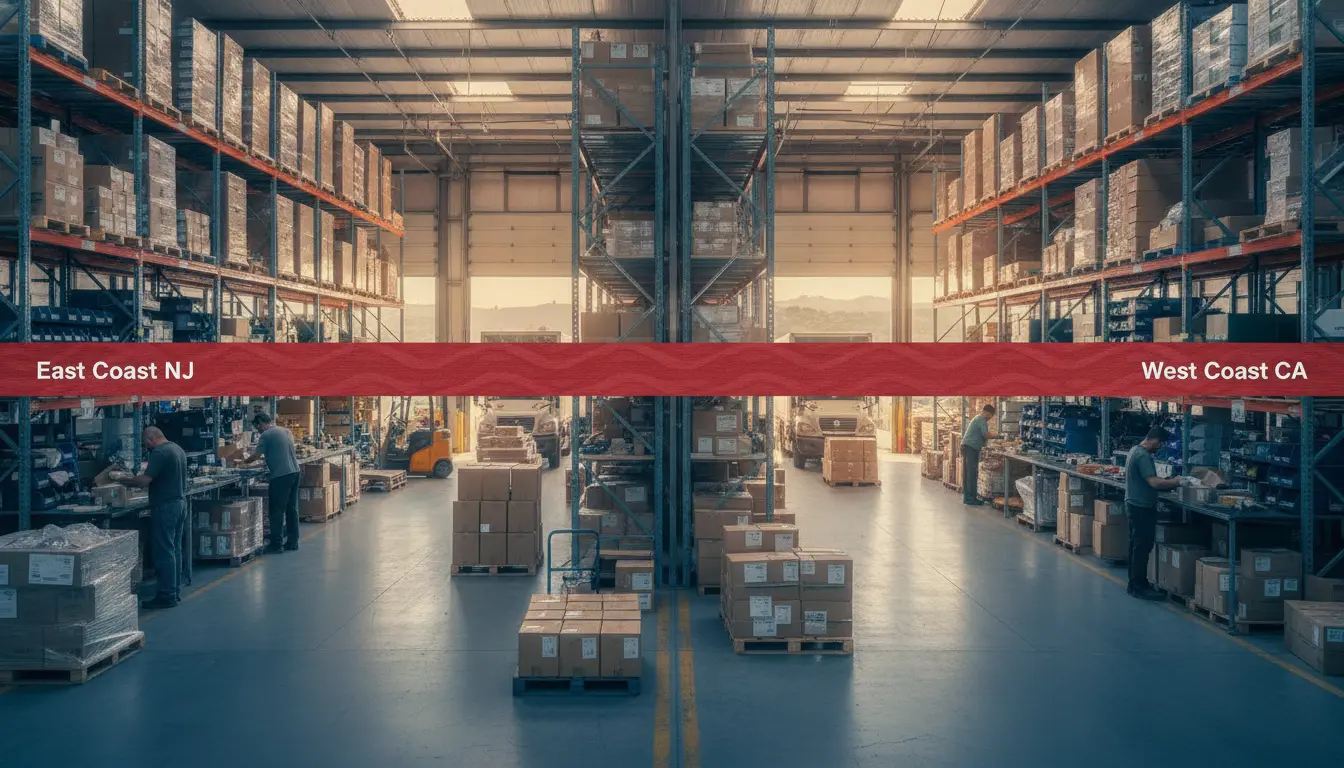
- YouParcel operates fulfillment centers at 20 Farinella Dr, East Hanover, NJ 07936 and 3700 S. Riverside Ave, Rialto, CA 92324, giving brands bi-coastal inventory placement without splitting 3PL relationships.
- No published price list exists for either provider; always request a custom quote based on your SKU count, order volume and channel mix before committing.
Why brands start looking at ShipMonk alternatives
ShipMonk built its reputation serving DTC Shopify and subscription-box brands at the startup-to-mid-market stage. Brands that outgrow that profile typically cite three friction points when they start evaluating other options.
First, warehouse geography. A single fulfillment node works well until your West Coast customers complain about transit times and your shipping costs per zone climb. Bi-coastal or tri-location inventory placement can cut average transit from four to five days down to two to three days for most US addresses, depending on carrier service level chosen, without upgrading to expedited shipping.
Second, channel complexity. Brands that add wholesale accounts, Amazon Vendor Central or EDI-based retail partners find that a purely DTC-oriented 3PL often lacks routing-guide compliance, pallet-build capabilities and the EDI transaction sets (850, 856, 810) that major retailers require.
Third, freight continuity. Many growing brands want one partner that can handle inbound freight forwarding, customs coordination, warehousing and outbound fulfillment. Splitting those relationships across two or three vendors creates handoff risk and makes it harder to attribute inventory discrepancies.
ShipMonk vs YouParcel: a side-by-side comparison
The table below uses publicly available information about ShipMonk and stated facts about YouParcel. Pricing cells are left as "custom quote" because neither provider publishes a universal rate card; your actual cost depends on SKU dimensions, order profile, storage turns and negotiated rates.
| Criterion | ShipMonk | YouParcel |
|---|---|---|
| US warehouse locations | Florida, California, Texas, Pennsylvania, Nevada (per published data) | New Jersey (East Hanover), California (Rialto), Illinois |
| International shipping | Supported via carrier network | Ships to 100+ countries; carriers include DHL, Aramex, FedEx, USPS, EasyPost |
| Orders per day (platform scale) | Not publicly stated | 10,000+ orders per day across multiple marketplaces |
| Shopify integration | Yes | Yes, plus 70+ platform integrations including Amazon, Salesforce and Tableau |
| Amazon MCF / FBA prep | FBA prep offered | FBA prep services available; Amazon integration native |
| B2B / wholesale / EDI | Limited published detail | EDI support, retailer routing-guide compliance, pallet builds, kitting and assembly |
| Subscription box fulfillment | Core offering | Supported; dedicated subscription box fulfillment service |
| Kitting and assembly | Supported | Supported, including custom kitting for retail and DTC |
| Returns / reverse logistics | Supported | Dedicated reverse logistics service with RMA processing, grading and restocking |
| Freight forwarding | Not a core service | In-house freight forwarding and customs coordination |
| BI and analytics | Portal-level reporting | Real-time tracking and alerts, BI analytics, Tableau and Zoho Analytics integrations |
| White-label shop-and-ship | Not offered | 250,000+ shop-and-ship customers; white-label program available; warehouses in USA, UK and Turkey |
| Sustainability commitment | Not prominently stated | Active steps toward carbon-neutral services |
| Pricing model | Custom quote | Custom quote |
Sources: ShipMonk public website (accessed 2026); YouParcel stated capabilities.
What the comparison does not tell you
A feature table is a starting point, not a decision. Three things matter more than any single row in the table above.
Warehouse proximity to your customer base
Dimensional weight (the pricing method carriers use to charge based on a package's size relative to its actual weight, using a divisor of 139 for domestic US parcels with most major carriers) means that heavier, denser products are less sensitive to zone-based pricing than light, bulky ones. If your average order is a lightweight apparel item or a supplement bottle, adding a second inventory node on the opposite coast can materially reduce your per-shipment cost and your average transit time. YouParcel's East Hanover, NJ facility serves the NY/NJ metro and the dense Northeast corridor; the Rialto, CA facility covers Southern California and the West Coast.
Channel mix today and in 12 months
A brand running only Shopify DTC has different requirements from one that also sells on Amazon, supplies Target or Walmart through EDI, and ships pallets to a regional distributor. If your roadmap includes retail distribution, make sure any 3PL you evaluate can produce GS1-compliant labels, build floor-ready merchandise, and transmit ASN (Advance Ship Notice, EDI 856) and invoice (EDI 810) transactions. YouParcel supports these requirements, which is why it serves both DTC and B2B channels from the same inventory pool. The B2B and wholesale fulfillment guide covers retailer compliance requirements in detail.
Inbound supply chain continuity
If your factory is in Asia or Europe, your 3PL relationship does not start at the warehouse receiving dock. It starts when your freight is on the water or in the air. A 3PL that also offers freight forwarding and customs broker coordination removes one of the most common sources of receiving delays: the hand-off between an independent freight forwarder and the warehouse team. YouParcel handles freight forwarding in addition to fulfillment, which means your inbound and outbound operations can be managed by one team.
When ShipMonk is likely a good fit
Fairness matters in any comparison. ShipMonk suits brands that:
- Are early-stage DTC or subscription-box businesses with straightforward SKU counts and no near-term B2B plans
- Have most of their customers in the Sun Belt states, where ShipMonk's Texas and Florida locations reduce transit times
- Want a provider that has built its entire product around Shopify-native DTC workflows
- Do not yet need international freight or customs coordination from the same partner
When a ShipMonk alternative makes more sense
Consider evaluating alternatives, including YouParcel, when one or more of the following applies to your situation.
You need Northeast or Great Lakes warehouse coverage
A large share of US ecommerce demand comes from the Boston-to-Washington corridor and the Great Lakes metro areas. Stocking inventory in New Jersey puts product within one to two ground-service days of roughly 50 million US consumers. If your current 3PL is not positioned there, your zone-weighted shipping cost is structurally higher than it needs to be.
You sell B2B and DTC from the same SKU pool
Omnichannel brands that fulfill DTC orders and wholesale purchase orders from one inventory location need a 3PL with separate workflows for each channel type. DTC orders ship in branded poly mailers with a packing slip; wholesale orders ship on pallets with retailer-specific carton labels and an ASN. Running both from one pool without a 3PL that separates those workflows leads to allocation errors and compliance chargebacks from retail partners. YouParcel's ecommerce fulfillment services cover both use cases.
You are expanding internationally or importing from overseas factories
US de minimis duty-free entry is suspended as of August 29, 2025. Every parcel entering the United States is now subject to formal customs entry and applicable duties, regardless of value. That change makes it more cost-effective than ever to hold US inventory domestically rather than shipping individual parcels from your overseas factory. If you are moving from a cross-border direct-ship model to a US warehouse model, the complexity of freight, customs clearance and 3PL receiving increases significantly. Having a single partner who handles all of it reduces coordination risk.
You need a white-label shop-and-ship program
ShipMonk does not offer a white-label shop-and-ship product. If you are a marketplace operator, logistics reseller or brand that wants to offer package forwarding under your own name, YouParcel's white-label program supports over 250,000 shop-and-ship customers with warehouses in the USA, the UK and Turkey.
How to run a fair 3PL evaluation: a practical checklist
Before you request quotes, get these inputs ready. The more specific your brief, the more comparable the responses you receive.
- Document your current SKU count, average SKU dimensions (length x width x height in inches) and average unit weight. These drive storage bin assignment, pick-and-pack labor time and dimensional weight calculations.
- Pull your last 90 days of orders by state. Map the top 10 destination states to understand which warehouse locations would minimize average shipping zone.
- List your sales channels: Shopify, Amazon Seller Central, Amazon Vendor Central, Walmart, TikTok Shop, wholesale accounts. Each channel has different integration and compliance requirements.
- Define your inbound freight profile: how often do inbound shipments arrive, in what format (pallets, floor-loaded containers, parcel boxes) and from which origin countries?
- State your peak volume multiple. If your average daily order count is 200 but you hit 1,500 on Black Friday, the 3PL needs to know that before quoting. A provider who cannot absorb your peak gracefully will cause customer-facing failures at your most critical moment.
- Ask each provider for a written SLA covering order cut-off times, same-day ship rate targets, inventory accuracy targets and return processing windows.
- Ask for the exit terms. What is the notice period? How is your inventory returned to you, and at what cost?
The 3PL alternatives comparison framework on the YouParcel blog walks through each of these criteria in greater depth, including how to weight them for your specific business model.
YouParcel's specific strengths for growing brands
Rather than repeating the table above, here are four concrete differentiators that come up most often in discovery calls.
One partner from freight-in to doorstep
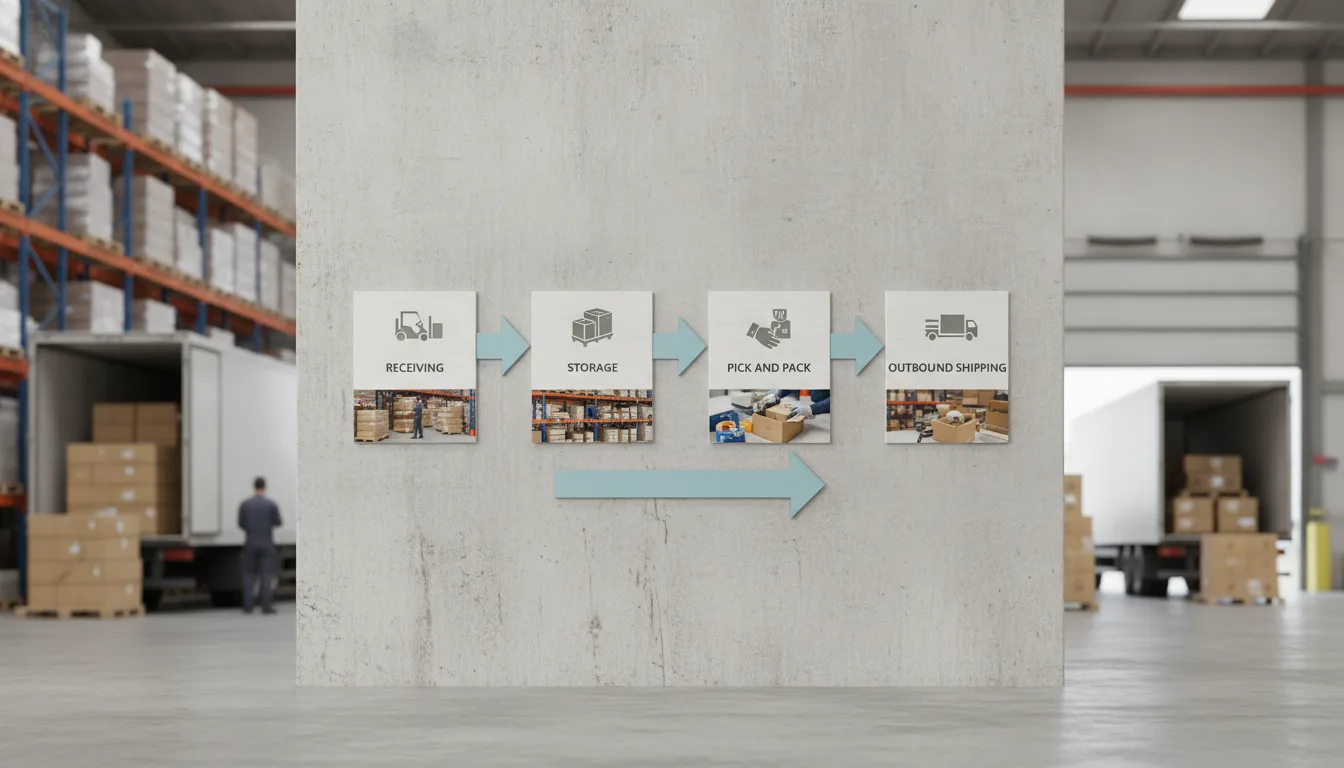
YouParcel handles freight forwarding, US customs coordination, warehouse receiving, pick and pack, outbound shipping and returns. Brands that previously used three separate vendors for these functions report that consolidating to one partner reduces the number of conversations required to resolve an inbound delay or a receiving discrepancy.
70+ platform integrations, including enterprise tools
Most 3PLs connect to Shopify and Amazon. YouParcel also integrates with Salesforce, Tableau, Oracle NetSuite, SAP, SPS Commerce and over 70 other platforms. That matters for brands that have outgrown spreadsheet-level operations and need their 3PL data to flow into their ERP or BI layer without manual exports.
Hands-on customer service from an experienced team
YouParcel's leadership team has 50+ years of combined logistics experience. The service model is hands-on rather than fully self-serve: when an edge case arises (a carrier exception on a time-sensitive B2B shipment, a receiving discrepancy on an inbound container), there is an accountable person to call, not just a ticket queue.
Custom solutions for non-standard problems
Subscription box assembly with insert sequencing, FBA prep for oversized ASINs, crowdfunding fulfillment with backer-specific SKU routing, retail kitting for club-store packs: these are all things YouParcel handles. Brands with straightforward SKU profiles may never need this, but brands with complex operations need to know their 3PL can keep up.
A note on pricing: why no one should quote you a rate without data
Fulfillment pricing has four main cost buckets: receiving (per pallet or per hour), storage (per pallet, per shelf bin, or per cubic foot per month), pick and pack (per order plus per item), and outbound shipping (carrier rate less negotiated discount). The interaction between these four buckets means that a provider who is cheaper on pick-and-pack labor may be more expensive overall if their storage rates are higher or their carrier discounts are weaker.
Neither ShipMonk nor YouParcel publishes a universal rate card because the cost per order varies too widely across product types, order profiles and volume tiers to be meaningful without actual account data. Any provider that quotes you a headline price-per-order without reviewing your SKU dimensions, weight profile and order mix is quoting a number that will not match your invoice. For a YouParcel quote built on your actual data, talk to an expert.
Frequently asked questions
Is ShipMonk good for high-volume ecommerce brands?
ShipMonk can serve brands at significant volume, but high-volume brands should evaluate whether its warehouse locations align with their customer geography and whether its B2B and EDI capabilities match their channel roadmap. If a brand is shipping 1,000 or more orders a day across DTC, wholesale and marketplace channels, the evaluation criteria shift considerably toward operational depth and integration reliability.
What is the main difference between ShipMonk and YouParcel?
ShipMonk is primarily a DTC fulfillment provider. YouParcel is a broader logistics partner that covers fulfillment, freight forwarding, B2B wholesale distribution, reverse logistics and white-label shop-and-ship, with bi-coastal US warehouses in New Jersey and California and a full carrier network including USPS, FedEx, DHL and Aramex. Brands that need a single partner from factory shipment through US delivery to returns processing typically find YouParcel a better structural fit.
Can YouParcel handle both Shopify DTC orders and wholesale purchase orders?
Yes. YouParcel supports omnichannel fulfillment from one inventory pool: DTC orders via Shopify, marketplace orders via Amazon and 70+ other integrations, and B2B wholesale orders with EDI transaction support and retailer routing-guide compliance including GS1 labeling and ASN transmission.
How does US de minimis suspension affect brands choosing a 3PL in 2025 and beyond?
Since August 29, 2025, all parcels entering the United States are subject to formal customs entry and applicable duties regardless of value. This makes holding pre-imported inventory in a US warehouse significantly more cost-effective than shipping individual orders directly from an overseas origin, because you pay duties once on a bulk shipment rather than on every parcel. A 3PL with US warehouse locations and inbound freight support, like YouParcel, helps brands make that transition efficiently.
How long does it take to onboard with a new 3PL?
A typical 3PL onboarding takes 30 to 60 days from signed agreement to first live order, covering integration setup, inbound shipment planning, SKU setup and testing. The timeline compresses when the brand provides complete SKU data and inbound freight details upfront. YouParcel's onboarding process is documented in the 3PL onboarding guide, which covers what to expect in the first 30 days step by step.
Ready to compare options with real data from your own account? Create a YouParcel account to get started, or speak with a fulfillment specialist about your specific requirements.